

1/9/25,c1:22cPM ClinicalcReasoningcCasescincNursingc7thcEditioncHardingcSnydercTestcBan
k
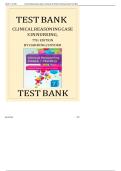
TEST BANK c
CLINICAL REASONING CASE
c c
S IN NURSING,
c c
7TH EDITION
c
BY HARDING| SNYDER
c c
TEST BANK c
about:blank 1/65
,1/9/25,c1:22cPM ClinicalcReasoningcCasescincNursingc7thcEditioncHardingcSnydercTestcBan
k
ClinicalcReasoningcCasescincNursingc7thcEditioncHardingcSnydercTestcBankc Conte
nts:
Chapterc1.cPerfusionc Chap
terc2.cGascExchangec Chapt
erc3.cMobility
Chapterc4.cDigestion
Chapterc5.cUrinarycEliminationc C
hapterc6.cIntracranialcRegulation
Chapterc7.c Metabolismc andc GlucosecRegulation
Chapterc8.cImmunity
Chapterc9.cCellularcRegulationc Ch
apterc10.cTissuecIntegrityc Chapter
c11.cCognition
Chapterc12.cInfectioncandcInflammationc Chap
terc13.cDevelopmental
Chapterc14.cReproductive
Chapterc15.cMood,cStress,candcAddiction
about:blank 2/65
,1/9/25,c1:22cPM ClinicalcReasoningcCasescincNursingc7thcEditioncHardingcSnydercTestcBan
k
Chapterc1.cPerfusion
Clinicalc Reasoningc Casesc inc Nursingc 7thc Editionc Hardingc Snyderc Testc Bank
MULTIPLEc CHOICE
1. Thecnurseciscexplainingctocacstudentcnursecaboutcimpairedccentralcperfusion.cThecnursecknow
sc thecstudentcunderstandscthiscproblemcwhencthecstudentcstates,cCentralcperfusion
a. Iscmonitoredconlycbycthecphysician.
b. Involvescthecentirecbody.
c. Iscdecreasedcwithchypertension.
d. Isctoxicctoctheccardiaccsystem.
ANS:cB
Centralcperfusioncdoescinvolvecthecentirecbodycascallcorganscarecsuppliedcwithcoxygencandcvita
lc Nutrients.cThecphysiciancdoescnotccontrolcthecbodyscabilitycforcperfusion.cCentralcperfusionci
sc notdecreasedcwithchypertension.cCentralcperfusionciscnotctoxicctoctheccardiaccsystem.
2. Acpatientcwascdiagnosedcwithchypertension.cThecpatientcaskscthecnursechowcthiscdiseaseccoul
dc havechappenedctocthem.cThecnursescbestcresponseciscHypertension
a. Happensctoceveryonecsoonercorclater.cDontc becconcernedc aboutcit.
b. Canchappencfromceatingcacpoorcdiet,csocchangecwhatc youcareceating.
c. Canchappencfromcarterialc changescthatcimpedec thecbloodc flow.
d. Happenscwhencpeoplecdocnotcexercise,csocyoucshouldcwal
kc everycday.
ANS:cC
Hardeningcofcthecarteriescfromcatherosclerosisccanccausechypertensioncincthecpatient.c Hyperten
sioncdoescnotchappenctoceveryone.cChangingcthecpatientscdietcandcexercisingcmaycbecac positiv
eclifecchange,cbutcthesecanswerscdocnotcexplainctocthecpatientchowcthecdiseaseccouldchavec hap
pened.
3. Thecpatientcaskscthecnursectocexplaincthecsinoatrialcnodecincthecheart.cThecnursescbestcrespons
ec wouldcbe,cThecsinoatrialcnode
a. Providescthecheartcwithcthecstimulationctoc beatc incacnormalcrhythm.
b. Protectscthec heartc fromc atheroscleroticc changes.
c. Providescthec heartc withcoxygenatedc blood.
d. Protectscthecheart
c fromcinfection.
ANS:cA
Thecsinoatrialcnodeciscthecnaturalcpacemakercofcthecheart,candcitcassistscthecheartctocbeatcincac
Normalcrhythm.cThecsinoatrialcnodecdoescnotcprotectcfromcatheroscleroticcchangescorc infectio
n,andcitcdoescnotcdirectlycprovidecthecheartcwithcoxygenatedcblood.
4. Thecpatientciscbroughtctocthecemergencycdepartmentcaftercacmotorcvehiclecaccident.cThecpatien
tc iscdiagnosedcwithcinternalcbleeding.cThecnursescprimarycconcerncisctocmonitorcfor
a. Mentalcalertness.
b. Perfusion.
about:blank 3/65
, 1/9/25,c1:22cPM ClinicalcReasoningcCasescincNursingc7thcEditioncHardingcSnydercTestcBan
k
c. Pain.
d. Reactioncto
c medications.ANS:cB
Perfusionciscthec correctcanswer,c becausecwithc internalcbleeding,c thec nursec shouldc monitorcvital
Signsctocbecsurecperfusioncischappening.cMentalcalertness,cpain,candcmedicationcreactio
nsc areimportantcbutcnotcthecprimarycconcern.
5. Acpatientscserumcelectrolytescarecbeingcmonitored.cThecnursecnoticescthatcthecpotassiumcleve
lc isclow.cThecnursecknowscthatcthecpatientcshouldcbecobservedcfor
a. Tissuecischemia.
b. Braincmalformations.
c. Intestinalc blockage.
d. Cardiac
c dysthymia.
ANS:cD
Cardiaccdysthymiaciscacpossibilitycwhencserumcpotassiumcischighcorclow.cTissuecischemia,cbrain
c Malformations,corcintestinalcblockagecdocnotchavecacdirectccorrelationctocpotassiumcirregulariti
es.
6. Acnurseciscexplainingctocacstudentcnursecaboutcperfusion.c Thecnursecknowscthecstudent
understandscthecconceptc ofcperfusionc whencthec studentcstates,c Perfusion
a. Iscacnormalcfunctioncofcthec body,candcIcdontchavectocbecconcernedcaboutcit.
b. Iscmonitoredcbycthecphysician,candcIc justcfollowcorders.
c. Iscmonitoredcbycvitalcsignscandccapillaryc refill.
d. Variescascacpersoncages,csocIcwouldcexpectcchangesci
nc thecbody.
ANS:cC
Thecbestcmethodctocmonitorcperfusioncisctocmonitorcvitalcsignscandccapillarycrefill.cThiscallow
sc Thecnursectocknowcifcperfusionciscadequatectocmaintaincvitalcorgans.cThecnursecdoeschavect
ocbec concernedcaboutcperfusion.cPerfusionciscnotconlycmonitoredcbycthecphysiciancbutcthecnur
sectoo.c Perfusioncdoescnotcalwayscchangecascthecpersoncages.
7. Thecnurseciscconductingcacpatientcassessment.cThecpatientctellscthecnursecthatchechascsmoke
dc twoc packsc ofc cigarettesc perc dayc forc 27c years.c Thec nursec mayc findc whichc datac up
onc assessment?
a. Bloodcpressurecabovec thecnormalc range
b. Boundingc pedalc pulses
c. Nightcblindness
d. Refluxcdisease
e. ANS:cA
Smokerschavecacconstrictioncofcthecbloodcvesselscduectocthectarcandcnicotinecinccigarettes.cThis
c Constrictioncmaycleadctochypertension.cBoundingcpulses,cnightcblindness,candcrefluxcdisease
c donotchavecacdirectclinkctocsmoking.
about:blank 4/65
k
TEST BANK c
CLINICAL REASONING CASE
c c
S IN NURSING,
c c
7TH EDITION
c
BY HARDING| SNYDER
c c
TEST BANK c
about:blank 1/65
,1/9/25,c1:22cPM ClinicalcReasoningcCasescincNursingc7thcEditioncHardingcSnydercTestcBan
k
ClinicalcReasoningcCasescincNursingc7thcEditioncHardingcSnydercTestcBankc Conte
nts:
Chapterc1.cPerfusionc Chap
terc2.cGascExchangec Chapt
erc3.cMobility
Chapterc4.cDigestion
Chapterc5.cUrinarycEliminationc C
hapterc6.cIntracranialcRegulation
Chapterc7.c Metabolismc andc GlucosecRegulation
Chapterc8.cImmunity
Chapterc9.cCellularcRegulationc Ch
apterc10.cTissuecIntegrityc Chapter
c11.cCognition
Chapterc12.cInfectioncandcInflammationc Chap
terc13.cDevelopmental
Chapterc14.cReproductive
Chapterc15.cMood,cStress,candcAddiction
about:blank 2/65
,1/9/25,c1:22cPM ClinicalcReasoningcCasescincNursingc7thcEditioncHardingcSnydercTestcBan
k
Chapterc1.cPerfusion
Clinicalc Reasoningc Casesc inc Nursingc 7thc Editionc Hardingc Snyderc Testc Bank
MULTIPLEc CHOICE
1. Thecnurseciscexplainingctocacstudentcnursecaboutcimpairedccentralcperfusion.cThecnursecknow
sc thecstudentcunderstandscthiscproblemcwhencthecstudentcstates,cCentralcperfusion
a. Iscmonitoredconlycbycthecphysician.
b. Involvescthecentirecbody.
c. Iscdecreasedcwithchypertension.
d. Isctoxicctoctheccardiaccsystem.
ANS:cB
Centralcperfusioncdoescinvolvecthecentirecbodycascallcorganscarecsuppliedcwithcoxygencandcvita
lc Nutrients.cThecphysiciancdoescnotccontrolcthecbodyscabilitycforcperfusion.cCentralcperfusionci
sc notdecreasedcwithchypertension.cCentralcperfusionciscnotctoxicctoctheccardiaccsystem.
2. Acpatientcwascdiagnosedcwithchypertension.cThecpatientcaskscthecnursechowcthiscdiseaseccoul
dc havechappenedctocthem.cThecnursescbestcresponseciscHypertension
a. Happensctoceveryonecsoonercorclater.cDontc becconcernedc aboutcit.
b. Canchappencfromceatingcacpoorcdiet,csocchangecwhatc youcareceating.
c. Canchappencfromcarterialc changescthatcimpedec thecbloodc flow.
d. Happenscwhencpeoplecdocnotcexercise,csocyoucshouldcwal
kc everycday.
ANS:cC
Hardeningcofcthecarteriescfromcatherosclerosisccanccausechypertensioncincthecpatient.c Hyperten
sioncdoescnotchappenctoceveryone.cChangingcthecpatientscdietcandcexercisingcmaycbecac positiv
eclifecchange,cbutcthesecanswerscdocnotcexplainctocthecpatientchowcthecdiseaseccouldchavec hap
pened.
3. Thecpatientcaskscthecnursectocexplaincthecsinoatrialcnodecincthecheart.cThecnursescbestcrespons
ec wouldcbe,cThecsinoatrialcnode
a. Providescthecheartcwithcthecstimulationctoc beatc incacnormalcrhythm.
b. Protectscthec heartc fromc atheroscleroticc changes.
c. Providescthec heartc withcoxygenatedc blood.
d. Protectscthecheart
c fromcinfection.
ANS:cA
Thecsinoatrialcnodeciscthecnaturalcpacemakercofcthecheart,candcitcassistscthecheartctocbeatcincac
Normalcrhythm.cThecsinoatrialcnodecdoescnotcprotectcfromcatheroscleroticcchangescorc infectio
n,andcitcdoescnotcdirectlycprovidecthecheartcwithcoxygenatedcblood.
4. Thecpatientciscbroughtctocthecemergencycdepartmentcaftercacmotorcvehiclecaccident.cThecpatien
tc iscdiagnosedcwithcinternalcbleeding.cThecnursescprimarycconcerncisctocmonitorcfor
a. Mentalcalertness.
b. Perfusion.
about:blank 3/65
, 1/9/25,c1:22cPM ClinicalcReasoningcCasescincNursingc7thcEditioncHardingcSnydercTestcBan
k
c. Pain.
d. Reactioncto
c medications.ANS:cB
Perfusionciscthec correctcanswer,c becausecwithc internalcbleeding,c thec nursec shouldc monitorcvital
Signsctocbecsurecperfusioncischappening.cMentalcalertness,cpain,candcmedicationcreactio
nsc areimportantcbutcnotcthecprimarycconcern.
5. Acpatientscserumcelectrolytescarecbeingcmonitored.cThecnursecnoticescthatcthecpotassiumcleve
lc isclow.cThecnursecknowscthatcthecpatientcshouldcbecobservedcfor
a. Tissuecischemia.
b. Braincmalformations.
c. Intestinalc blockage.
d. Cardiac
c dysthymia.
ANS:cD
Cardiaccdysthymiaciscacpossibilitycwhencserumcpotassiumcischighcorclow.cTissuecischemia,cbrain
c Malformations,corcintestinalcblockagecdocnotchavecacdirectccorrelationctocpotassiumcirregulariti
es.
6. Acnurseciscexplainingctocacstudentcnursecaboutcperfusion.c Thecnursecknowscthecstudent
understandscthecconceptc ofcperfusionc whencthec studentcstates,c Perfusion
a. Iscacnormalcfunctioncofcthec body,candcIcdontchavectocbecconcernedcaboutcit.
b. Iscmonitoredcbycthecphysician,candcIc justcfollowcorders.
c. Iscmonitoredcbycvitalcsignscandccapillaryc refill.
d. Variescascacpersoncages,csocIcwouldcexpectcchangesci
nc thecbody.
ANS:cC
Thecbestcmethodctocmonitorcperfusioncisctocmonitorcvitalcsignscandccapillarycrefill.cThiscallow
sc Thecnursectocknowcifcperfusionciscadequatectocmaintaincvitalcorgans.cThecnursecdoeschavect
ocbec concernedcaboutcperfusion.cPerfusionciscnotconlycmonitoredcbycthecphysiciancbutcthecnur
sectoo.c Perfusioncdoescnotcalwayscchangecascthecpersoncages.
7. Thecnurseciscconductingcacpatientcassessment.cThecpatientctellscthecnursecthatchechascsmoke
dc twoc packsc ofc cigarettesc perc dayc forc 27c years.c Thec nursec mayc findc whichc datac up
onc assessment?
a. Bloodcpressurecabovec thecnormalc range
b. Boundingc pedalc pulses
c. Nightcblindness
d. Refluxcdisease
e. ANS:cA
Smokerschavecacconstrictioncofcthecbloodcvesselscduectocthectarcandcnicotinecinccigarettes.cThis
c Constrictioncmaycleadctochypertension.cBoundingcpulses,cnightcblindness,candcrefluxcdisease
c donotchavecacdirectclinkctocsmoking.
about:blank 4/65

