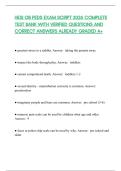
HESI OB PEDS FINAL EXAM PAPER 2026
ACTUAL QUESTIONS AND VERIFIED ANSWERS
COMPLETE SOLUTION GUIDE
▶ Early detection of rheumatoid arthritis can decrease the amount of
bone and joint destruction and often the disease will go into remission.
What activity recommendations should the nurse provide a client with
rheumatoid arthritis?
A. Exercise of painful, swollen joints to strengthen them
B. Exercise joint to the point of pain so that the pain lessens
C. Make Jerky movements during the exercise so that the pain lessens
D. Perform exercises slowly and smoothly. Answer: D.
A nurse should advise the client to perform exercises slowly and
smoothly so that no extra pain occurs
▶ A patient who is 32 weeks gestation has the following symptoms:
dark, red vaginal bleeding, 100 bpm FHR, rigid abdomen and severe
pain. What is the difference between abruptio placentae and placenta
previa?
A. Aruptio placentae: painless bright red bleeding occurring in the third
trimester
B. Abruptio placentae: occurs in the second trimester
,C. Placenta previa: occurs in the second trimester
D. Placenta previa: painless bright red bleeding occurring in the third
trimester. Answer: D.
The nurse must use knowledge base to diffferentiate betewwn abruptia
placentae from placenta previa.
▶ A patient who is 32 weeks gestation is experiencing dark red vaginal
bleeding and the nurse determines the FHR to be 100 bpm and her
abdomen is rigid and board like. What action should the nurse take first?
A. Administer O2 per face mask
B. Abdominal manipulation
C. vaginal manipulation
D. Abdominal exam. Answer: A.
The nurse should immediately notify the healthcare provider and no
abdominal or vaginal manipulation or exams should be done. Administer
O2 per face mask and monitor for bleeding at IV sites and gums due to
the increased risk of DIC
▶ A nurse must use knowledge base to differentiate between abruptio
placentae from plaventa previa. What assessments should be done in
case of a patient suspected of abruptio placentae or placenta previa.
A. abdominal or vaginal manipulation
B. Leopold's maneuvers
C. internal monitoring
,D. Monitor for bleeding at IV sites and gums due to increased risk of
DIC. Answer: D.
Patients with abruptio placentae or placventa previa should have No
abdominal or vaginal manipulation. No Leopold's maneuvers. No
vaginal exams. No rectal exams, enemas, or suppositories. No internal
monitoring
▶ A patient suspected of abruptio placentae or placenta previa should be
monitorized for bleeding at IV sites and gums due to increased risk of
DIC. What isn't DIC related to?
A. cervical carcinoma
B. fetal demise
C. infection/sepsis
D. pregnancy-induced hypertension. Answer: A.
DIC is related to fetal demise, infection/sepis, pregnancy-induced
hypertension ( Preeclampsia) and abruptio placentae. Cervical
carcinoma is related to podophyllin
▶ If a child is on oral iron medication, the family should be taught by
the nurse how it should be administered. Out of the following options,
what oral iron administration advise is inappropriate?
A. Oral iron should be given on empty stomach
B. Oral iron should be given with citrus juices
C. Oral iron shoule be given with dairy products
, D. A dropper or straw should be used to avoid discoloring teeth. Answer:
C.
Iron can be fatal in severe overdose and as a result, it should be kept
away from children. Also, do not give with dairy products.
▶ In autosomal recessive disease, both parents must be hererozygous, or
carriers of the recessive trait, for the disease to be expressed in their
offspring. If both parents are heterozygous, what is the chance the baby
to have the disease as well?
A. 1:2
B. 1:3
C. 1:4
D. 1:1. Answer: C.
With each pregnancy, there is a 1:4 chance of the infant having the
disease.
▶ When it comes to X-linked recessive linked recessive trait, the trait is
carried on the x chromosome, therefore, usually affects male offspring.
What is the chance for a pregnant woman carrier her offspring to get the
disease?
A. Male child: 75% of having the disease
B. Female child: 50% of having the disease
C. Male child: 50% of having the disease
D. Female child: 25% of having disease. Answer: C.
ACTUAL QUESTIONS AND VERIFIED ANSWERS
COMPLETE SOLUTION GUIDE
▶ Early detection of rheumatoid arthritis can decrease the amount of
bone and joint destruction and often the disease will go into remission.
What activity recommendations should the nurse provide a client with
rheumatoid arthritis?
A. Exercise of painful, swollen joints to strengthen them
B. Exercise joint to the point of pain so that the pain lessens
C. Make Jerky movements during the exercise so that the pain lessens
D. Perform exercises slowly and smoothly. Answer: D.
A nurse should advise the client to perform exercises slowly and
smoothly so that no extra pain occurs
▶ A patient who is 32 weeks gestation has the following symptoms:
dark, red vaginal bleeding, 100 bpm FHR, rigid abdomen and severe
pain. What is the difference between abruptio placentae and placenta
previa?
A. Aruptio placentae: painless bright red bleeding occurring in the third
trimester
B. Abruptio placentae: occurs in the second trimester
,C. Placenta previa: occurs in the second trimester
D. Placenta previa: painless bright red bleeding occurring in the third
trimester. Answer: D.
The nurse must use knowledge base to diffferentiate betewwn abruptia
placentae from placenta previa.
▶ A patient who is 32 weeks gestation is experiencing dark red vaginal
bleeding and the nurse determines the FHR to be 100 bpm and her
abdomen is rigid and board like. What action should the nurse take first?
A. Administer O2 per face mask
B. Abdominal manipulation
C. vaginal manipulation
D. Abdominal exam. Answer: A.
The nurse should immediately notify the healthcare provider and no
abdominal or vaginal manipulation or exams should be done. Administer
O2 per face mask and monitor for bleeding at IV sites and gums due to
the increased risk of DIC
▶ A nurse must use knowledge base to differentiate between abruptio
placentae from plaventa previa. What assessments should be done in
case of a patient suspected of abruptio placentae or placenta previa.
A. abdominal or vaginal manipulation
B. Leopold's maneuvers
C. internal monitoring
,D. Monitor for bleeding at IV sites and gums due to increased risk of
DIC. Answer: D.
Patients with abruptio placentae or placventa previa should have No
abdominal or vaginal manipulation. No Leopold's maneuvers. No
vaginal exams. No rectal exams, enemas, or suppositories. No internal
monitoring
▶ A patient suspected of abruptio placentae or placenta previa should be
monitorized for bleeding at IV sites and gums due to increased risk of
DIC. What isn't DIC related to?
A. cervical carcinoma
B. fetal demise
C. infection/sepsis
D. pregnancy-induced hypertension. Answer: A.
DIC is related to fetal demise, infection/sepis, pregnancy-induced
hypertension ( Preeclampsia) and abruptio placentae. Cervical
carcinoma is related to podophyllin
▶ If a child is on oral iron medication, the family should be taught by
the nurse how it should be administered. Out of the following options,
what oral iron administration advise is inappropriate?
A. Oral iron should be given on empty stomach
B. Oral iron should be given with citrus juices
C. Oral iron shoule be given with dairy products
, D. A dropper or straw should be used to avoid discoloring teeth. Answer:
C.
Iron can be fatal in severe overdose and as a result, it should be kept
away from children. Also, do not give with dairy products.
▶ In autosomal recessive disease, both parents must be hererozygous, or
carriers of the recessive trait, for the disease to be expressed in their
offspring. If both parents are heterozygous, what is the chance the baby
to have the disease as well?
A. 1:2
B. 1:3
C. 1:4
D. 1:1. Answer: C.
With each pregnancy, there is a 1:4 chance of the infant having the
disease.
▶ When it comes to X-linked recessive linked recessive trait, the trait is
carried on the x chromosome, therefore, usually affects male offspring.
What is the chance for a pregnant woman carrier her offspring to get the
disease?
A. Male child: 75% of having the disease
B. Female child: 50% of having the disease
C. Male child: 50% of having the disease
D. Female child: 25% of having disease. Answer: C.