100% de satisfacción garantizada Inmediatamente disponible después del pago Tanto en línea como en PDF No estas atado a nada 4.2 TrustPilot
logo-home
Examen

HED4802 Portfolio (COMPLETE ANSWERS) 2025 - DUE 16 January 2026

Puntuación
5.0
(2)
Vendido
5
Páginas
12
Grado
A+
Subido en
22-11-2025
Escrito en
2025/2026

HED4802 Portfolio (COMPLETE ANSWERS) 2025 - DUE 16 January 2026; 100% TRUSTED Complete, trusted solutions and explanations. For assistance, Whats-App 0.6.7-1.7.1-1.7.3.9. Ensure your success with us...Comprehensive-ness and accuracy Includes major definitions and perspectives on curriculum. All information is accurate and free from errors. Includes most major definitions and perspectives on curriculum. Most information is accurate, with few errors. Includes some major definitions and perspectives on curriculum. Some information is accurate but contains several errors. Includes few or no major definitions and perspectives on curriculum. Information is mostly inaccurate, with many errors. Only a few words included Criteria Excellent (10 marks) Good (8 marks) Satisfactory (6 marks) Needs Improvement (4 marks) Largely incomplete or minimally completed (2 marks) 0 (Not attempted/not done or copied directly from another source) Organisation, clarity, and readability Graphic is logically organised and very easy to read. Graphic is mostly organised and easy to read. Graphic has some organisation, but is a little difficult to read Graphic is poorly organised and difficult to read. No graphic included, only words Comprehensive-ness and accuracy Includes major definitions and perspectives on curriculum. All information is accurate and free from errors. Includes most major definitions and perspectives on curriculum. Most information is accurate, with few errors. Includes some major definitions and perspectives on curriculum. Some information is accurate but contains several errors. Includes few or no major definitions and perspectives on curriculum. Information is mostly inaccurate, with many errors. Only a few words included Criteria Excellent (10 marks) Good (8 marks) Satisfactory (6 marks) Needs Improvement (4 marks) Largely incomplete or minimally completed (2 marks) 0 (Not attempted/not done or copied directly from another source) Organisation, clarity, and readability Graphic is logically organised and very easy to read. Graphic is mostly organised and easy to read. Graphic has some organisation, but is a little difficult to read Graphic is poorly organised and difficult to read. No graphic included, only words Causes of the problem (according to… 3 different sources) Curriculum problems are related to curriculum content, curriculum coverage, teaching methods, teaching resources, assessment - not learner behaviour, parental involvement. 1. List 5 curriculum problems you are experiencing in your teaching/lecturing 2. In a table format complete the following: E.g. according to me… E.g. according to the principal… E.g. according to Copilot … E.g. according to Du Preez & Reddy (2025) … Possible solution to the problem (according to … 3 different sources) Problem 2 The second problem I encounter is … Causes of the problem (according to … 3 different sources) Possible solution to the problem (according to… 3 different sources) Problem 3 The third problem I encounter is … Causes of the problem (according to … 3 different sources) Possible solution to the problem (according to 3 different sources) Problem 4 The fourth problem I encounter is … Causes of the problem (according to 3 different sources) Possible solution to the problem (according to 3 different sources) Problem 5 The fifth problem I encounter is … Causes of the problem (according to 3 different sources) Possible solution to the problem (according to 3 different sources) Rubric for marking Criteria Excellent 10 Good 8 Adequate 6 Limited 4 Not completed/incorrect Identification of problems (10 marks) Clearly and specifically describes 5 real, relevant classroom problems. 4 problems clearly described; 1 vague/less relevant. 3 problems well described; others vague. Fewer than 3 problems, Your letter must include the following elements: • Introduction: Introduce yourself as a concerned Honours student and explain the purpose of your letter. • Current challenges: Identify the key challenges that you have experienced that novice teachers face in the classroom (e.g., classroom management, diverse learner needs, lack of real-world teaching experience). • Suggested curriculum adjustments: Propose specific adjustments or additions to the current teacher education curriculum. • Support from research: Integrate current research that supports the need for these adjustments. Provide references to studies or literature to back up your suggestions. • Benefits for novice teachers and the school system: Highlight how these adjustments will help future teachers better navigate the challenges of the classroom and improve their effectiveness. • Conclusion: End with an invitation to discuss the proposal further and express gratitude for their consideration. vague/irrelevant. 0 Excellent 15 Good 12 Adequate 9 Limited 5 Not completed/incorrect 0 Causes Supported by Sources (15 marks) For each problem, provides at least 3 credible, varied sources that deeply explain causes. Critical engagement evident. 2–3 sources per problem, mostly credible and relevant, some detail. 1–2 sources per problem, limited credibility/relevance, superficial explanation. Few/no sources; little explanation of causes. Repetitive causes 0 Solutions Supported by Sources (15 marks) Each solution linked to at least 3 different sources. Solutions are innovative, realistic, and grounded in curriculum/teaching theory. Most solutions linked to 2–3 sources, generally realistic and relevant. Some solutions linked to limited sources Few/no sources; solutions unrealistic or vague. Repetitive solutions 0 Comprehensive-ness and accuracy Includes major definitions and perspectives on curriculum. All information is accurate and free from errors. Includes most major definitions and perspectives on curriculum. Most information is accurate, with few errors. Includes some major definitions and perspectives on curriculum. Some information is accurate but contains several errors. Includes few or no major definitions and perspectives on curriculum. Information is mostly inaccurate, with many errors. Only a few words included Criteria Excellent (10 marks) Compose a formal letter to a university, urging them to adjust their undergraduate teacher education curriculum, so that novice teachers are better prepared for real-world classrooms. Good (8 marks) Satisfactory (6 marks) Needs Improvement (4 marks) Largely incomplete or minimally completed (2 marks) 0 Create a visual representation (e.g., concept map, mind map, infographic, or diagram) that outlines the different definitions and perspectives of the term “curriculum”. This task is designed to help you understand the complexity of curriculum as a concept, and how it varies across different educational contexts and theories. • Investigate multiple definitions of “curriculum” from various sources, such as academic literature, educational theorists, and curriculum frameworks. Consider both traditional and modern perspectives. • Traditional views: Focus on curriculum as a syllabus or a planned set of lessons and content that teachers deliver in the classroom. • Broader perspectives: Explore modern definitions that view the curriculum as an experiential, holistic, or hidden set of learnings that occur both in and outside the classroom. • Look at critical, social justice, or culturally relevant approaches to curriculum, such as the “hidden curriculum” or the “null curriculum.” Any platforms or apps that you use to create the diagram (e.g. Canva) must be credited. You may not copy an already published diagram. (Not attempted/not done or copied directly from another source) Organisation, clarity, and readability Graphic is logically organised and very easy to read. Graphic is mostly organised and easy to read. Graphic has some organisation, but is a little difficult to read Graphic is poorly organised and difficult to read. No graphic included, only words Comprehensive-ness and accuracy Includes major definitions and perspectives on curriculum. All information is accurate and free from errors. Includes most major definitions and perspectives on curriculum. Most information is accurate, with few errors. Includes some major definitions and perspectives on curriculum. Some information is accurate but contains several errors. Includes few or no major definitions and perspectives on curriculum. Information is mostly inaccurate, with many errors. Only a few words included Criteria Excellent (10 marks) Good (8 marks) Satisfactory (6 marks) Needs Improvement (4 marks) Largely incomplete or minimally completed (2 marks) 0 (Not attempted/not done or copied directly from another source) Organisation, clarity, and readability Graphic is logically organised and very easy to read. Graphic is mostly organised and easy to read. Graphic has some organisation, but is a little difficult to read Graphic is poorly organised and difficult to read. No graphic included, only words Comprehensive-ness and accuracy Includes major definitions and perspectives on curriculum. All information is accurate and free from errors. Includes most major definitions and perspectives on curriculum. Most information is accurate, with few errors. Includes some major definitions and perspectives on curriculum. Some information is accurate but contains several errors. Includes few or no major definitions and perspectives on curriculum. Information is mostly inaccurate, with many errors. Only a few words included Criteria Excellent (10 marks) Good (8 marks) Satisfactory (6 marks) Needs Improvement (4 marks) Largely incomplete or minimally completed (2 marks) 0 (Not attempted/not done or copied directly from another source) Organisation, clarity, and readability Graphic is logically organised and very easy to read. Graphic is mostly organised and easy to read. Graphic has some organisation, but is a little difficult to read Graphic is poorly organised and difficult to read. No graphic included, only words Causes of the problem (according to… 3 different sources) Curriculum problems are related to curriculum content, curriculum coverage, teaching methods, teaching resources, assessment - not learner behaviour, parental involvement. 1. List 5 curriculum problems you are experiencing in your teaching/lecturing 2. In a table format complete the following: E.g. according to me… E.g. according to the principal… E.g. according to Copilot … E.g. according to Du Preez & Reddy (2025) … Possible solution to the problem (according to … 3 different sources) Problem 2 The second problem I encounter is … Causes of the problem (according to … 3 different sources) Possible solution to the problem (according to… 3 different sources) Problem 3 The third problem I encounter is … Causes of the problem (according to … 3 different sources) Possible solution to the problem (according to 3 different sources) Problem 4 The fourth problem I encounter is … Causes of the problem (according to 3 different sources) Possible solution to the problem (according to 3 different sources) Problem 5 The fifth problem I encounter is … Causes of the problem (according to 3 different sources) Possible solution to the problem (according to 3 different sources) Rubric for marking Criteria Excellent 10 Good 8 Adequate 6 Limited 4 Not completed/incorrect Identification of problems (10 marks) Clearly and specifically describes 5 real, relevant classroom problems. 4 problems clearly described; 1 vague/less relevant. 3 problems well described; others vague. Fewer than 3 problems, Your letter must include the following elements: • Introduction: Introduce yourself as a concerned Honours student and explain the purpose of your letter. • Current challenges: Identify the key challenges that you have experienced that novice teachers face in the classroom (e.g., classroom management, diverse learner needs, lack of real-world teaching experience). • Suggested curriculum adjustments: Propose specific adjustments or additions to the current teacher education curriculum. • Support from research: Integrate current research that supports the need for these adjustments. Provide references to studies or literature to back up your suggestions. • Benefits for novice teachers and the school system: Highlight how these adjustments will help future teachers better navigate the challenges of the classroom and improve their effectiveness. • Conclusion: End with an invitation to discuss the proposal further and express gratitude for their consideration. vague/irrelevant. 0 Excellent 15 Good 12 Adequate 9 Limited 5 Not completed/incorrect 0 Causes Supported by Sources (15 marks) For each problem, provides at least 3 credible, varied sources that deeply explain causes. Critical engagement evident. 2–3 sources per problem, mostly credible and relevant, some detail. 1–2 sources per problem, limited credibility/relevance, superficial explanation. Few/no sources; little explanation of causes. Repetitive causes 0 Solutions Supported by Sources (15 marks) Each solution linked to at least 3 different sources. Solutions are innovative, realistic, and grounded in curriculum/teaching theory. Most solutions linked to 2–3 sources, generally realistic and relevant. Some solutions linked to limited sources Few/no sources; solutions unrealistic or vague. Repetitive solutions 0 Comprehensive-ness and accuracy Includes major definitions and perspectives on curriculum. All information is accurate and free from errors. Includes most major definitions and perspectives on curriculum. Most information is accurate, with few errors. Includes some major definitions and perspectives on curriculum. Some information is accurate but contains several errors. Includes few or no major definitions and perspectives on curriculum. Information is mostly inaccurate, with many errors. Only a few words included Criteria Excellent (10 marks) Compose a formal letter to a university, urging them to adjust their undergraduate teacher education curriculum, so that novice teachers are better prepared for real-world classrooms. Good (8 marks) Satisfactory (6 marks) Needs Improvement (4 marks) Largely incomplete or minimally completed (2 marks) 0 Create a visual representation (e.g., concept map, mind map, infographic, or diagram) that outlines the different definitions and perspectives of the term “curriculum”. This task is designed to help you understand the complexity of curriculum as a concept, and how it varies across different educational contexts and theories. • Investigate multiple definitions of “curriculum” from various sources, such as academic literature, educational theorists, and curriculum frameworks. Consider both traditional and modern perspectives. • Traditional views: Focus on curriculum as a syllabus or a planned set of lessons and content that teachers deliver in the classroom. • Broader perspectives: Explore modern definitions that view the curriculum as an experiential, holistic, or hidden set of learnings that occur both in and outside the classroom. • Look at critical, social justice, or culturally relevant approaches to curriculum, such as the “hidden curriculum” or the “null curriculum.” Any platforms or apps that you use to create the diagram (e.g. Canva) must be credited. You may not copy an already published diagram. (Not attempted/not done or copied directly from another source) Organisation, clarity, and readability Graphic is logically organised and very easy to read. Graphic is mostly organised and easy to read. Graphic has some organisation, but is a little difficult to read Graphic is poorly organised and difficult to read. No graphic included, only words

Mostrar más Leer menos
Institución
Grado


Ups! No podemos cargar tu documento ahora. Inténtalo de nuevo o contacta con soporte.

Libro relacionado

Escuela, estudio y materia

Institución
Grado

Información del documento

Subido en
22 de noviembre de 2025
Número de páginas
12
Escrito en
2025/2026
Tipo
Examen
Contiene
Preguntas y respuestas

Temas

Vista previa del contenido

HED4802
PORTFOLIO 2025
Unique number:
Due Date: 16 January 2026

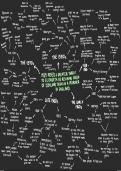
ACTIVITY 1: TASK: CREATE A VISUAL REPRESENTATION


Terms of use
By making use of this document you agree to:
 Use this document as a guide for learning, comparison and reference purpose,
Terms of use
 Not to duplicate, reproduce and/or misrepresent the contents of this document as your own work,
By making use of this document you agree to:
 Use this document
Fully accept the consequences
solely as a guide forshould you plagiarise
learning, reference,or and
misuse this document.
comparison purposes,
 Ensure originality
1. THEof your own work,
SCHOOL AS Aand fully accept the consequences should you plagiarise or misuse this document.
SYSTEM/ORGANIZATION
 Comply with all relevant standards, guidelines, regulations, and legislation governing academic and written work.

Disclaimer
Great care has been taken in the preparation of this document; however, the contents are provided "as is" without any express or
implied representations or warranties. The author accepts no responsibility or liability for any actions taken based on the
information contained within this document. This document is intended solely for comparison, research, and reference purposes.
Reproduction, resale, or transmission of any part of this document, in any form or by any means, is strictly prohibited.

, +27 67 171 1739


ACTIVITY 1: TASK: CREATE A VISUAL REPRESENTATION


References

Ornstein, A. C., & Hunkins, F. P. (2018). Curriculum: Foundations, Principles, and Issues.
Pearson.

Department of Basic Education. (2011). Curriculum and Assessment Policy Statement
(CAPS). Pretoria: Government Printers.


Disclaimer
Great care has been taken in the preparation of this document; however, the contents are provided "as is"
without any express or implied representations or warranties. The author accepts no responsibility or
liability for any actions taken based on the information contained within this document. This document is
intended solely for comparison, research, and reference purposes. Reproduction, resale, or transmission
of any part of this document, in any form or by any means, is strictly prohibited.

$3.08
Accede al documento completo:

100% de satisfacción garantizada
Inmediatamente disponible después del pago
Tanto en línea como en PDF
No estas atado a nada

Reseñas de compradores verificados

Se muestran los 2 comentarios
1 semana hace

2 semanas hace

5.0

2 reseñas

5
2
4
0
3
0
2
0
1
0
Reseñas confiables sobre Stuvia

Todas las reseñas las realizan usuarios reales de Stuvia después de compras verificadas.

Conoce al vendedor

Seller avatar
Los indicadores de reputación están sujetos a la cantidad de artículos vendidos por una tarifa y las reseñas que ha recibido por esos documentos. Hay tres niveles: Bronce, Plata y Oro. Cuanto mayor reputación, más podrás confiar en la calidad del trabajo del vendedor.
EduPal University of South Africa (Unisa)
Seguir Necesitas iniciar sesión para seguir a otros usuarios o asignaturas
Vendido
149175
Miembro desde
7 año
Número de seguidores
35995
Documentos
4335
Última venta
3 horas hace

4.2

13560 reseñas

5
7807
4
2688
3
1791
2
455
1
819

Recientemente visto por ti

Por qué los estudiantes eligen Stuvia

Creado por compañeros estudiantes, verificado por reseñas

Calidad en la que puedes confiar: escrito por estudiantes que aprobaron y evaluado por otros que han usado estos resúmenes.

¿No estás satisfecho? Elige otro documento

¡No te preocupes! Puedes elegir directamente otro documento que se ajuste mejor a lo que buscas.

Paga como quieras, empieza a estudiar al instante

Sin suscripción, sin compromisos. Paga como estés acostumbrado con tarjeta de crédito y descarga tu documento PDF inmediatamente.

Student with book image

“Comprado, descargado y aprobado. Así de fácil puede ser.”

Alisha Student

Preguntas frecuentes