,CONTEXT
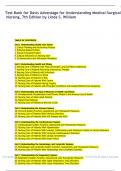
Chapter 1 The Foundational Concepts of Clinical Practice
Chapter 2 Chemical and Biochemical Foundations
Chapter 3 Molecular Biology, Genetics, and Genetic Diseases
Chapter 4 Cell Physiology and Pathophysiology
Chapter 5 Infectious Disease
Chapter 6 The Immune System and Leukocyte Function
Chapter 7 Neoplasia
Chapter 8 Blood and Clotting
Chapter 9 Circulation
Chapter 10 Heart
Chapter 11 Lungs
Chapter 12 Kidneys
Chapter 13 Gastrointestinal Tract
Chapter 14 Liver
Chapter 15 Nervous System
Chapter 16 Musculoskeletal System
Chapter 17 Endocrine System
,Chapter 1: The Foundational Concepts of Clinical Practice
Theme: Core principles of physiology and pathophysiology,
homeostasis, feedback systems, stress response, adaptation, and
linking science to clinical assessment.
Q1. A patient presents with hypotension following acute
hemorrhage. Which compensatory mechanism is primarily activated
to maintain blood pressure initially?
A. Parasympathetic stimulation of the heart
B. Sympathetic activation causing vasoconstriction
C. Increased renal sodium excretion
D. Decreased respiratory rate
Answer: B
Rationale: Acute hemorrhage reduces circulating blood volume,
triggering sympathetic nervous system activation, leading to
vasoconstriction, increased heart rate, and cardiac contractility to
maintain blood pressure. Parasympathetic activity would lower heart
rate, which is counterproductive in shock.
Key words: hemorrhage, hypotension, sympathetic activation,
vasoconstriction, compensatory mechanism
Q2. Which feedback system is most critical in maintaining plasma
calcium levels?
,A. Positive feedback via aldosterone
B. Negative feedback via parathyroid hormone and calcitonin
C. Feedforward regulation via cortisol
D. Positive feedback via insulin
Answer: B
Rationale: Negative feedback loops maintain calcium homeostasis:
low calcium stimulates parathyroid hormone (PTH) release, increasing
calcium reabsorption and mobilization from bone; high calcium
stimulates calcitonin release, reducing calcium levels. Positive
feedback would exacerbate imbalances.
Key words: calcium homeostasis, negative feedback, PTH, calcitonin,
regulation
Q3. Which of the following is an example of an allostatic response to
chronic stress?
A. Temporary increase in heart rate during exercise
B. Chronic activation of the hypothalamic-pituitary-adrenal (HPA) axis
C. Reflex vasodilation after heat exposure
D. Insulin-mediated glucose uptake after a meal
Answer: B
Rationale: Allostasis refers to the body’s adaptation to stress.
Chronic stress leads to prolonged HPA axis activation, increasing
cortisol levels, which can contribute to pathophysiology such as
hypertension or insulin resistance. Acute responses (A, C, D) are
,homeostatic, not allostatic.
Key words: chronic stress, allostasis, HPA axis, cortisol, adaptation
Q4. During a fever, the hypothalamic set point is elevated. This is an
example of:
A. Positive feedback
B. Negative feedback
C. Feedforward mechanism
D. Pathophysiologic failure
Answer: B
Rationale: Fever is a negative feedback response: the hypothalamus
raises the set point, triggering heat conservation and production
mechanisms until the new set point is reached. Once fever resolves,
homeostatic processes normalize body temperature.
Key words: fever, hypothalamus, negative feedback, set point,
thermoregulation
Q5. A patient with severe diarrhea develops hypotension and
tachycardia. Which system compensates first to maintain tissue
perfusion?
A. Renin-angiotensin-aldosterone system
B. Sympathetic nervous system
C. Parasympathetic nervous system
D. Erythropoietin release
,Answer: B
Rationale: Acute hypovolemia from fluid loss stimulates the
sympathetic nervous system, causing tachycardia and
vasoconstriction to maintain perfusion. RAAS activation occurs more
slowly, hours after volume depletion begins.
Key words: diarrhea, hypovolemia, tachycardia, sympathetic
compensation
Q6. Which concept best explains why some patients tolerate chronic
hypertension without immediate symptoms?
A. Positive feedback loops
B. Homeostatic set point adaptation
C. Irreversible organ damage
D. Pathologic feedforward mechanisms
Answer: B
Rationale: Chronic hypertension triggers homeostatic adaptation,
including arterial remodeling and renal adjustment, allowing patients
to remain asymptomatic initially despite elevated pressures. This
demonstrates the principle of homeostasis and adaptation.
Key words: chronic hypertension, adaptation, homeostasis, set point,
asymptomatic
Q7. Which of the following is a primary systemic effect of acute stress
on metabolism?
, A. Increased insulin secretion
B. Decreased gluconeogenesis
C. Increased glycogenolysis and blood glucose
D. Enhanced adipose storage
Answer: C
Rationale: Acute stress activates the sympathetic nervous system
and HPA axis, promoting glycogenolysis and gluconeogenesis to
increase blood glucose for immediate energy. Insulin secretion
decreases to preserve glucose for vital organs.
Key words: acute stress, metabolism, glycogenolysis, HPA axis,
glucose
Q8. A patient’s body responds to chronic hypoxia by increasing red
blood cell production. This is an example of:
A. Negative feedback
B. Positive feedback
C. Maladaptive response
D. Feedforward mechanism
Answer: A
Rationale: Hypoxia stimulates erythropoietin release, which
increases RBC production to improve oxygen delivery—a classic
negative feedback mechanism restoring oxygen homeostasis.
Key words: hypoxia, erythropoietin, negative feedback, adaptation,
RBC production
Chapter 1 The Foundational Concepts of Clinical Practice
Chapter 2 Chemical and Biochemical Foundations
Chapter 3 Molecular Biology, Genetics, and Genetic Diseases
Chapter 4 Cell Physiology and Pathophysiology
Chapter 5 Infectious Disease
Chapter 6 The Immune System and Leukocyte Function
Chapter 7 Neoplasia
Chapter 8 Blood and Clotting
Chapter 9 Circulation
Chapter 10 Heart
Chapter 11 Lungs
Chapter 12 Kidneys
Chapter 13 Gastrointestinal Tract
Chapter 14 Liver
Chapter 15 Nervous System
Chapter 16 Musculoskeletal System
Chapter 17 Endocrine System
,Chapter 1: The Foundational Concepts of Clinical Practice
Theme: Core principles of physiology and pathophysiology,
homeostasis, feedback systems, stress response, adaptation, and
linking science to clinical assessment.
Q1. A patient presents with hypotension following acute
hemorrhage. Which compensatory mechanism is primarily activated
to maintain blood pressure initially?
A. Parasympathetic stimulation of the heart
B. Sympathetic activation causing vasoconstriction
C. Increased renal sodium excretion
D. Decreased respiratory rate
Answer: B
Rationale: Acute hemorrhage reduces circulating blood volume,
triggering sympathetic nervous system activation, leading to
vasoconstriction, increased heart rate, and cardiac contractility to
maintain blood pressure. Parasympathetic activity would lower heart
rate, which is counterproductive in shock.
Key words: hemorrhage, hypotension, sympathetic activation,
vasoconstriction, compensatory mechanism
Q2. Which feedback system is most critical in maintaining plasma
calcium levels?
,A. Positive feedback via aldosterone
B. Negative feedback via parathyroid hormone and calcitonin
C. Feedforward regulation via cortisol
D. Positive feedback via insulin
Answer: B
Rationale: Negative feedback loops maintain calcium homeostasis:
low calcium stimulates parathyroid hormone (PTH) release, increasing
calcium reabsorption and mobilization from bone; high calcium
stimulates calcitonin release, reducing calcium levels. Positive
feedback would exacerbate imbalances.
Key words: calcium homeostasis, negative feedback, PTH, calcitonin,
regulation
Q3. Which of the following is an example of an allostatic response to
chronic stress?
A. Temporary increase in heart rate during exercise
B. Chronic activation of the hypothalamic-pituitary-adrenal (HPA) axis
C. Reflex vasodilation after heat exposure
D. Insulin-mediated glucose uptake after a meal
Answer: B
Rationale: Allostasis refers to the body’s adaptation to stress.
Chronic stress leads to prolonged HPA axis activation, increasing
cortisol levels, which can contribute to pathophysiology such as
hypertension or insulin resistance. Acute responses (A, C, D) are
,homeostatic, not allostatic.
Key words: chronic stress, allostasis, HPA axis, cortisol, adaptation
Q4. During a fever, the hypothalamic set point is elevated. This is an
example of:
A. Positive feedback
B. Negative feedback
C. Feedforward mechanism
D. Pathophysiologic failure
Answer: B
Rationale: Fever is a negative feedback response: the hypothalamus
raises the set point, triggering heat conservation and production
mechanisms until the new set point is reached. Once fever resolves,
homeostatic processes normalize body temperature.
Key words: fever, hypothalamus, negative feedback, set point,
thermoregulation
Q5. A patient with severe diarrhea develops hypotension and
tachycardia. Which system compensates first to maintain tissue
perfusion?
A. Renin-angiotensin-aldosterone system
B. Sympathetic nervous system
C. Parasympathetic nervous system
D. Erythropoietin release
,Answer: B
Rationale: Acute hypovolemia from fluid loss stimulates the
sympathetic nervous system, causing tachycardia and
vasoconstriction to maintain perfusion. RAAS activation occurs more
slowly, hours after volume depletion begins.
Key words: diarrhea, hypovolemia, tachycardia, sympathetic
compensation
Q6. Which concept best explains why some patients tolerate chronic
hypertension without immediate symptoms?
A. Positive feedback loops
B. Homeostatic set point adaptation
C. Irreversible organ damage
D. Pathologic feedforward mechanisms
Answer: B
Rationale: Chronic hypertension triggers homeostatic adaptation,
including arterial remodeling and renal adjustment, allowing patients
to remain asymptomatic initially despite elevated pressures. This
demonstrates the principle of homeostasis and adaptation.
Key words: chronic hypertension, adaptation, homeostasis, set point,
asymptomatic
Q7. Which of the following is a primary systemic effect of acute stress
on metabolism?
, A. Increased insulin secretion
B. Decreased gluconeogenesis
C. Increased glycogenolysis and blood glucose
D. Enhanced adipose storage
Answer: C
Rationale: Acute stress activates the sympathetic nervous system
and HPA axis, promoting glycogenolysis and gluconeogenesis to
increase blood glucose for immediate energy. Insulin secretion
decreases to preserve glucose for vital organs.
Key words: acute stress, metabolism, glycogenolysis, HPA axis,
glucose
Q8. A patient’s body responds to chronic hypoxia by increasing red
blood cell production. This is an example of:
A. Negative feedback
B. Positive feedback
C. Maladaptive response
D. Feedforward mechanism
Answer: A
Rationale: Hypoxia stimulates erythropoietin release, which
increases RBC production to improve oxygen delivery—a classic
negative feedback mechanism restoring oxygen homeostasis.
Key words: hypoxia, erythropoietin, negative feedback, adaptation,
RBC production