AFSB 151 - CHAPTER 5 EXAM
QUESTIONS AND CORRECT ANSWERS.
VERIFIED 2025/2026.
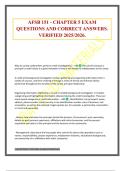
Why do surety underwriters perform credit investigations? - ANS They do this because a
principal's credit history is a good indication of how it will handle its indebtedness to the surety
A credit and background investigation involves gathering and organizing information from a
variety of sources, and then verifying it through a series of formal and informal checks
performed throughout the duration of the surety-principal relationship
Organizing information effectively is crucial to reliable background investigation. It includes
categorizing and highlighting information obtained during the credit investigation. These are
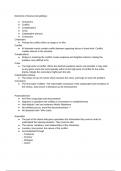
some typical categories of credit information: - ANS - Identification: the principal's name,
address, phone number, social security or tax identification number, class of business, and
occupation, as well as the principal's legal capacity (as, for example, a partnership, corporation,
or trust) and ownership.
- History: how and when the principal started the business, the business's prior ownership,
details on past business experience, affiliations with other businesses, and the present
reputation and status of the principal and the business in the community
- Management: data about the key people who control the day-to-day operations such as
names, responsibilities, project experience, employment histories, educational backgrounds,
and ownership of or affiliations with other companies
1 @COPYRIGHT 2025/2026 ALLRIGHTS RESERVED.
,- Finances: financial information about the principal and related entities, such as verified
financial statements, that forms the basis for analyzing the principal's ability to finance present
and future obligations and to withstand financial setbacks
- Banking information: data from banks and other financial institutions about the principal's
current cash position and ability to obtain financing on a timely basis through secured or
unsecured borrowing
- Pay records: information from trade creditors (usually obtained through commercial reporting
agencies) regarding the principal's ability to obtain credit and meet trade credit obligations on a
timely basis
- Performance history: the principal's record of performance on jobs similar in size and type to
the one described in the bond application
- Public records: Legal filings, such as lawsuits, judgements, tax liens, bankruptcies,
reorganizations, and Uniform Commercial Code filings. This information indicates the principal's
current legal situation and might reveal something about its ability to obtain unsecured
financing. Commerci
By evaluating the information they gather, surety underwriters can develop a better
understanding of a principal's risk. Underwriters must be thoroughly familiar with the
information's sources and techniques used to evaluate these crucial factors: - ANS -
Usefulness: an underwriter gathers information to understand the principal's abilities and to
verify an applicant's creditworthiness. The information should be comprehensive enough to
provide a good understanding of the risk and significant enough to influence the credit decision
- Accuracy: information is valuable only if its accurate. To confirm the accuracy of information,
an underwriter relies on accountants, copies of source documents, direct verifications, and
other sources
- Timeliness: an underwriter needs to obtain current information quickly or risk making a bad
decision on broad or outdated information
2 @COPYRIGHT 2025/2026 ALLRIGHTS RESERVED.
, - Cost-effectiveness: a surety pays for information and uses resources as labor, mail and other
forms of communication, and office supplies to gather, analyze, and file information. These
expenses require surety underwriters to plan their investigations and use the most cost-
effective investigative means
The principal is the primary source of: - ANS Direct information, including identification,
historical, management, financial, bank, and performance information
The underwriter should evaluate positive and negative information objectively to discover any
omissions. It is therefore important to verify information from the principal. The principal
provides the surety underwriter with information gathered from documents and personal
meetings: - ANS - Certified public accountant audits and reviews: these are the primary
sources of financial information. To evaluate such information, an underwriter should be
familiar with generally accepted accounting principles and generally accepted auditing
standards
- Compilations and other statements: A compilation report is an unaudited financial statement
that accounting firms prepare for banks and other major credit suppliers. Underwriters needs to
closely examine compilation financial statements from parties other then independent CPAs
because no independent third party has verified that information. Compilation statements can
be inaccurate or misleading
- SEC 10K and 10Q Reports: publicly held companies submit these reports to the Securities and
Exchange Commission (SEC), which must in turn furnish them to stockholders on request. The
10K report is prepared annually and the 10Q, quarterly. The SEC requires that the reports
include information on corporate developments, legal proceedings, and operating trends, as
well as fully detailed financial disclosures.
- Asset appraisals: appraisals (independent estimates of asset values) are inherently unreliable
because each on presents only one person's opinion
- Source documents: documents such as invoices and canceled checks are acceptable as
verification of a transaction, and they can help give credibility to some financial statement items
- Age of accounts: the average age of accounts receivable and accounts payable can alert the
underwriter to questionable assets or cash flow problems. Receivables and payables are broken
3 @COPYRIGHT 2025/2026 ALLRIGHTS RESERVED.
QUESTIONS AND CORRECT ANSWERS.
VERIFIED 2025/2026.
Why do surety underwriters perform credit investigations? - ANS They do this because a
principal's credit history is a good indication of how it will handle its indebtedness to the surety
A credit and background investigation involves gathering and organizing information from a
variety of sources, and then verifying it through a series of formal and informal checks
performed throughout the duration of the surety-principal relationship
Organizing information effectively is crucial to reliable background investigation. It includes
categorizing and highlighting information obtained during the credit investigation. These are
some typical categories of credit information: - ANS - Identification: the principal's name,
address, phone number, social security or tax identification number, class of business, and
occupation, as well as the principal's legal capacity (as, for example, a partnership, corporation,
or trust) and ownership.
- History: how and when the principal started the business, the business's prior ownership,
details on past business experience, affiliations with other businesses, and the present
reputation and status of the principal and the business in the community
- Management: data about the key people who control the day-to-day operations such as
names, responsibilities, project experience, employment histories, educational backgrounds,
and ownership of or affiliations with other companies
1 @COPYRIGHT 2025/2026 ALLRIGHTS RESERVED.
,- Finances: financial information about the principal and related entities, such as verified
financial statements, that forms the basis for analyzing the principal's ability to finance present
and future obligations and to withstand financial setbacks
- Banking information: data from banks and other financial institutions about the principal's
current cash position and ability to obtain financing on a timely basis through secured or
unsecured borrowing
- Pay records: information from trade creditors (usually obtained through commercial reporting
agencies) regarding the principal's ability to obtain credit and meet trade credit obligations on a
timely basis
- Performance history: the principal's record of performance on jobs similar in size and type to
the one described in the bond application
- Public records: Legal filings, such as lawsuits, judgements, tax liens, bankruptcies,
reorganizations, and Uniform Commercial Code filings. This information indicates the principal's
current legal situation and might reveal something about its ability to obtain unsecured
financing. Commerci
By evaluating the information they gather, surety underwriters can develop a better
understanding of a principal's risk. Underwriters must be thoroughly familiar with the
information's sources and techniques used to evaluate these crucial factors: - ANS -
Usefulness: an underwriter gathers information to understand the principal's abilities and to
verify an applicant's creditworthiness. The information should be comprehensive enough to
provide a good understanding of the risk and significant enough to influence the credit decision
- Accuracy: information is valuable only if its accurate. To confirm the accuracy of information,
an underwriter relies on accountants, copies of source documents, direct verifications, and
other sources
- Timeliness: an underwriter needs to obtain current information quickly or risk making a bad
decision on broad or outdated information
2 @COPYRIGHT 2025/2026 ALLRIGHTS RESERVED.
, - Cost-effectiveness: a surety pays for information and uses resources as labor, mail and other
forms of communication, and office supplies to gather, analyze, and file information. These
expenses require surety underwriters to plan their investigations and use the most cost-
effective investigative means
The principal is the primary source of: - ANS Direct information, including identification,
historical, management, financial, bank, and performance information
The underwriter should evaluate positive and negative information objectively to discover any
omissions. It is therefore important to verify information from the principal. The principal
provides the surety underwriter with information gathered from documents and personal
meetings: - ANS - Certified public accountant audits and reviews: these are the primary
sources of financial information. To evaluate such information, an underwriter should be
familiar with generally accepted accounting principles and generally accepted auditing
standards
- Compilations and other statements: A compilation report is an unaudited financial statement
that accounting firms prepare for banks and other major credit suppliers. Underwriters needs to
closely examine compilation financial statements from parties other then independent CPAs
because no independent third party has verified that information. Compilation statements can
be inaccurate or misleading
- SEC 10K and 10Q Reports: publicly held companies submit these reports to the Securities and
Exchange Commission (SEC), which must in turn furnish them to stockholders on request. The
10K report is prepared annually and the 10Q, quarterly. The SEC requires that the reports
include information on corporate developments, legal proceedings, and operating trends, as
well as fully detailed financial disclosures.
- Asset appraisals: appraisals (independent estimates of asset values) are inherently unreliable
because each on presents only one person's opinion
- Source documents: documents such as invoices and canceled checks are acceptable as
verification of a transaction, and they can help give credibility to some financial statement items
- Age of accounts: the average age of accounts receivable and accounts payable can alert the
underwriter to questionable assets or cash flow problems. Receivables and payables are broken
3 @COPYRIGHT 2025/2026 ALLRIGHTS RESERVED.