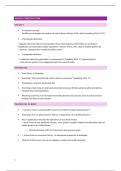
Theory construction
Focus: toepassen van een theorie en creatief omgaan met
- Examen: Engels + open boek
➢ 30% individuele paper 20% groepspresentatie 50% examen
➢ Reader: vertalingen → rest enkel aanduiden
- Theorie: verschil in definiëring van concepten (beschrijvingen argumenten toepasbaarheid)
Introduction
Course
About what:
- Nature of theorization within the social sciences
- Centering around crucial elements → essential for social-scientific research
➢ Questions
➢ Concepts
➢ Explanations
- Skill of disciplines and creative theorization examining the theories themselves
Main concepts:
- Conceptual proficiency: ability to formulate and refine research questions, …
- Theoretical acumen: a nuanced understanding of various paradigms and their application
- Methodological expertise: alignment theory and method + challenges of operationalization
- Critical engagement: to encourage students to critically engage with existing scholarship
- Analytical versatility: ability to adapt and apply diverse theoretical tools
General aims: Basic knowledge and skills to ask good social science questions
1. Mastery in formulating research questions and thesis statements
2. Proficiency in positivist theoretical frameworks
3. Expertise in interpretive paradigms
4. Expertise in critical and normative theories
5. Integration of theory and methodology
6. Proficiency in problematization and conceptual operationalization
7. Capacity for innovative research inquiry
8. Comprehensive understanding of levels of analysis and theoretical frameworks
9. Construction of postcolonial theoretical frameworks
10. Colonialism theory and migration
Key objectives:
- Apply insights to real-world situations (application of knowledge)
Content:
1. Defining and formulating question/statement: positive, interpretive and critical theory
2. Level of analysis, postcolonial theoretical framework, migration, integrating method,
problematization and working definition of concept(s)
,Defining a subject matter and formulating a research question/statement
Coming in up with a topic
Own interest: issues (ex. Nationalism), people (ex. Sunni), geography (ex. Sunni), …
Sociologic themes (ex. In the devil wears Prada) = broad topics (ex. Social media, political interest, …)
- Power dynamics and hierarchies → Social class [≈ contrast in background]
- Work culture / Consumer culture and identity
- Agency and structure/ Gender roles
Search:
- Already know but lack of specialization
- About what: place, person, time, object, idea, process, …
- Misunderstandings or different positions
- Related to a job you want
Coming up with research questions
Sources for research questions:
- Personal interest/experience
- Theory // Research literature
- Puzzles: why X despite Y? Howdid X become possible despite Y?
- New developments in society + Social problem
Broad questions:
- Discourse: power dynamics, social stratification, gender roles,
- Yes/no-question, ambiguous terms (ex. Culture: norms, personal, …)
- Narrowing: specify terms/metrics/demographic/geographic/…
➢ Ex. Influenced influenced in her perception of …
Coming up with thesis statement
Thesis statement: main idea supported by evidence that substantiates your claim
1. Identify research question
2. Presenting evidence: support thesis
3. Organizing the argument: introduction – evidence – analyze supporting evidence – conclusion
Construction:
1. Research question
2. Simplify question
3. Take a position ≠ neutral
4. Write it down = Concise articulation of the central argument
Strength of thesis statement:
- Answer of the question
- Challenge or opposing position
- Specificity + ‘so what’
- Support my thesis specifically and without wandering
- Pass “how and why” test
, Comparison:
1. Research question as movie genre
➢ Genre: overall tone and guides → framing the issues
➢ Function: guide, shaping the nature of the narrative
➢ Conceptual framework → theories, empirical data and comparative analysis
2. Thesis statement as movie trailer
➢ Encapsulation main argument and preview
➢ Revealing crucial aspects: main characters, central conflict and hint of the resolution
➢ = Road map: what to expect + answer to the question + interpretation of subject
3. Thesis statement = elevator pitch
➢ Concise: summarize core questions and objectives of the dissertation
➢ Engaging: grabbing attention and makes research relatable
➢ Intriguing: explore reinforcement and challenging stereotypes = nuances approach
➢ Relevant: societal perceptions of intelligence and social competence (applicability)
Research paper
Expectation of academic writing:
- Proof that you understand the material
- Demonstrate use or apply the material (critical engagement)
- Produce a critique of the material, apply it to something else
- Argumentative point
Steps in a paper:
1. Developing a good argument:
➢ Defining the terms
➢ Defining the concepts: with evidence from authors
2. Substantiate the thesis with evidence
➢ Reliability of academic sources
Focus: toepassen van een theorie en creatief omgaan met
- Examen: Engels + open boek
➢ 30% individuele paper 20% groepspresentatie 50% examen
➢ Reader: vertalingen → rest enkel aanduiden
- Theorie: verschil in definiëring van concepten (beschrijvingen argumenten toepasbaarheid)
Introduction
Course
About what:
- Nature of theorization within the social sciences
- Centering around crucial elements → essential for social-scientific research
➢ Questions
➢ Concepts
➢ Explanations
- Skill of disciplines and creative theorization examining the theories themselves
Main concepts:
- Conceptual proficiency: ability to formulate and refine research questions, …
- Theoretical acumen: a nuanced understanding of various paradigms and their application
- Methodological expertise: alignment theory and method + challenges of operationalization
- Critical engagement: to encourage students to critically engage with existing scholarship
- Analytical versatility: ability to adapt and apply diverse theoretical tools
General aims: Basic knowledge and skills to ask good social science questions
1. Mastery in formulating research questions and thesis statements
2. Proficiency in positivist theoretical frameworks
3. Expertise in interpretive paradigms
4. Expertise in critical and normative theories
5. Integration of theory and methodology
6. Proficiency in problematization and conceptual operationalization
7. Capacity for innovative research inquiry
8. Comprehensive understanding of levels of analysis and theoretical frameworks
9. Construction of postcolonial theoretical frameworks
10. Colonialism theory and migration
Key objectives:
- Apply insights to real-world situations (application of knowledge)
Content:
1. Defining and formulating question/statement: positive, interpretive and critical theory
2. Level of analysis, postcolonial theoretical framework, migration, integrating method,
problematization and working definition of concept(s)
,Defining a subject matter and formulating a research question/statement
Coming in up with a topic
Own interest: issues (ex. Nationalism), people (ex. Sunni), geography (ex. Sunni), …
Sociologic themes (ex. In the devil wears Prada) = broad topics (ex. Social media, political interest, …)
- Power dynamics and hierarchies → Social class [≈ contrast in background]
- Work culture / Consumer culture and identity
- Agency and structure/ Gender roles
Search:
- Already know but lack of specialization
- About what: place, person, time, object, idea, process, …
- Misunderstandings or different positions
- Related to a job you want
Coming up with research questions
Sources for research questions:
- Personal interest/experience
- Theory // Research literature
- Puzzles: why X despite Y? Howdid X become possible despite Y?
- New developments in society + Social problem
Broad questions:
- Discourse: power dynamics, social stratification, gender roles,
- Yes/no-question, ambiguous terms (ex. Culture: norms, personal, …)
- Narrowing: specify terms/metrics/demographic/geographic/…
➢ Ex. Influenced influenced in her perception of …
Coming up with thesis statement
Thesis statement: main idea supported by evidence that substantiates your claim
1. Identify research question
2. Presenting evidence: support thesis
3. Organizing the argument: introduction – evidence – analyze supporting evidence – conclusion
Construction:
1. Research question
2. Simplify question
3. Take a position ≠ neutral
4. Write it down = Concise articulation of the central argument
Strength of thesis statement:
- Answer of the question
- Challenge or opposing position
- Specificity + ‘so what’
- Support my thesis specifically and without wandering
- Pass “how and why” test
, Comparison:
1. Research question as movie genre
➢ Genre: overall tone and guides → framing the issues
➢ Function: guide, shaping the nature of the narrative
➢ Conceptual framework → theories, empirical data and comparative analysis
2. Thesis statement as movie trailer
➢ Encapsulation main argument and preview
➢ Revealing crucial aspects: main characters, central conflict and hint of the resolution
➢ = Road map: what to expect + answer to the question + interpretation of subject
3. Thesis statement = elevator pitch
➢ Concise: summarize core questions and objectives of the dissertation
➢ Engaging: grabbing attention and makes research relatable
➢ Intriguing: explore reinforcement and challenging stereotypes = nuances approach
➢ Relevant: societal perceptions of intelligence and social competence (applicability)
Research paper
Expectation of academic writing:
- Proof that you understand the material
- Demonstrate use or apply the material (critical engagement)
- Produce a critique of the material, apply it to something else
- Argumentative point
Steps in a paper:
1. Developing a good argument:
➢ Defining the terms
➢ Defining the concepts: with evidence from authors
2. Substantiate the thesis with evidence
➢ Reliability of academic sources