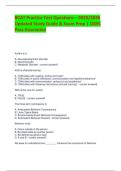
BCAT Practice Test Questions – 2025/2026
Updated Study Guide & Exam Prep | 100%
Pass Guarantee
Autism is a:
A. Neurodevelopment Disorder
B. Mood Disorder
C. Metabolic Disorder - correct answerA
ASD is characterized by:
A. "Difficulties with reading, writing and math"
B. "Difficulties in social interaction, communication and repetitive behaviors"
C. "Difficulties with communication, acting out and academics"
D. "Difficulties with following instructions and self harming" - correct answerB
ABA is the cure for autism
A. TRUE
B. FALSE - correct answerB
The three term contingency is
A. Antecedent-Behavior-Consequence
B. Lions-Tigers-Bears
C. Environmental Event-Behavior-Consequence
D. Antecedent-Behavior-Reward - correct answerA
Behavior must:
A. Occur outside of the person
B. Be observable by another person
C. Be defined as good or bad
D. A and B - correct answerD
We seek to understand how ________ influence the occurrence of behavior
,A. Everything
B. Private Events
C. Environmental events
D. Rewards - correct answerC
Which is not an area we would work on with our clients?
A. Hitting classmates
B. Communication
C. Feeling Angry
D. Difficulties with social interaction - correct answerC
Frequency is:
A. The length of time it takes to START a behavior after the instruction is given
B. Assigning numbers to different prompt levels
C. The number of times the behavior occurs
D. The length of time that a behavior occurs - correct answerC
ABC Data
A. "Records the antecedent, behavior and consequence of problem behaviors"
B. Is when target behaviors occur
C. The length of time a behavior occurs
D. The ratio of number of times a behavior occurs per unit of time - correct answerA
Whole-Interval Time Sampling
A. "Records the antecedent, behavior and consequence of problem behaviors"
B. The target behavior is recorded as a (+) if occurs throughout the entire interval
C. The length of time a behavior occurs
D. The length of time it takes to START a behavior - correct answerB
Rate
A. The behavior is recorded as a (+) if occurs at least once at any point during the
interval
B. The number of times the behavior occurs
C. Assigns numbers to different prompt levels
D. The ratio of number of times a behavior occurs per unit of time - correct answerD
Percent
A. Count of Behavior/number of opportunities X 100
B. The ratio of number of times a behavior occurs per unit of time
, C. The number of times the behavior occurs
D. The length of time that a behavior occurs - correct answerA
Scatterplot
A. The length of time a behavior occurs
B. The number of times the behavior occurs
C. When the target behavior occurs
D. The behavior is recorded as a (+) if occurs at least once at any point during the
interval - correct answerC
Duration
A. The ratio of number of times a behavior occurs per unit of time
B. The length of time it takes to START a behavior after the instruction is given"
C. The number of times the behavior occurs
D. The length of time a behavior occurs - correct answerD
Prompt Level
A. When the target behavior occurs
B. Assigning numbers to different prompt levels
C. Count of Behavior/number of opportunities X 100
D. "Records the antecedent, behavior and consequence of problem behaviors" - correct
answerB
Partial Interval Time Sampling
A. The behavior is recorded as a (+) if occurs at least once at any point during the
interval
B. The target behavior is recorded as a (+) if occurs throughout the entire interval
C. The time it takes to START a behavior after the instruction is given
D. The number of times a behavior occurs - correct answerA
Latency
A. The length of time that a behavior occurs
B. When the behavior occurs
C. The length of time it takes to START a behavior after the instruction is given
D. Count of behavior/number of opportunities X100 - correct answerC
Positive reinforcement is when you add a stimulus to the environment to increase the
future frequency of that behavior.
A. TRUE
B. FALSE - correct answerA
Updated Study Guide & Exam Prep | 100%
Pass Guarantee
Autism is a:
A. Neurodevelopment Disorder
B. Mood Disorder
C. Metabolic Disorder - correct answerA
ASD is characterized by:
A. "Difficulties with reading, writing and math"
B. "Difficulties in social interaction, communication and repetitive behaviors"
C. "Difficulties with communication, acting out and academics"
D. "Difficulties with following instructions and self harming" - correct answerB
ABA is the cure for autism
A. TRUE
B. FALSE - correct answerB
The three term contingency is
A. Antecedent-Behavior-Consequence
B. Lions-Tigers-Bears
C. Environmental Event-Behavior-Consequence
D. Antecedent-Behavior-Reward - correct answerA
Behavior must:
A. Occur outside of the person
B. Be observable by another person
C. Be defined as good or bad
D. A and B - correct answerD
We seek to understand how ________ influence the occurrence of behavior
,A. Everything
B. Private Events
C. Environmental events
D. Rewards - correct answerC
Which is not an area we would work on with our clients?
A. Hitting classmates
B. Communication
C. Feeling Angry
D. Difficulties with social interaction - correct answerC
Frequency is:
A. The length of time it takes to START a behavior after the instruction is given
B. Assigning numbers to different prompt levels
C. The number of times the behavior occurs
D. The length of time that a behavior occurs - correct answerC
ABC Data
A. "Records the antecedent, behavior and consequence of problem behaviors"
B. Is when target behaviors occur
C. The length of time a behavior occurs
D. The ratio of number of times a behavior occurs per unit of time - correct answerA
Whole-Interval Time Sampling
A. "Records the antecedent, behavior and consequence of problem behaviors"
B. The target behavior is recorded as a (+) if occurs throughout the entire interval
C. The length of time a behavior occurs
D. The length of time it takes to START a behavior - correct answerB
Rate
A. The behavior is recorded as a (+) if occurs at least once at any point during the
interval
B. The number of times the behavior occurs
C. Assigns numbers to different prompt levels
D. The ratio of number of times a behavior occurs per unit of time - correct answerD
Percent
A. Count of Behavior/number of opportunities X 100
B. The ratio of number of times a behavior occurs per unit of time
, C. The number of times the behavior occurs
D. The length of time that a behavior occurs - correct answerA
Scatterplot
A. The length of time a behavior occurs
B. The number of times the behavior occurs
C. When the target behavior occurs
D. The behavior is recorded as a (+) if occurs at least once at any point during the
interval - correct answerC
Duration
A. The ratio of number of times a behavior occurs per unit of time
B. The length of time it takes to START a behavior after the instruction is given"
C. The number of times the behavior occurs
D. The length of time a behavior occurs - correct answerD
Prompt Level
A. When the target behavior occurs
B. Assigning numbers to different prompt levels
C. Count of Behavior/number of opportunities X 100
D. "Records the antecedent, behavior and consequence of problem behaviors" - correct
answerB
Partial Interval Time Sampling
A. The behavior is recorded as a (+) if occurs at least once at any point during the
interval
B. The target behavior is recorded as a (+) if occurs throughout the entire interval
C. The time it takes to START a behavior after the instruction is given
D. The number of times a behavior occurs - correct answerA
Latency
A. The length of time that a behavior occurs
B. When the behavior occurs
C. The length of time it takes to START a behavior after the instruction is given
D. Count of behavior/number of opportunities X100 - correct answerC
Positive reinforcement is when you add a stimulus to the environment to increase the
future frequency of that behavior.
A. TRUE
B. FALSE - correct answerA