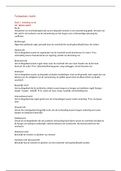
Summary Biophysics notes for medical study
Notes for following biophysical topics for medical study 1. Nature and subject of biophysics. Biophysics subareas. 2. Molecular structure of biological systems. Microphysical and macrophysical behavior. Anisotropy. Intramolecular bonds. 3. Subjects of thermodynamics, basic thermodynamic terms: thermodynamic system, variables, state, thermodynamic equilibrium, conjugate variables and thermodynamic process. 4. Equilibrium thermodynamics. First law of thermodynamics. Mathematical formulation of the first law. Limitations of the first law. 5. Second law of thermodynamics. Phenomenological definition of entropy. 6. Order and probability. Thermodynamic probability and entropy. Boltzmann equation of entropy. 7. Information and entropy. Statistical definition of entropy. Shannon relation of information content. Maxwell’s demon. 8. Thermodynamic potentials: internal energy and enthalpy. 9. Thermodynamic potentials: Helmholtz and Gibbs free energy. 10. Chemical and electrochemical potentials. First law of thermodynamics for open systems 11. Linear non-equilibrium thermodynamics Definition and basic terms. Force and motion. Phenomenological coefficients. Conjugated fluxes. 12. Stationary state. Dissipative function. Entropy and stability. Steady state. 13. Biological structures: general aspects. 14. Bioenergetics. Energy. Metabolism. Oxidation as a source of metabolic energy. ATP and energy transduction. Mechanism of coupling the oxidative– phosphorylation reactions. 15. A kinetic study of acid-catalyzed sucrose hydrolysis. 16. Cell membranes. Plasma membrane. Internal membranes. Lipid bilayer – unit membrane. Membrane functions. 17. Biological Membranes. Membrane lipids: the supporting structure. Phospholipids, glycolipids and cholesterol. Membrane proteins – categories and functions. Membrane dynamics. Cholesterol effects on membrane fluidity. 18. Molecular (size exclusion) chromatography: determination of molecular masses. 19. Thin-layer chromatography: qualitative analysis of membrane lipids. 20. Paper electrophoresis: separation of proteins. 21. Transport of matter across cell membranes – classification on the basis of transport mechanism, energy supply, number of transported species and direction of their translocation, and trans-membrane potential changes. 22. Model membranes: preparation of hemosomes. 23. Absorption spectrophotometry: studying acid hemolysis of erythrocytes. 24. Free diffusion of non-charged particles. Fick's law. 25. Free diffusion of charged particles. Nernst-Planck molar flux equation. 26. Simple diffusion through membranes. Permeability. Page 2 of 4 pages 27. Transport of water through membranes. Filtration and osmosis. 28. Biophysics of hemodialysis: transport of urea across a semipermeable membrane. 29. Facilitated diffusion: transport by carrier proteins. Saturability and specificity - important characteristics of the membrane transport systems. 30. Facilitated diffusion: transport by channels and pores. Three examples of pores important for cellular physiology. Ionophores. 31. Primary active transport: sodium-potassium ATP-ase. Putative structure of sodium-potassium pump. Basic steps of ion transport process. 32. Primary active transport: calcium ATP-ase. Putative structure of calcium pump. Basic steps of ion transport process. 33. Secondary (ion gradient-driven) active transport. Glucose transport in the intestinal epithelium. 34. Lactose permease. Putative mechanism of lactose transport in E. coli. 35. Microelectrophoresis: determination of electrokinetic (zeta) potential. 36. Diffusion potential. The Henderson equation. Time dependence of diffusion potential 37. Membrane (equilibrium) potential. The Nernst equation. 38. Donnan potential. Approach to electrical and chemical equilibrium. Gibbs- Donnan equation. Osmotic consequences of the Gibbs-Donnan equilibrium. 39. Generation of resting membrane potential. The Goldman and Thomas equations. Factors contributing to the resting potential. 40. Generation of action potential. Voltage-gated channels. Saltatory conduction. 41. Free radical biology – basic terms. Free radical reactions. Classification. Chemical reactivity of free radicals. 42. Sources of free radical generation in human body. 43. Superoxide and singlet oxygen – generation and properties. 44. Initiation and propagation of lipid peroxidation. 45. Decomposition and termination stages of lipid peroxidation. Metal ions and the peroxidation processes. 46. Copper-induced superoxide production in erythrocytes. Page 3 of 4 pages FORM EXAMINATION SYNOPSIS Index: FO - 04.01.01 - 02 Issue: P - 02 Date: 06.02.2013 Page 4 of 4 pages 47. Lipid peroxidation: measuring malonedialdehyde concentration. 48. Singlet oxygen – generation and role in living systems. 49. Consequences of free-radical processes in living systems. 50. Enzymatic antioxidants. 51. Non-enzymatic antioxidants. 52. Lipid peroxidation and toxicology. Contribution of oxidative stress to atherosclerosis. 53. The importance of oxidative stress in the development of nervous system injury.
Escuela, estudio y materia
- Institución
- Upstate Medical University
- Grado
- Biophysics
Información del documento
- Subido en
- 29 de enero de 2021
- Número de páginas
- 61
- Escrito en
- 2020/2021
- Tipo
- Resumen
Temas
-
biophysics
-
medicine
-
physics
-
medical physics