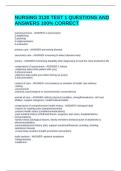
NURSING 3120 TEST 1 QUESTIONS AND
ANSWERS 100% CORRECT
nursing process - ANSWER-1.assessment
2.diagnosing
3.planning
4.implementation
5.evaluation
primary care - ANSWER-preventing disease
secondary care - ANSWER-screening to detect disease early
tertiary - ANSWER-minimizing disability after diagnosing to lead the most productive life
components of assessment - ANSWER-1.history
-subjective data (what patient tells you)
2.physical exam
-objective data (what you collect during an exam)
3.documentation
context of care - ANSWER--circumstance or situation of health care delivery
-setting
-environment
-physical, psychological or socioeconomic circumstances
portrait of care - ANSWER-reflects physical condition, strength/weakness, self care
abilities, support caregivers, health/cultural beliefs
components of comprehensive health history - ANSWER--biological data
-reason for seeking care (symptoms/events)
-present health status (conditions/medications)
-past medical history (childhood illness, surgeries, last exam, hospitalizations,
immunizations)
-family history (biological factors, family members disease/cause of death/who is
alive/comorbidities
-personal/physical history (diet, support emotional/financial, smoking, drinking,
substance misuse)
-review body systems (health promotion/ prevention)
body systems - ANSWER--general symptoms
-integumentary
-head/neck
,-chest/breasts
-respiratory
-cardiovascular
-GI/GU
-reproductive
-musculoskeletal
-neurological
thermometers - ANSWER--electronic
-tympanic (ear)
-temporal artery (forehead, accurate)
palpation - ANSWER--feel texture, shape of body parts
-identify pain/tender area
percussion - ANSWER--detects tenderness
-determines fluid in body cavity
-direct (strike finger, tap finger over body)
-indirect (both hand used to perform rapid striking motion)
percussion tones - ANSWER-1.tympany
2.resonance
3.hyperresonance
4.dullness
5.flatness
tympany percussion tone - ANSWER-abdomen
-loud/high noise
resonance percussion tone - ANSWER-normal lung tissue
hyperresonance percussion tone - ANSWER-expanded lung tissue
-emphysema
dullnesses percussion tone - ANSWER-liver
flatness percussion tone - ANSWER-bones/muscles
auscultation - ANSWER-listen to the sounds in the human body (intensity, pitch,
duration, quality)
-use stethoscope
diaphragm of stethoscope - ANSWER--flat with rubber ring
-for high pitched sounds like breath/heart/bowel sounds
bell of stethoscope - ANSWER--concave part of head on skin
, -for low pitch sounds like extra heart sounds or vascular sounds (bruit)
pulse oximetry - ANSWER--very accurate way to measure arterial oxygenation
saturation in blood
shellen chart - ANSWER-eye test on wall 20 feet from patient
Rosenbaum test - ANSWER-visual acuity test for near-vision examination
-patient hold chart 14 inches away and test one eye at a time
ophthalmoscope - ANSWER-inspects internal eye structure
-test patient's one eye with opposite eye (inspect left eye with right eye)
otoscope - ANSWER-inspects external auditory canal and tympanic membrane
penlight - ANSWER-light source for inspection to look inside mouth, nose, assess a
wound closer or evaluate pupil constriction
nasal speculum - ANSWER-spreads nares open for assessment
tuning fork - ANSWER-for auditory assessment and vibratory sensation
-strike on hand to get vibration
percussion/reflex hammer - ANSWER-tests deep tendon reflexes
doppler machine - ANSWER-uses ultrasound waves to detect difficult to hear vascular
sounds
-warm gel on skin to hear blood flow
goniometer - ANSWER-measures degree of extension/flexion of a joint
skin fold thickness assessment - ANSWER-calipers measure thickness of SQ tissue to
amount of body fat
-BMI better assessment
-mostly on posterior tricep
audioscope - ANSWER--screens for hearing
-patient raises hand when hearing described tones
monofilament - ANSWER-assesses lower extremity sensation
-determines decreased peripheral sensation
transilluminator - ANSWER-differentiates tissue and fluid in a cavity
wood's lamp - ANSWER-black light over skin that identifies fungal infections (light
makes skin yellow-green when present)
ANSWERS 100% CORRECT
nursing process - ANSWER-1.assessment
2.diagnosing
3.planning
4.implementation
5.evaluation
primary care - ANSWER-preventing disease
secondary care - ANSWER-screening to detect disease early
tertiary - ANSWER-minimizing disability after diagnosing to lead the most productive life
components of assessment - ANSWER-1.history
-subjective data (what patient tells you)
2.physical exam
-objective data (what you collect during an exam)
3.documentation
context of care - ANSWER--circumstance or situation of health care delivery
-setting
-environment
-physical, psychological or socioeconomic circumstances
portrait of care - ANSWER-reflects physical condition, strength/weakness, self care
abilities, support caregivers, health/cultural beliefs
components of comprehensive health history - ANSWER--biological data
-reason for seeking care (symptoms/events)
-present health status (conditions/medications)
-past medical history (childhood illness, surgeries, last exam, hospitalizations,
immunizations)
-family history (biological factors, family members disease/cause of death/who is
alive/comorbidities
-personal/physical history (diet, support emotional/financial, smoking, drinking,
substance misuse)
-review body systems (health promotion/ prevention)
body systems - ANSWER--general symptoms
-integumentary
-head/neck
,-chest/breasts
-respiratory
-cardiovascular
-GI/GU
-reproductive
-musculoskeletal
-neurological
thermometers - ANSWER--electronic
-tympanic (ear)
-temporal artery (forehead, accurate)
palpation - ANSWER--feel texture, shape of body parts
-identify pain/tender area
percussion - ANSWER--detects tenderness
-determines fluid in body cavity
-direct (strike finger, tap finger over body)
-indirect (both hand used to perform rapid striking motion)
percussion tones - ANSWER-1.tympany
2.resonance
3.hyperresonance
4.dullness
5.flatness
tympany percussion tone - ANSWER-abdomen
-loud/high noise
resonance percussion tone - ANSWER-normal lung tissue
hyperresonance percussion tone - ANSWER-expanded lung tissue
-emphysema
dullnesses percussion tone - ANSWER-liver
flatness percussion tone - ANSWER-bones/muscles
auscultation - ANSWER-listen to the sounds in the human body (intensity, pitch,
duration, quality)
-use stethoscope
diaphragm of stethoscope - ANSWER--flat with rubber ring
-for high pitched sounds like breath/heart/bowel sounds
bell of stethoscope - ANSWER--concave part of head on skin
, -for low pitch sounds like extra heart sounds or vascular sounds (bruit)
pulse oximetry - ANSWER--very accurate way to measure arterial oxygenation
saturation in blood
shellen chart - ANSWER-eye test on wall 20 feet from patient
Rosenbaum test - ANSWER-visual acuity test for near-vision examination
-patient hold chart 14 inches away and test one eye at a time
ophthalmoscope - ANSWER-inspects internal eye structure
-test patient's one eye with opposite eye (inspect left eye with right eye)
otoscope - ANSWER-inspects external auditory canal and tympanic membrane
penlight - ANSWER-light source for inspection to look inside mouth, nose, assess a
wound closer or evaluate pupil constriction
nasal speculum - ANSWER-spreads nares open for assessment
tuning fork - ANSWER-for auditory assessment and vibratory sensation
-strike on hand to get vibration
percussion/reflex hammer - ANSWER-tests deep tendon reflexes
doppler machine - ANSWER-uses ultrasound waves to detect difficult to hear vascular
sounds
-warm gel on skin to hear blood flow
goniometer - ANSWER-measures degree of extension/flexion of a joint
skin fold thickness assessment - ANSWER-calipers measure thickness of SQ tissue to
amount of body fat
-BMI better assessment
-mostly on posterior tricep
audioscope - ANSWER--screens for hearing
-patient raises hand when hearing described tones
monofilament - ANSWER-assesses lower extremity sensation
-determines decreased peripheral sensation
transilluminator - ANSWER-differentiates tissue and fluid in a cavity
wood's lamp - ANSWER-black light over skin that identifies fungal infections (light
makes skin yellow-green when present)