Summary The student’s guide to cognitive neuroscience
hoofdstuk 2, pp 15-29
hoofdstuk 16, pp 407-429
hoofdstuk 3, pp 31-47
hoofdstuk 4, pp 49-57 tot 'From image to cognitive theory'
hoofdstuk 8, pp 165-194
hoofdstuk 10, pp 232-257
hoofdstuk 7, pp 135-163
hoofdstuk 9, pp 195-229
hoofdstuk 14, pp 345-371
hoofdstuk 15, pp 373-406.
, Chapter 2: Introducing the brain (p. 15-29)
Structure and function of the neuron
Neurons = cell that makes up the nervous system and supports cognitive function.
Cell body = contains the nucleus and other organelles.
Dendrites = carry information from other neurons.
Axon = carry information to other neurons and transmists an action potential.
Synapse = small gap between neurons in which neurotransmitters are released.
Action potential = depolarization and repolarization in the electrical properties of the neuron
membrane in an axon.
Neurotransmitters = Chemical signals that are released by one neuron and affect the properties of
other neurons.
Electrical signaling and the action potential
Rustpotentiaal
Intracellulair Kalium + (potassium) (in rust Eiwit -
open)
Extracellulair Natrium + (sodium) (in rust Chloride -
gesloten)
Gevolg In rust gaat positieve kalium Doordat positieve kalium in
van binnen naar buiten, rust naar buiten gaat, blijft
rustpotentiaal van -70mV het binnen de cel
negatiever dan buiten
Actiepotentiaal
Alleen spiercellen en zenuwcellen kunnen actiepotentialen genereren.
Stap 1: Een prikkel uit een zenuwcel of zintuigcel
gaat naar het celmembraan van een axon
Stap 2: Natriumkanaal gaat open, positief Natrium Binnen het celmembraan wordt de lading positiever
stroomt van buiten het celmembraan naar binnen (depolarisatie)
Stap 3: Drempelwaarde wordt overschreden Verschil kan oplopen tot +30mV. Drempelwaarde (-
50mV) wordt overschreden > dit is de actiepotentiaal
Stap 4: Kaliumkanaal gaat verder open Kalium stroomt uit de cel, waardoor cel minder
positief wordt. Hierdoor sluit natriumkanaal
(repolarisatie)
Stap 5: Rustpotentiaal herstelt Kalium stroomt net zo lang naar buiten tot er weer
een verschil is van -70mV.
Doordat Kalium nog even doorwerkt wordt de cel
extra negatief (hyperpolarisatie).
Myelin = fatty substance deposited around the axon, speeds conduction.
Chemical signaling and the postsynaptic neuron
Receptors in the membrane of the postsynaptic neurons bind to the neurotransmitters.
Some neurotransmitters (GABA) have inhibitory effect by making the inside of the neuron more
negative. Others (acetylcholine) have excitatory effects.
,How do neurons code information?
Amplitude of an action potential does not vary, but the number of action potentials per second
(spiking rate) does vary.
The gross organization of the brain
Gray matter, white matter and cerebrospinal fluid
Gray matter = consisting of neural cell bodies (cerebral cortex).
White matter = consisting of axons and support/glia cells (beneath cerebral cortex and subcortex)
Glia = support cells involved in tissue repair and formation of myelin.
Three different types of white matter tract:
Association tract = cortical within hemisphere
Commisure = cortical between hemispheres
Projection tract = cortical to subcortical.
Most important commissure is Corpus callosum = white matter tract that connects the two
hemispheres.
Ventricles = four hollow chambers of the brain that contain cerebrospinal fluid (CSF), which serves
non-cognitive functions such as carrying metabolites and providing cushion for the brain.
, A hierarchical view of the central nervous system
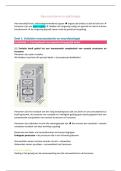
1. Cerebrale cortex
2. Pariëtaalkwab
3. Limbisch system
4. Hippocampus
5. Basale ganglia
6. Globus pallidus
7. Diëncefalon
8. Middenbrein ('Midbrain')
9. Pons
Terms of reference and section
Anterior = front. Posterior = back.
Superior/Dorsal = towards top. Inferior/Ventral = towards bottom.
Lateral = outer part. Medial = in/toward middle.
hoofdstuk 2, pp 15-29
hoofdstuk 16, pp 407-429
hoofdstuk 3, pp 31-47
hoofdstuk 4, pp 49-57 tot 'From image to cognitive theory'
hoofdstuk 8, pp 165-194
hoofdstuk 10, pp 232-257
hoofdstuk 7, pp 135-163
hoofdstuk 9, pp 195-229
hoofdstuk 14, pp 345-371
hoofdstuk 15, pp 373-406.
, Chapter 2: Introducing the brain (p. 15-29)
Structure and function of the neuron
Neurons = cell that makes up the nervous system and supports cognitive function.
Cell body = contains the nucleus and other organelles.
Dendrites = carry information from other neurons.
Axon = carry information to other neurons and transmists an action potential.
Synapse = small gap between neurons in which neurotransmitters are released.
Action potential = depolarization and repolarization in the electrical properties of the neuron
membrane in an axon.
Neurotransmitters = Chemical signals that are released by one neuron and affect the properties of
other neurons.
Electrical signaling and the action potential
Rustpotentiaal
Intracellulair Kalium + (potassium) (in rust Eiwit -
open)
Extracellulair Natrium + (sodium) (in rust Chloride -
gesloten)
Gevolg In rust gaat positieve kalium Doordat positieve kalium in
van binnen naar buiten, rust naar buiten gaat, blijft
rustpotentiaal van -70mV het binnen de cel
negatiever dan buiten
Actiepotentiaal
Alleen spiercellen en zenuwcellen kunnen actiepotentialen genereren.
Stap 1: Een prikkel uit een zenuwcel of zintuigcel
gaat naar het celmembraan van een axon
Stap 2: Natriumkanaal gaat open, positief Natrium Binnen het celmembraan wordt de lading positiever
stroomt van buiten het celmembraan naar binnen (depolarisatie)
Stap 3: Drempelwaarde wordt overschreden Verschil kan oplopen tot +30mV. Drempelwaarde (-
50mV) wordt overschreden > dit is de actiepotentiaal
Stap 4: Kaliumkanaal gaat verder open Kalium stroomt uit de cel, waardoor cel minder
positief wordt. Hierdoor sluit natriumkanaal
(repolarisatie)
Stap 5: Rustpotentiaal herstelt Kalium stroomt net zo lang naar buiten tot er weer
een verschil is van -70mV.
Doordat Kalium nog even doorwerkt wordt de cel
extra negatief (hyperpolarisatie).
Myelin = fatty substance deposited around the axon, speeds conduction.
Chemical signaling and the postsynaptic neuron
Receptors in the membrane of the postsynaptic neurons bind to the neurotransmitters.
Some neurotransmitters (GABA) have inhibitory effect by making the inside of the neuron more
negative. Others (acetylcholine) have excitatory effects.
,How do neurons code information?
Amplitude of an action potential does not vary, but the number of action potentials per second
(spiking rate) does vary.
The gross organization of the brain
Gray matter, white matter and cerebrospinal fluid
Gray matter = consisting of neural cell bodies (cerebral cortex).
White matter = consisting of axons and support/glia cells (beneath cerebral cortex and subcortex)
Glia = support cells involved in tissue repair and formation of myelin.
Three different types of white matter tract:
Association tract = cortical within hemisphere
Commisure = cortical between hemispheres
Projection tract = cortical to subcortical.
Most important commissure is Corpus callosum = white matter tract that connects the two
hemispheres.
Ventricles = four hollow chambers of the brain that contain cerebrospinal fluid (CSF), which serves
non-cognitive functions such as carrying metabolites and providing cushion for the brain.
, A hierarchical view of the central nervous system
1. Cerebrale cortex
2. Pariëtaalkwab
3. Limbisch system
4. Hippocampus
5. Basale ganglia
6. Globus pallidus
7. Diëncefalon
8. Middenbrein ('Midbrain')
9. Pons
Terms of reference and section
Anterior = front. Posterior = back.
Superior/Dorsal = towards top. Inferior/Ventral = towards bottom.
Lateral = outer part. Medial = in/toward middle.