Arguments
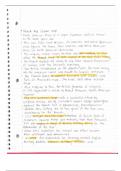
- Argument: A collection of sentences that attempt to establish that some conclusion is
true.
- Conclusion: The sentence you are trying to convince people of.
- Premises: The statements which are supposed to support the conclusion, or
constitute good reasons for believing the conclusion.
- Two properties of arguments: Validity and Soundness.
- An argument is valid if its conclusion follows from its premises. In other words, for valid
arguments, if the premises are true, then the conclusion must be true.
- A valid argument may have false premises.
- An argument is sound if it is valid and the premises are all true.
- Arguments are NOT true or false - they are valid or invalid, sound or unsound.
- It is sentences that can be true or false.
- Example:
1. All men are mortal. 2. Socrates is a man. 3. Therefore, Socrates is mortal. = VALID
1. All men are mortal. 2. Baby Yoda is not a man. 3. Therefore, Baby Yoda is not mortal.
= INVALID
1. All men are mortal. 2. Baby Yoda is a man. 3. Therefore, Baby Yoda is mortal. =
VALID but NOT SOUND (he is not a man).
- True: A sound argument is a valid argument with true premises.
- True: If the premises of a valid argument are true, it is impossible for the conclusion to
be false.
- False: All valid arguments are sound.
- True: The conclusion of a valid argument could be false.
- False: If the premises and conclusion of an argument are all true, then the argument
must be sound.
- False: If the premises of a valid argument are false, the conclusion must also be false.
Arguments in Ethics
- Can we prove things in ethics?
- Compare with science.
- The data we will use: our intuitions about simple situations.
- We will assume these are reliable.
- The general strategy: Use our intuitions about simple situations to infer conclusions
about complicated situations.
Arguments by Analogy
- Two steps:
1) Appeal to an intuition about a simple, uncontroversial case, and then
2) Argue that some more complicated, controversial case is the same in all morally
relevant respects. Since the cases are the same in all morally relevant respects,
we should draw the same moral conclusion about each case.
- The arguments go something like this:
1) Action A is morally wrong.
2) Action B is morally analogous wrong to Action A.
3) Therefore action B is morally wrong.
- Argument: A collection of sentences that attempt to establish that some conclusion is
true.
- Conclusion: The sentence you are trying to convince people of.
- Premises: The statements which are supposed to support the conclusion, or
constitute good reasons for believing the conclusion.
- Two properties of arguments: Validity and Soundness.
- An argument is valid if its conclusion follows from its premises. In other words, for valid
arguments, if the premises are true, then the conclusion must be true.
- A valid argument may have false premises.
- An argument is sound if it is valid and the premises are all true.
- Arguments are NOT true or false - they are valid or invalid, sound or unsound.
- It is sentences that can be true or false.
- Example:
1. All men are mortal. 2. Socrates is a man. 3. Therefore, Socrates is mortal. = VALID
1. All men are mortal. 2. Baby Yoda is not a man. 3. Therefore, Baby Yoda is not mortal.
= INVALID
1. All men are mortal. 2. Baby Yoda is a man. 3. Therefore, Baby Yoda is mortal. =
VALID but NOT SOUND (he is not a man).
- True: A sound argument is a valid argument with true premises.
- True: If the premises of a valid argument are true, it is impossible for the conclusion to
be false.
- False: All valid arguments are sound.
- True: The conclusion of a valid argument could be false.
- False: If the premises and conclusion of an argument are all true, then the argument
must be sound.
- False: If the premises of a valid argument are false, the conclusion must also be false.
Arguments in Ethics
- Can we prove things in ethics?
- Compare with science.
- The data we will use: our intuitions about simple situations.
- We will assume these are reliable.
- The general strategy: Use our intuitions about simple situations to infer conclusions
about complicated situations.
Arguments by Analogy
- Two steps:
1) Appeal to an intuition about a simple, uncontroversial case, and then
2) Argue that some more complicated, controversial case is the same in all morally
relevant respects. Since the cases are the same in all morally relevant respects,
we should draw the same moral conclusion about each case.
- The arguments go something like this:
1) Action A is morally wrong.
2) Action B is morally analogous wrong to Action A.
3) Therefore action B is morally wrong.