Day 1 Law Notes U.S. Constitutional Law/Search and Seizure 4 th Amendment
U.S. Constitutional Law
EPO #1: Identify and discuss the history and purpose of the federalist system of government.
3 Systems of gov’t: Unitary System (Fed Power), Confederate (State), Federalist System (U.S.)
13 colonies under British unitary control, colonist felt their rights were violated and no
representation. Colonists establish The First Continental Congress Sept 5, 1774.
Continental Congress believed King George’s rule to be tyrannical and declared independency.
Declaration of Independence
Articles of Confederation named the “United States of America”.
Constitutional Powers: Wage war, tax & spend, regulate interstate commerce.
No general federal police power, reserved to the states.
Fed power: Military, Indian reservation, VA property, D.C.
EPO #2: Identify and discuss the Articles of the Constitution.
Preamble-establish scope of constitution.
To form a more perfect Union and secure blessings of liberty for future generations.
Article
1 The Legislative Branch: (Congress is a bicameral legislature)
House of Reps: 435, 25y/o, citizen 7 yrs, resident of their state, 2 yr term, speaker of house
Senate: 100, 30 y/o, citizen 9 years, 6 yr term, 1/3 voted every 2 yrs, Vice President over
Congress: vested with power for immigration/naturalization, bankruptcy, money, patients,
lower courts
2 Executive Branch (Power of President): Elected by Electoral College, 35 y/o, natural
citizen, resident of the U.S. for 14 years, 4 yr term, Commander in Chief of the Military
Appoints Ambassadors, Cabinet Secretaries, Federal Judges and Justices, and etc. enters treaties with consent
of Senate, Fills Senate vacancies during recess, can convene Congress, Commission military officers, State of
the Union, may be impeached for “high crimes & misdemeanors”.
3 The Judicial Branch (Supreme Court & Inferior Courts)
Federal Judges appointed for life.
Subject Matter Jurisdiction
Admiralty & Maritime Law, Bankruptcy, & Patents
Cases arising from federal law/violations.
Dispute between residents of different states >$75,000
4 The State and the Feds
Privileges & Immunities, Full Faith and Credit, Congress may admit new states, Republican
Gov’t, Protection from foreign invasion.
5 Amendments
6 The Supremacy Clause
Article 6 consists of three sections, which collectively assert the supremacy of the
Constitution in establishing laws and treaties.
No state laws should overrule federal laws.
,Day 1 Law Notes U.S. Constitutional Law/Search and Seizure 4 th Amendment
7 Ratification
Methods for which states could ratify the Constitution.
EPO #3: Identify individual rights that are enumerated in the Constitution.
Article 1, Section 9:
1- Habeas Corpus- “you may have the body” can report unlawful detention to a court.
Proof of authority and good cause for imprisonment, validity of detention
2- No Bill of Attainder-declaring a person/group of bring guilty of a crime, punish w/o trail.
3- No Ex Post Facto Laws- “after the fact”
EPO #4: Identify various Amendments to the Constitution.
Bill of Rights 1791
1st Freedom of Speech
2nd To keep and bear arms
3rd No Soldier, in time of peace, be quartered in any house w/o consent of the Owner, nor
in time of war
4th Secure in their persons, houses, paper, and effects, against unreasonable searches/
seizures
5th right to a grand jury, forbids “double jeopardy,” and protects against self-
incrimination. “nor be deprived of life, liberty, or property, without due process.
6th Speedy & public trial, impartial jury, assistance of counsel for defense
7th Trial by a jury of his peers in a civil court case. Suits at common law value exceeds
20$, right of trial by jury.
8th Excessive bail not required, excessive fine, nor cruel & unusual punishments
9th The enumeration in the Constitution of certain rights shall not be construed to deny or
disparage others retained by the people. “IDK which amendment so it’s prob this one”
(The rights not specified in the Constitution belong to the people, not the federal
government.)
10th Powers not delegated to the U.S. by the constitution, nor prohibited by it to the States
The Reconstruction Amendments
13th (1865) Abolish slavery/ involuntary servitude unless for punishment for crime
14th (1868) Born/ Naturalized in the U.S. are citizens of the U.S. and states they reside
No state may make or enforce law which would abridge the privileges or immunities
Due Process Clause: May not deprive of life, liberty, or property without due process.
Equal Protection Clause: State may not deny equal protection of its laws
, Day 1 Law Notes U.S. Constitutional Law/Search and Seizure 4 th Amendment
15th (1870) right to citizens to vote shall not be denied because of race, color, or previous
condition of servitude.
Bill of Rights was originally applied to federal gov’t only. During 1900s Supreme Court
decisions interpreted the 14th Amendment as “incorporating” most portions of the Bill of Rights.
Enforceable against the states.
Search and Seizure 4th Amendment
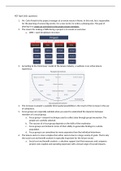
EPO #1: Describe the process for 4 the Amendment analysis
1. Was there state action?
NO YES
Does the action constitute a search with the meaning of the 4th Amendment?
NO YES
Was a warrant issues by a detached magistrate?
NO YES
Is there an exception to warrant requirement? Presumptively Reasonable
Yes – Conduct Search
EPO #2: Identify what constitutes state action
The Constitution applies to gov’t action, not private action.
4th Amendment does not prohibit searches and seizures conducted by private persons.
State actor is:
- a person acting on behalf of a governmental body-publicly paid officer, on/off
duty.
- Any private person acting on the direction of the police
- Private police who are deputized
State actor is not:
- A private person acting on their own free will
- A private security guard/loss prevention
- Private investigator
- Gov’t employee w/o police power, contractor
EPO #3: Identify what constitutes a search within the meaning of the 4 the Amendment
Weeks v. U.S.: Search of home incident to arrest constituted a “search” within the meaning of the
4th amendment- warrant required.
Olmstead v. U.S.: “Search” depends on whether a state-law trespass occurred.
Katz v. U.S.: FBI listening device on phone booth. No trespass, No warrant. Passes Olmstead.
Overturned Olmstead, “reasonable expectation of privacy”
1. Subjective expectation of privacy. (I thought it was private.)
U.S. Constitutional Law
EPO #1: Identify and discuss the history and purpose of the federalist system of government.
3 Systems of gov’t: Unitary System (Fed Power), Confederate (State), Federalist System (U.S.)
13 colonies under British unitary control, colonist felt their rights were violated and no
representation. Colonists establish The First Continental Congress Sept 5, 1774.
Continental Congress believed King George’s rule to be tyrannical and declared independency.
Declaration of Independence
Articles of Confederation named the “United States of America”.
Constitutional Powers: Wage war, tax & spend, regulate interstate commerce.
No general federal police power, reserved to the states.
Fed power: Military, Indian reservation, VA property, D.C.
EPO #2: Identify and discuss the Articles of the Constitution.
Preamble-establish scope of constitution.
To form a more perfect Union and secure blessings of liberty for future generations.
Article
1 The Legislative Branch: (Congress is a bicameral legislature)
House of Reps: 435, 25y/o, citizen 7 yrs, resident of their state, 2 yr term, speaker of house
Senate: 100, 30 y/o, citizen 9 years, 6 yr term, 1/3 voted every 2 yrs, Vice President over
Congress: vested with power for immigration/naturalization, bankruptcy, money, patients,
lower courts
2 Executive Branch (Power of President): Elected by Electoral College, 35 y/o, natural
citizen, resident of the U.S. for 14 years, 4 yr term, Commander in Chief of the Military
Appoints Ambassadors, Cabinet Secretaries, Federal Judges and Justices, and etc. enters treaties with consent
of Senate, Fills Senate vacancies during recess, can convene Congress, Commission military officers, State of
the Union, may be impeached for “high crimes & misdemeanors”.
3 The Judicial Branch (Supreme Court & Inferior Courts)
Federal Judges appointed for life.
Subject Matter Jurisdiction
Admiralty & Maritime Law, Bankruptcy, & Patents
Cases arising from federal law/violations.
Dispute between residents of different states >$75,000
4 The State and the Feds
Privileges & Immunities, Full Faith and Credit, Congress may admit new states, Republican
Gov’t, Protection from foreign invasion.
5 Amendments
6 The Supremacy Clause
Article 6 consists of three sections, which collectively assert the supremacy of the
Constitution in establishing laws and treaties.
No state laws should overrule federal laws.
,Day 1 Law Notes U.S. Constitutional Law/Search and Seizure 4 th Amendment
7 Ratification
Methods for which states could ratify the Constitution.
EPO #3: Identify individual rights that are enumerated in the Constitution.
Article 1, Section 9:
1- Habeas Corpus- “you may have the body” can report unlawful detention to a court.
Proof of authority and good cause for imprisonment, validity of detention
2- No Bill of Attainder-declaring a person/group of bring guilty of a crime, punish w/o trail.
3- No Ex Post Facto Laws- “after the fact”
EPO #4: Identify various Amendments to the Constitution.
Bill of Rights 1791
1st Freedom of Speech
2nd To keep and bear arms
3rd No Soldier, in time of peace, be quartered in any house w/o consent of the Owner, nor
in time of war
4th Secure in their persons, houses, paper, and effects, against unreasonable searches/
seizures
5th right to a grand jury, forbids “double jeopardy,” and protects against self-
incrimination. “nor be deprived of life, liberty, or property, without due process.
6th Speedy & public trial, impartial jury, assistance of counsel for defense
7th Trial by a jury of his peers in a civil court case. Suits at common law value exceeds
20$, right of trial by jury.
8th Excessive bail not required, excessive fine, nor cruel & unusual punishments
9th The enumeration in the Constitution of certain rights shall not be construed to deny or
disparage others retained by the people. “IDK which amendment so it’s prob this one”
(The rights not specified in the Constitution belong to the people, not the federal
government.)
10th Powers not delegated to the U.S. by the constitution, nor prohibited by it to the States
The Reconstruction Amendments
13th (1865) Abolish slavery/ involuntary servitude unless for punishment for crime
14th (1868) Born/ Naturalized in the U.S. are citizens of the U.S. and states they reside
No state may make or enforce law which would abridge the privileges or immunities
Due Process Clause: May not deprive of life, liberty, or property without due process.
Equal Protection Clause: State may not deny equal protection of its laws
, Day 1 Law Notes U.S. Constitutional Law/Search and Seizure 4 th Amendment
15th (1870) right to citizens to vote shall not be denied because of race, color, or previous
condition of servitude.
Bill of Rights was originally applied to federal gov’t only. During 1900s Supreme Court
decisions interpreted the 14th Amendment as “incorporating” most portions of the Bill of Rights.
Enforceable against the states.
Search and Seizure 4th Amendment
EPO #1: Describe the process for 4 the Amendment analysis
1. Was there state action?
NO YES
Does the action constitute a search with the meaning of the 4th Amendment?
NO YES
Was a warrant issues by a detached magistrate?
NO YES
Is there an exception to warrant requirement? Presumptively Reasonable
Yes – Conduct Search
EPO #2: Identify what constitutes state action
The Constitution applies to gov’t action, not private action.
4th Amendment does not prohibit searches and seizures conducted by private persons.
State actor is:
- a person acting on behalf of a governmental body-publicly paid officer, on/off
duty.
- Any private person acting on the direction of the police
- Private police who are deputized
State actor is not:
- A private person acting on their own free will
- A private security guard/loss prevention
- Private investigator
- Gov’t employee w/o police power, contractor
EPO #3: Identify what constitutes a search within the meaning of the 4 the Amendment
Weeks v. U.S.: Search of home incident to arrest constituted a “search” within the meaning of the
4th amendment- warrant required.
Olmstead v. U.S.: “Search” depends on whether a state-law trespass occurred.
Katz v. U.S.: FBI listening device on phone booth. No trespass, No warrant. Passes Olmstead.
Overturned Olmstead, “reasonable expectation of privacy”
1. Subjective expectation of privacy. (I thought it was private.)