Problem 4 – Drugs
Drug mechanisms:
- drugs either facilitate or inhibit transmission at synapses
- antagonist: drug that block a neurotransmitter (high affinity, low efficacy)
→ fails to stimulate a receptor
- agonist: drug that mimics or increases the effects of a neurotransmitter(high affinity, high efficacy)
- affinity: drugs that binds to a receptor – can vary from strong to weak
- efficacy: a drugs tendency to activate receptors -
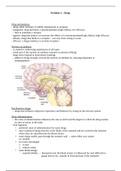
Nucleus accumbens:
- is central to reinforcing experiences of all types
- small part of the nucleus accumbens response to pleasure (liking)
- large areas respond to motivation (wanting)
→ addictive drugs strongly activate the nucleus accumbens by releasing dopamine or
norepinephrine
Psychoactive drugs:
→ drugs that influence subjective experience and behavior by acting on the nervous system
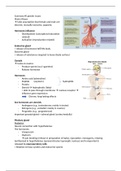
Drug Administration:
→ the route of administration influences the rate at which and the degree to which the drug reaches
its sites of action in the body
- Oral Ingestion
• preferred route of administration for many drugs
• once swallowed drugs dissolve in the fluids of the stomach and are carried to the intestine
where they are absorbed into the blood stream
• some drugs readily pass through the stomach wall → takes effect way sooner
ex. alcohol
• two main advantages
1. is easy
2. relative safety
• main disadvantage:
◦ unpredictability → absorption into the blood stream is influenced by such difficult-to-
gauge factors (ex. amount of food and type in the stomach)
, → drugs that are not readily absorbed from the digestive tract or that are broken down into inactive
metabolites (breakdown products of the body’s chemical reaction) before they can be absorbed
must be taken by some other route
- Injection
• is common in medical practice
• effects are strong fast and predictable
• injections are typically made:
◦ subcutaneously (SC) → into the fatty tissue just beneath the skin
◦ intramusculary (IM) → into the large muscles
◦ intravenously (IV) → directly into veins at points where they run just beneath the skin
• most drug addicted people prefer the intravenous way – bloodstream deliverers drugs
directly to the brain
• after an injection there is little or no opportunity to counteract the effects of an overdose, an
impurity or an allergic reaction
• many drug users develop scar tissue, infections, and collapsed veins
- Inhalation
• are absorbed into the bloodstream through the rich network of capillaries in the lungs
• many anesthetics are typically administered this way
• ex. tobacco or marijuana
• two main short comings
1. it is difficult to precisely regulate the dose of inhaled drugs
2. many substances damage the lungs if they are inhaled chronically
- Absorption Through Mucous Membranes of the
• nose, mouth and rectum
• ex. cocaine’
• damages the nasal membranes for example
Ways in which psychoactive drugs can influence the nervous system:
- once a drug enters the bloodstream it is carried to the blood vessels of the CNS
- the blood-brain barrier makes it difficult for many potentially dangerous bloodborne chemicals to
pass from the blood vessels of the CNS into its neurons
- drugs influence the nervous system in different ways:
• some act diffusely on neural membranes throughout the CNS (alcohol, anestesia)
• others act more specifically:
→ by binding to synaptic receptors
→ by influencing the synthesis, transport, release and deactivation of neurotransmitters
→ by influencing the chain of chemical reactions elicited in postsynaptic neurons by the
activation of their receptors
Drug Metabolism and Elimination
- drug metabolism:
• the actions of most drugs are terminated by enzymes synthesized by the liver
→ these liver enzymes stimulate the conversation of active drugs to nonactive forms
• eliminated a drug’s ability to pass through lipid membranes of cells in many cases
→ so it can no longer penetrate the blood-brain barrier
- small amounts of some psychoactive drugs are passed from the body in urine, sweat, feces, breath
and mothers milk
Drug mechanisms:
- drugs either facilitate or inhibit transmission at synapses
- antagonist: drug that block a neurotransmitter (high affinity, low efficacy)
→ fails to stimulate a receptor
- agonist: drug that mimics or increases the effects of a neurotransmitter(high affinity, high efficacy)
- affinity: drugs that binds to a receptor – can vary from strong to weak
- efficacy: a drugs tendency to activate receptors -
Nucleus accumbens:
- is central to reinforcing experiences of all types
- small part of the nucleus accumbens response to pleasure (liking)
- large areas respond to motivation (wanting)
→ addictive drugs strongly activate the nucleus accumbens by releasing dopamine or
norepinephrine
Psychoactive drugs:
→ drugs that influence subjective experience and behavior by acting on the nervous system
Drug Administration:
→ the route of administration influences the rate at which and the degree to which the drug reaches
its sites of action in the body
- Oral Ingestion
• preferred route of administration for many drugs
• once swallowed drugs dissolve in the fluids of the stomach and are carried to the intestine
where they are absorbed into the blood stream
• some drugs readily pass through the stomach wall → takes effect way sooner
ex. alcohol
• two main advantages
1. is easy
2. relative safety
• main disadvantage:
◦ unpredictability → absorption into the blood stream is influenced by such difficult-to-
gauge factors (ex. amount of food and type in the stomach)
, → drugs that are not readily absorbed from the digestive tract or that are broken down into inactive
metabolites (breakdown products of the body’s chemical reaction) before they can be absorbed
must be taken by some other route
- Injection
• is common in medical practice
• effects are strong fast and predictable
• injections are typically made:
◦ subcutaneously (SC) → into the fatty tissue just beneath the skin
◦ intramusculary (IM) → into the large muscles
◦ intravenously (IV) → directly into veins at points where they run just beneath the skin
• most drug addicted people prefer the intravenous way – bloodstream deliverers drugs
directly to the brain
• after an injection there is little or no opportunity to counteract the effects of an overdose, an
impurity or an allergic reaction
• many drug users develop scar tissue, infections, and collapsed veins
- Inhalation
• are absorbed into the bloodstream through the rich network of capillaries in the lungs
• many anesthetics are typically administered this way
• ex. tobacco or marijuana
• two main short comings
1. it is difficult to precisely regulate the dose of inhaled drugs
2. many substances damage the lungs if they are inhaled chronically
- Absorption Through Mucous Membranes of the
• nose, mouth and rectum
• ex. cocaine’
• damages the nasal membranes for example
Ways in which psychoactive drugs can influence the nervous system:
- once a drug enters the bloodstream it is carried to the blood vessels of the CNS
- the blood-brain barrier makes it difficult for many potentially dangerous bloodborne chemicals to
pass from the blood vessels of the CNS into its neurons
- drugs influence the nervous system in different ways:
• some act diffusely on neural membranes throughout the CNS (alcohol, anestesia)
• others act more specifically:
→ by binding to synaptic receptors
→ by influencing the synthesis, transport, release and deactivation of neurotransmitters
→ by influencing the chain of chemical reactions elicited in postsynaptic neurons by the
activation of their receptors
Drug Metabolism and Elimination
- drug metabolism:
• the actions of most drugs are terminated by enzymes synthesized by the liver
→ these liver enzymes stimulate the conversation of active drugs to nonactive forms
• eliminated a drug’s ability to pass through lipid membranes of cells in many cases
→ so it can no longer penetrate the blood-brain barrier
- small amounts of some psychoactive drugs are passed from the body in urine, sweat, feces, breath
and mothers milk