Problem 2 – Two Sides
Cerebral Lateralization
- Lateralization of function: differences in function between the right and left cerebral hemispheres
- language is the most lateralized of all cognitive abilities – often residing in the left hemisphere
- motor functions seem to be more strongly lateralized than sensory, emotional and cognitive
functions
→ speak production is more strongly lateralized than the understanding of speech
Visual connection to the brain
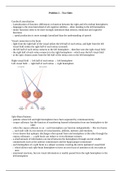
- light from the right half of the visual strikes the left half of each retina, and light from the left
visual field strikes the right half of each retina (crossed)
- the left half of each retina connects to the left hemisphere – therefore sees the right visual field
- the right half of each retina connects to the right hemisphere – which sees the left visual field
- at the optic chiasm axons from the left half of the retina cross to the left hemisphere
Right visual field → left half of each retina → left hemisphere
Left visual field → right half of each retina → right hemisphere
Split-Brain Patients:
- patients whose left and right hemispheres have been separated by commissurotomy
- corpus callosum: has the function of transferring learned information from one hemisphere to the
other
- when the corpus callosum is cut – each hemisphere can function independently – like two brains
→ each side with its own stream of consciousness, abilities, memory and emotions
- it was known that epileptic discharges often spread from one hemisphere to the other through the
corpus collossum → a split brain can reduce or even eliminate seizures
- a small amount of information can travel between the hemispheres through several smaller
commissures such as the anterior commissures and the hippocampal commissure
- each hemisphere of a split brain is a subject scotoma covering the entire ipsilateral visual field
→ which allows each split-brain hemisphere to have its own focus of attention to do two tasks at
once
- emotional reactions, but not visual information is readily passed from the right hemisphere to the
left hemisphere
, - a patients left hemisphere often reacts with the appropriate emotional verbal response to an image
that had been presented to the right hemisphere
→ even though it did not know what the image was like
- when a test objects presented to left hemisphere (right visual field)
→ split brain patients will say what it is and can reach out with their right hand and identify the
object
- when a test object is presented to the right hemisphere either visually (in the left visual field) or
tactually (in the left hand)
→ split brain patient will likely say nothing appeared – since the right hemisphere is aware but
cannot communicate it to the left (speaking) hemisphere
→ but patients left hand can identify objects even though the left hemisphere is unaware of its
identity
Cross-cueing:
- communication between the two cerebral hemispheres of a split-brain patient through an external
route (different from the indirect pathways of the brainstem)
→ Example: when split-brain patients are provided an image to the right hemisphere, they have
trouble verbally reporting what it is. When the right-hemisphere knows the answer, it
can signal (shaking head) that the left-brain's guess was wrong
Helping-hand phenomenon:
- occurs when the two hemispheres are presented with different information about the correct choice
and the are asked to reach out and pick up the correct object from a collection in full view
→ usually the right hand will reach out to pick out what the left hemisphere saw
→ but the right hemisphere seeing what it thinks is an error being made – then causes the left hand
to grab the right hand and pull it over to the other object
Cortical blindness:
- people do see an object they are just not aware of it
The left and the right cerebral hemisphere:
- are entirely separated
→ except for the cerebral commissures connecting them
- are similar in appearance
- the sides have major differences between them in function
- differences are always relative
Cerebral Lateralization
- Lateralization of function: differences in function between the right and left cerebral hemispheres
- language is the most lateralized of all cognitive abilities – often residing in the left hemisphere
- motor functions seem to be more strongly lateralized than sensory, emotional and cognitive
functions
→ speak production is more strongly lateralized than the understanding of speech
Visual connection to the brain
- light from the right half of the visual strikes the left half of each retina, and light from the left
visual field strikes the right half of each retina (crossed)
- the left half of each retina connects to the left hemisphere – therefore sees the right visual field
- the right half of each retina connects to the right hemisphere – which sees the left visual field
- at the optic chiasm axons from the left half of the retina cross to the left hemisphere
Right visual field → left half of each retina → left hemisphere
Left visual field → right half of each retina → right hemisphere
Split-Brain Patients:
- patients whose left and right hemispheres have been separated by commissurotomy
- corpus callosum: has the function of transferring learned information from one hemisphere to the
other
- when the corpus callosum is cut – each hemisphere can function independently – like two brains
→ each side with its own stream of consciousness, abilities, memory and emotions
- it was known that epileptic discharges often spread from one hemisphere to the other through the
corpus collossum → a split brain can reduce or even eliminate seizures
- a small amount of information can travel between the hemispheres through several smaller
commissures such as the anterior commissures and the hippocampal commissure
- each hemisphere of a split brain is a subject scotoma covering the entire ipsilateral visual field
→ which allows each split-brain hemisphere to have its own focus of attention to do two tasks at
once
- emotional reactions, but not visual information is readily passed from the right hemisphere to the
left hemisphere
, - a patients left hemisphere often reacts with the appropriate emotional verbal response to an image
that had been presented to the right hemisphere
→ even though it did not know what the image was like
- when a test objects presented to left hemisphere (right visual field)
→ split brain patients will say what it is and can reach out with their right hand and identify the
object
- when a test object is presented to the right hemisphere either visually (in the left visual field) or
tactually (in the left hand)
→ split brain patient will likely say nothing appeared – since the right hemisphere is aware but
cannot communicate it to the left (speaking) hemisphere
→ but patients left hand can identify objects even though the left hemisphere is unaware of its
identity
Cross-cueing:
- communication between the two cerebral hemispheres of a split-brain patient through an external
route (different from the indirect pathways of the brainstem)
→ Example: when split-brain patients are provided an image to the right hemisphere, they have
trouble verbally reporting what it is. When the right-hemisphere knows the answer, it
can signal (shaking head) that the left-brain's guess was wrong
Helping-hand phenomenon:
- occurs when the two hemispheres are presented with different information about the correct choice
and the are asked to reach out and pick up the correct object from a collection in full view
→ usually the right hand will reach out to pick out what the left hemisphere saw
→ but the right hemisphere seeing what it thinks is an error being made – then causes the left hand
to grab the right hand and pull it over to the other object
Cortical blindness:
- people do see an object they are just not aware of it
The left and the right cerebral hemisphere:
- are entirely separated
→ except for the cerebral commissures connecting them
- are similar in appearance
- the sides have major differences between them in function
- differences are always relative