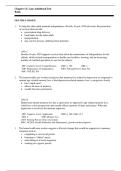
Chapter 13: Late Adulthood Test
Bank
MULTIPLE CHOICE
1. To help the older adult maintain independence, Healthy People 2020 advocates the promotion
of services that provide:
a. prescription drug delivery.
b. food banks for the older adult.
c. transportation.
d. day care for persons suffering from dementia.
ANS: C
Healthy People 2020 supports services that aid in the maintenance of independence for the
elderly, which include transportation to health-care facilities, housing, and an increasing
number of certified specialists to care for the elderly.
DIF: Cognitive Level: Comprehension REF: p. 196 OBJ: 1
TOP: Maintenance of independence KEY: Nursing Process Step: NA
MSC: NCLEX: NA
2. The home health-care worker recognizes that memory loss related to depression as compared to
normal age–related memory loss is that depression-related memory loss: a. progresses slowly.
b. has a rapid onset.
c. affects all areas of memory.
d. usually becomes permanent.
ANS: B
Depression-related memory loss has a rapid onset as opposed to age-related memory loss,
which has a slow progression and usually affects memory of dates and names. When the
depression is resolved, the memory improves.
DIF: Cognitive Level: Application REF: p. 206, Table 13-2
OBJ: 2 TOP: Memory loss
KEY: Nursing Process Step: Assessment
MSC: NCLEX: Health Promotion and Maintenance: growth and development
3. The home health care worker suggests a lifestyle change that would be supportive to memory
retention such as:
a. completing a crossword puzzle.
b. listening to “oldies” music.
c. subscribing to a travel magazine.
d. working on a jigsaw puzzle.
, ANS: A
A lifestyle component that exercises memory skills, such as doing crossword puzzles, is
thought to help maintain memory function.
DIF: Cognitive Level: Application REF: p. 206 OBJ: 4
TOP: Lifestyle changes to promote memory
KEY: Nursing Process Step: Implementation
MSC: NCLEX: Health Promotion and Maintenance: growth and development
4. The most effective nursing intervention for health promotion in the older adult is primarily
focused on:
a. managing disease.
b. providing a sense of control over health problems.
c. controlling symptoms of illness.
d. teaching positive health behaviors.
ANS: D
Important goals in managing the aging process include preventing illness and disability,
maintaining cognitive functioning, and promoting an active and healthy lifestyle.
DIF: Cognitive Level: Application REF: p. 196 OBJ: 2
TOP: Teaching techniques and goals for the older adult
KEY: Nursing Process Step: Planning
MSC: NCLEX: Health Promotion and Maintenance: prevention and early detection of disease
5. The health-care worker is taking the health history of an older adult with the assistance of the
patient’s daughter, who is the caregiver. The assessment that would suggest that the patient may
be abused is the:
a. patient is disoriented.
b. daughter has little knowledge of the patient’s medical condition.
c. daughter handles the patient’s finances.
d. daughter is involved in many community activities.
ANS: B
Lack of interest by the daughter in the condition or needs of an older adult may indicate a lack
of commitment to meeting the individual’s needs.
DIF: Cognitive Level: Application REF: p. 201 OBJ: 5
TOP: Elder or dependent abuse KEY: Nursing Process Step: Assessment
MSC: NCLEX: Physiological Integrity: reduction of risk
, 6. The health-care worker identifies age-related memory impairment in the older adult who says:
a. “I just can’t remember my telephone number.”
b. “I forgot I went to the store this morning and didn’t realize it until I went again this
afternoon.”
c. “I forget the names of movie stars more often now, but I can remember them later.”
d. “I simply cannot remember how to set my alarm clock anymore.”
ANS: C
Age-associated memory loss is characterized by a temporary memory loss or benign
forgetfulness. The other examples indicate abnormal cognitive functioning.
DIF: Cognitive Level: Application REF: p. 206, Table 13-2 | p. 205, Box 13-2
OBJ: 2 TOP: Memory loss
KEY: Nursing Process Step: Assessment
MSC: NCLEX: Health Promotion and Maintenance: growth and development
7. When access to health care is blocked, the major negative impact is that:
a. communities will not develop broader health services.
b. minorities will be the most neglected.
c. insurance payments will be impacted.
d. preventative health-care measures are neglected.
ANS: D
When access to health care is blocked either by lack of knowledge or lack of transportation,
basic preventative health care is neglected. This deficit affects all ages and ethnic groups.
DIF: Cognitive Level: Analysis REF: p. 200 OBJ: 2
TOP: Effect of blocked access to health care
KEY: Nursing Process Step: Implementation
MSC: NCLEX: Health Promotion and Maintenance: prevention and early detection of disease
8. When teaching an older adult, the health-care worker promotes learning by providing: a.
detailed verbal explanations.
b. information that relates to the person’s actual experiences.
c. a review of basic concepts, because long-term memory is impaired.
d. numerous repetitive presentations to promote memory retention.
ANS: B
Relating information to the older adult’s experience is much more effective than reviewing
basic concepts, particularly if the material is already known. Repetition may be helpful but
should not be excessive to the point of demeaning the person.
Bank
MULTIPLE CHOICE
1. To help the older adult maintain independence, Healthy People 2020 advocates the promotion
of services that provide:
a. prescription drug delivery.
b. food banks for the older adult.
c. transportation.
d. day care for persons suffering from dementia.
ANS: C
Healthy People 2020 supports services that aid in the maintenance of independence for the
elderly, which include transportation to health-care facilities, housing, and an increasing
number of certified specialists to care for the elderly.
DIF: Cognitive Level: Comprehension REF: p. 196 OBJ: 1
TOP: Maintenance of independence KEY: Nursing Process Step: NA
MSC: NCLEX: NA
2. The home health-care worker recognizes that memory loss related to depression as compared to
normal age–related memory loss is that depression-related memory loss: a. progresses slowly.
b. has a rapid onset.
c. affects all areas of memory.
d. usually becomes permanent.
ANS: B
Depression-related memory loss has a rapid onset as opposed to age-related memory loss,
which has a slow progression and usually affects memory of dates and names. When the
depression is resolved, the memory improves.
DIF: Cognitive Level: Application REF: p. 206, Table 13-2
OBJ: 2 TOP: Memory loss
KEY: Nursing Process Step: Assessment
MSC: NCLEX: Health Promotion and Maintenance: growth and development
3. The home health care worker suggests a lifestyle change that would be supportive to memory
retention such as:
a. completing a crossword puzzle.
b. listening to “oldies” music.
c. subscribing to a travel magazine.
d. working on a jigsaw puzzle.
, ANS: A
A lifestyle component that exercises memory skills, such as doing crossword puzzles, is
thought to help maintain memory function.
DIF: Cognitive Level: Application REF: p. 206 OBJ: 4
TOP: Lifestyle changes to promote memory
KEY: Nursing Process Step: Implementation
MSC: NCLEX: Health Promotion and Maintenance: growth and development
4. The most effective nursing intervention for health promotion in the older adult is primarily
focused on:
a. managing disease.
b. providing a sense of control over health problems.
c. controlling symptoms of illness.
d. teaching positive health behaviors.
ANS: D
Important goals in managing the aging process include preventing illness and disability,
maintaining cognitive functioning, and promoting an active and healthy lifestyle.
DIF: Cognitive Level: Application REF: p. 196 OBJ: 2
TOP: Teaching techniques and goals for the older adult
KEY: Nursing Process Step: Planning
MSC: NCLEX: Health Promotion and Maintenance: prevention and early detection of disease
5. The health-care worker is taking the health history of an older adult with the assistance of the
patient’s daughter, who is the caregiver. The assessment that would suggest that the patient may
be abused is the:
a. patient is disoriented.
b. daughter has little knowledge of the patient’s medical condition.
c. daughter handles the patient’s finances.
d. daughter is involved in many community activities.
ANS: B
Lack of interest by the daughter in the condition or needs of an older adult may indicate a lack
of commitment to meeting the individual’s needs.
DIF: Cognitive Level: Application REF: p. 201 OBJ: 5
TOP: Elder or dependent abuse KEY: Nursing Process Step: Assessment
MSC: NCLEX: Physiological Integrity: reduction of risk
, 6. The health-care worker identifies age-related memory impairment in the older adult who says:
a. “I just can’t remember my telephone number.”
b. “I forgot I went to the store this morning and didn’t realize it until I went again this
afternoon.”
c. “I forget the names of movie stars more often now, but I can remember them later.”
d. “I simply cannot remember how to set my alarm clock anymore.”
ANS: C
Age-associated memory loss is characterized by a temporary memory loss or benign
forgetfulness. The other examples indicate abnormal cognitive functioning.
DIF: Cognitive Level: Application REF: p. 206, Table 13-2 | p. 205, Box 13-2
OBJ: 2 TOP: Memory loss
KEY: Nursing Process Step: Assessment
MSC: NCLEX: Health Promotion and Maintenance: growth and development
7. When access to health care is blocked, the major negative impact is that:
a. communities will not develop broader health services.
b. minorities will be the most neglected.
c. insurance payments will be impacted.
d. preventative health-care measures are neglected.
ANS: D
When access to health care is blocked either by lack of knowledge or lack of transportation,
basic preventative health care is neglected. This deficit affects all ages and ethnic groups.
DIF: Cognitive Level: Analysis REF: p. 200 OBJ: 2
TOP: Effect of blocked access to health care
KEY: Nursing Process Step: Implementation
MSC: NCLEX: Health Promotion and Maintenance: prevention and early detection of disease
8. When teaching an older adult, the health-care worker promotes learning by providing: a.
detailed verbal explanations.
b. information that relates to the person’s actual experiences.
c. a review of basic concepts, because long-term memory is impaired.
d. numerous repetitive presentations to promote memory retention.
ANS: B
Relating information to the older adult’s experience is much more effective than reviewing
basic concepts, particularly if the material is already known. Repetition may be helpful but
should not be excessive to the point of demeaning the person.