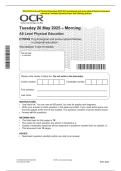
2025 OCR AS Level Physical Education H155/02 Psychological and socio-cultural themes in physical
education Combined Question Paper and Marking Scheme
Oxford Cambridge and RSA
Tuesday 20 May 2025 – Morning
AS Level Physical Education
H155/02 Psychological and socio-cultural themes
in physical education
*1332804217*
Time allowed: 1 hour 15 minutes
You can use:
• a calculator
Please write clearly in black ink. Do not write in the barcodes.
Centre number Candidate number
First name(s)
Last name
INSTRUCTIONS
• Use black ink. You can use an HB pencil, but only for graphs and diagrams.
• Write your answer to each question in the space provided. If you need extra space use
the lined pages at the end of this booklet. The question numbers must be clearly shown.
• Answer all the questions.
INFORMATION
• The total mark for this paper is 70.
• The marks for each question are shown in brackets [ ].
• Quality of extended response will be assessed in questions marked with an asterisk (*).
• This document has 12 pages.
ADVICE
• Read each question carefully before you start your answer.
© OCR 2025 [601/8323/8] OCR is an exempt Charity
DC (PQ) 331730/4 Turn over
, 2
Section A
1 The continuity continuum refers to how well defined the beginning and end of a skill is and has
three parts to it: discrete, serial and continuous.
(a)
(i) Give an example of a skill for each of the three following classifications on the continuity
continuum:
Discrete example: ............................................................................................................................
Serial example: ................................................................................................................................
Continuous example: .......................................................................................................................
[3]
(ii) Label the two ends of the continuum and explain how skills are classified on it.
.................. ..................
Explanation of continuum: ................................................................................................................
..........................................................................................................................................................
[3]
(b)
(i) Give an example of bilateral and negative transfer in sport.
Bilateral example: .............................................................................................................................
..........................................................................................................................................................
Negative example: ...........................................................................................................................
..........................................................................................................................................................
[2]
(ii) State two ways in which a coach could limit the effect of negative transfer in sport.
1. ......................................................................................................................................................
..........................................................................................................................................................
2. ......................................................................................................................................................
..........................................................................................................................................................
[2]
© OCR 2025
, 3
(c)
(i) Give a sporting example of the following types of guidance:
Verbal: ..............................................................................................................................................
..........................................................................................................................................................
Visual: ..............................................................................................................................................
..........................................................................................................................................................
Manual: ............................................................................................................................................
..........................................................................................................................................................
Mechanical: ......................................................................................................................................
..........................................................................................................................................................
[4]
(ii) State two disadvantages of using mechanical guidance.
1. ......................................................................................................................................................
..........................................................................................................................................................
2. ......................................................................................................................................................
..........................................................................................................................................................
[2]
(d) Complete the table to outline an advantage and a disadvantage of the following types of
feedback:
Feedback type Advantage Disadvantage
Positive
Knowledge of
performance
[4]
© OCR 2025 Turn over
, 4
2
(a)
(i) State three reasons why a performer might set goals.
1. ......................................................................................................................................................
2. ......................................................................................................................................................
3. ......................................................................................................................................................
[3]
(ii) Identify the principle of goal setting described in each of the following statements.
1. It must be within reach of the performer, it should present a challenge without being too
hard.
Principle: ...................................................................................................................................
2. There must be a way to calculate if the performer is making progress or if the goal has been
reached.
Principle: ...................................................................................................................................
[2]
(b)
(i) Define the term ‘attitude’.
..........................................................................................................................................................
. ................................................................................................................................................. [1]
(ii) Explain how persuasive communication can be used to change an attitude.
..........................................................................................................................................................
..........................................................................................................................................................
..........................................................................................................................................................
..........................................................................................................................................................
..........................................................................................................................................................
..........................................................................................................................................................
..........................................................................................................................................................
..........................................................................................................................................................
..........................................................................................................................................................
..........................................................................................................................................................
..........................................................................................................................................................
. ................................................................................................................................................. [4]
© OCR 2025
education Combined Question Paper and Marking Scheme
Oxford Cambridge and RSA
Tuesday 20 May 2025 – Morning
AS Level Physical Education
H155/02 Psychological and socio-cultural themes
in physical education
*1332804217*
Time allowed: 1 hour 15 minutes
You can use:
• a calculator
Please write clearly in black ink. Do not write in the barcodes.
Centre number Candidate number
First name(s)
Last name
INSTRUCTIONS
• Use black ink. You can use an HB pencil, but only for graphs and diagrams.
• Write your answer to each question in the space provided. If you need extra space use
the lined pages at the end of this booklet. The question numbers must be clearly shown.
• Answer all the questions.
INFORMATION
• The total mark for this paper is 70.
• The marks for each question are shown in brackets [ ].
• Quality of extended response will be assessed in questions marked with an asterisk (*).
• This document has 12 pages.
ADVICE
• Read each question carefully before you start your answer.
© OCR 2025 [601/8323/8] OCR is an exempt Charity
DC (PQ) 331730/4 Turn over
, 2
Section A
1 The continuity continuum refers to how well defined the beginning and end of a skill is and has
three parts to it: discrete, serial and continuous.
(a)
(i) Give an example of a skill for each of the three following classifications on the continuity
continuum:
Discrete example: ............................................................................................................................
Serial example: ................................................................................................................................
Continuous example: .......................................................................................................................
[3]
(ii) Label the two ends of the continuum and explain how skills are classified on it.
.................. ..................
Explanation of continuum: ................................................................................................................
..........................................................................................................................................................
[3]
(b)
(i) Give an example of bilateral and negative transfer in sport.
Bilateral example: .............................................................................................................................
..........................................................................................................................................................
Negative example: ...........................................................................................................................
..........................................................................................................................................................
[2]
(ii) State two ways in which a coach could limit the effect of negative transfer in sport.
1. ......................................................................................................................................................
..........................................................................................................................................................
2. ......................................................................................................................................................
..........................................................................................................................................................
[2]
© OCR 2025
, 3
(c)
(i) Give a sporting example of the following types of guidance:
Verbal: ..............................................................................................................................................
..........................................................................................................................................................
Visual: ..............................................................................................................................................
..........................................................................................................................................................
Manual: ............................................................................................................................................
..........................................................................................................................................................
Mechanical: ......................................................................................................................................
..........................................................................................................................................................
[4]
(ii) State two disadvantages of using mechanical guidance.
1. ......................................................................................................................................................
..........................................................................................................................................................
2. ......................................................................................................................................................
..........................................................................................................................................................
[2]
(d) Complete the table to outline an advantage and a disadvantage of the following types of
feedback:
Feedback type Advantage Disadvantage
Positive
Knowledge of
performance
[4]
© OCR 2025 Turn over
, 4
2
(a)
(i) State three reasons why a performer might set goals.
1. ......................................................................................................................................................
2. ......................................................................................................................................................
3. ......................................................................................................................................................
[3]
(ii) Identify the principle of goal setting described in each of the following statements.
1. It must be within reach of the performer, it should present a challenge without being too
hard.
Principle: ...................................................................................................................................
2. There must be a way to calculate if the performer is making progress or if the goal has been
reached.
Principle: ...................................................................................................................................
[2]
(b)
(i) Define the term ‘attitude’.
..........................................................................................................................................................
. ................................................................................................................................................. [1]
(ii) Explain how persuasive communication can be used to change an attitude.
..........................................................................................................................................................
..........................................................................................................................................................
..........................................................................................................................................................
..........................................................................................................................................................
..........................................................................................................................................................
..........................................................................................................................................................
..........................................................................................................................................................
..........................................................................................................................................................
..........................................................................................................................................................
..........................................................................................................................................................
..........................................................................................................................................................
. ................................................................................................................................................. [4]
© OCR 2025