ESTUDYR
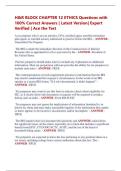
HESI RN EXIT EXAM 2025 MULTICHOICE ANSWERED EXAM
QUESTIONS WITH DETAILED RATIONALES
1. The nurse gives preop instructions to a 14-yr-old scheduled to correct a spinal curvature.
Which statement best demonstrates learning has taken place?
A. “I hope I won’t need a cast.”
B. “I understand I will be in a body cast and I will show you how you taught me to
turn.” ✅
C. “I’ll need help for everything after surgery.”
D. “I won’t eat or drink before surgery.”
Rationale: The student states accurate facts (body cast) and demonstrates
willingness/ability to perform taught skill — evidence of learning.
2. To take vitals of a 4-month-old, which order gives the most accurate results?
A. Heart rate, respiratory rate, axillary temp
B. Rectal temp, heart rate, respiratory rate
C. Respiratory rate, heart rate, rectal temperature ✅
D. Blood pressure, heart rate, oral temp
Rationale: Infants are best observed for RR first (least disturbing), then HR, and rectal
temp is most accurate if needed.
3. Otoscopic exam: tympanic membrane pearly gray, slightly bulging and not movable.
Next action?
A. Start antibiotics immediately
B. Ask the child about recent cold, runny nose, or ear pain ✅
C. Irrigate the ear canal
D. Refer for CT scan
Rationale: Bulging, immobile TM suggests otitis media — asking about URI/ear pain
clarifies symptoms before treatment.
4. Which restraint for a toddler after cleft-palate repair?
A. Wrist restraints
B. Elbow restraints ✅
C. Vest restraint
D. Soft limb restraints on both legs
Rationale: Elbow (arm) restraints prevent hand-to-mouth and protect the surgical site
while allowing mobility.
,ESTUDYR
5. Preop nursing intervention for an infant with pyloric stenosis should include:
A. Immediate feeds to test tolerance
B. Observe for projectile vomiting ✅
C. Administer phenobarbital preop
D. Place in Trendelenburg position
Rationale: Projectile vomiting is hallmark of pyloric stenosis and guides stabilization and
care.
6. A six-month-old returns from surgery with elbow restraints. What intervention is
required when caring for any restrained child?
A. Keep restraints on continuously for 48 hr
B. Remove restraints one at a time and provide ROM exercises ✅
C. Allow unsupervised removal for comfort
D. Replace restraints with soft ties every 12 hr only
Rationale: Periodic removal and ROM prevent contractures and circulatory/skin
problems.
7. A 2-yr-old with Down syndrome — which problem is frequently associated?
A. Type 1 diabetes
B. Congenital heart disease ✅
C. Sickle cell disease
D. Juvenile glaucoma
Rationale: Congenital cardiac defects (e.g., AV septal defects) are common in Down
syndrome.
8. In asthma, intercostal retractions are expected during:
A. Expiration
B. Inspiration ✅
C. Sleep only
D. While sitting quietly
Rationale: Retractions occur when inspiratory effort increases against narrowed
airways.
9. After cleft-lip repair, crying should be minimized because it:
A. Lowers blood pressure
B. Prevents infection
C. Stresses the suture line ✅
D. Causes hypoventilation
Rationale: Excessive crying increases tension on sutures risking dehiscence.
,ESTUDYR
10. A client with a productive cough obtained sputum for culture as instructed. Best initial
nursing action?
A. Administer the first dose of prescribed antibiotic therapy ✅
B. Dispose of the specimen after noting color
C. Delay antibiotics until culture result arrives
D. Encourage more coughing to get second specimen
Rationale: After obtaining culture (before antibiotics ideally), administer prescribed
antibiotic promptly per order.
11. Client in ED in cardiac arrest, intubated, 100% O₂, cyanotic, cold, diaphoretic. Most
important assessment?
A. Serum electrolytes
B. Pupillary size only
C. Deep tendon reflexes ✅
D. Skin turgor
Rationale: In prolonged hypoxia/brain insult, DTRs indicate neurologic function and
possible anoxic injury — key in post-resuscitation assessment.
12. After SIADH hospitalization, client develops pontine myelinolysis. First intervention?
A. Call physician for MRI
B. Reorient client to his room ✅
C. Restrict fluids further
D. Encourage independent ambulation
Rationale: Pontine myelinolysis commonly causes acute neurologic changes;
reorientation addresses immediate cognitive/neurologic needs and safety.
13. A male HF client reports shoes too tight. Which additional info should nurse obtain?
A. Current medications list
B. Has his weight changed in the last several days? ✅
C. Dietary fiber intake
D. Recent travel history
Rationale: Sudden weight gain suggests fluid retention/edema related to HF
exacerbation.
14. Older adult with COPD, progressive SOB, anxious, dry mouth. Which intervention?
A. Give sedative PRN
B. Apply a high-flow Venturi mask ✅
C. Encourage brisk exercise
D. Restrict oral fluids
, ESTUDYR
Rationale: Precise high-flow Venturi can improve oxygenation while minimizing CO₂
retention; manage anxiety by improving oxygenation.
15. Asthma + bronchitis client with thick tenacious mucus — important self-care
instruction?
A. Decrease oral fluids to avoid aspiration
B. Increase daily oral fluid intake to liquefy secretions ✅
C. Avoid humidified air at home
D. Stop bronchodilator medications
Rationale: Hydration thins secretions and improves clearance.
16. Cardiac cath shows 95% LAD, 99% proximal circumflex, 95% proximal RCA. Client asks
what it means. Best explanation:
A. Blockage in a minor vessel only
B. Three main arteries have major blockages with only 1–5% blood flow getting
through ✅
C. Everything is fine; just mild plaque
D. You have an infection, not blockages
Rationale: High percentage occlusions of major coronaries imply critical multivessel
disease.
17. Client with lower left pulmonary abscess — which position should nurse instruct client
to maintain?
A. Right lateral
B. Left lateral ✅
C. Supine
D. Trendelenburg
Rationale: Positioning the affected side down (dependent) can help drainage of that
lung area.
18. Client with gallstone lodged in common bile duct, unable to eat without N/V. Which
finding to report?
A. Elevated WBC only
B. Yellow sclera (jaundice) ✅
C. Dry skin only
D. Mild thirst
Rationale: Jaundice indicates biliary obstruction and possible cholestasis or ascending
cholangitis — urgent.
HESI RN EXIT EXAM 2025 MULTICHOICE ANSWERED EXAM
QUESTIONS WITH DETAILED RATIONALES
1. The nurse gives preop instructions to a 14-yr-old scheduled to correct a spinal curvature.
Which statement best demonstrates learning has taken place?
A. “I hope I won’t need a cast.”
B. “I understand I will be in a body cast and I will show you how you taught me to
turn.” ✅
C. “I’ll need help for everything after surgery.”
D. “I won’t eat or drink before surgery.”
Rationale: The student states accurate facts (body cast) and demonstrates
willingness/ability to perform taught skill — evidence of learning.
2. To take vitals of a 4-month-old, which order gives the most accurate results?
A. Heart rate, respiratory rate, axillary temp
B. Rectal temp, heart rate, respiratory rate
C. Respiratory rate, heart rate, rectal temperature ✅
D. Blood pressure, heart rate, oral temp
Rationale: Infants are best observed for RR first (least disturbing), then HR, and rectal
temp is most accurate if needed.
3. Otoscopic exam: tympanic membrane pearly gray, slightly bulging and not movable.
Next action?
A. Start antibiotics immediately
B. Ask the child about recent cold, runny nose, or ear pain ✅
C. Irrigate the ear canal
D. Refer for CT scan
Rationale: Bulging, immobile TM suggests otitis media — asking about URI/ear pain
clarifies symptoms before treatment.
4. Which restraint for a toddler after cleft-palate repair?
A. Wrist restraints
B. Elbow restraints ✅
C. Vest restraint
D. Soft limb restraints on both legs
Rationale: Elbow (arm) restraints prevent hand-to-mouth and protect the surgical site
while allowing mobility.
,ESTUDYR
5. Preop nursing intervention for an infant with pyloric stenosis should include:
A. Immediate feeds to test tolerance
B. Observe for projectile vomiting ✅
C. Administer phenobarbital preop
D. Place in Trendelenburg position
Rationale: Projectile vomiting is hallmark of pyloric stenosis and guides stabilization and
care.
6. A six-month-old returns from surgery with elbow restraints. What intervention is
required when caring for any restrained child?
A. Keep restraints on continuously for 48 hr
B. Remove restraints one at a time and provide ROM exercises ✅
C. Allow unsupervised removal for comfort
D. Replace restraints with soft ties every 12 hr only
Rationale: Periodic removal and ROM prevent contractures and circulatory/skin
problems.
7. A 2-yr-old with Down syndrome — which problem is frequently associated?
A. Type 1 diabetes
B. Congenital heart disease ✅
C. Sickle cell disease
D. Juvenile glaucoma
Rationale: Congenital cardiac defects (e.g., AV septal defects) are common in Down
syndrome.
8. In asthma, intercostal retractions are expected during:
A. Expiration
B. Inspiration ✅
C. Sleep only
D. While sitting quietly
Rationale: Retractions occur when inspiratory effort increases against narrowed
airways.
9. After cleft-lip repair, crying should be minimized because it:
A. Lowers blood pressure
B. Prevents infection
C. Stresses the suture line ✅
D. Causes hypoventilation
Rationale: Excessive crying increases tension on sutures risking dehiscence.
,ESTUDYR
10. A client with a productive cough obtained sputum for culture as instructed. Best initial
nursing action?
A. Administer the first dose of prescribed antibiotic therapy ✅
B. Dispose of the specimen after noting color
C. Delay antibiotics until culture result arrives
D. Encourage more coughing to get second specimen
Rationale: After obtaining culture (before antibiotics ideally), administer prescribed
antibiotic promptly per order.
11. Client in ED in cardiac arrest, intubated, 100% O₂, cyanotic, cold, diaphoretic. Most
important assessment?
A. Serum electrolytes
B. Pupillary size only
C. Deep tendon reflexes ✅
D. Skin turgor
Rationale: In prolonged hypoxia/brain insult, DTRs indicate neurologic function and
possible anoxic injury — key in post-resuscitation assessment.
12. After SIADH hospitalization, client develops pontine myelinolysis. First intervention?
A. Call physician for MRI
B. Reorient client to his room ✅
C. Restrict fluids further
D. Encourage independent ambulation
Rationale: Pontine myelinolysis commonly causes acute neurologic changes;
reorientation addresses immediate cognitive/neurologic needs and safety.
13. A male HF client reports shoes too tight. Which additional info should nurse obtain?
A. Current medications list
B. Has his weight changed in the last several days? ✅
C. Dietary fiber intake
D. Recent travel history
Rationale: Sudden weight gain suggests fluid retention/edema related to HF
exacerbation.
14. Older adult with COPD, progressive SOB, anxious, dry mouth. Which intervention?
A. Give sedative PRN
B. Apply a high-flow Venturi mask ✅
C. Encourage brisk exercise
D. Restrict oral fluids
, ESTUDYR
Rationale: Precise high-flow Venturi can improve oxygenation while minimizing CO₂
retention; manage anxiety by improving oxygenation.
15. Asthma + bronchitis client with thick tenacious mucus — important self-care
instruction?
A. Decrease oral fluids to avoid aspiration
B. Increase daily oral fluid intake to liquefy secretions ✅
C. Avoid humidified air at home
D. Stop bronchodilator medications
Rationale: Hydration thins secretions and improves clearance.
16. Cardiac cath shows 95% LAD, 99% proximal circumflex, 95% proximal RCA. Client asks
what it means. Best explanation:
A. Blockage in a minor vessel only
B. Three main arteries have major blockages with only 1–5% blood flow getting
through ✅
C. Everything is fine; just mild plaque
D. You have an infection, not blockages
Rationale: High percentage occlusions of major coronaries imply critical multivessel
disease.
17. Client with lower left pulmonary abscess — which position should nurse instruct client
to maintain?
A. Right lateral
B. Left lateral ✅
C. Supine
D. Trendelenburg
Rationale: Positioning the affected side down (dependent) can help drainage of that
lung area.
18. Client with gallstone lodged in common bile duct, unable to eat without N/V. Which
finding to report?
A. Elevated WBC only
B. Yellow sclera (jaundice) ✅
C. Dry skin only
D. Mild thirst
Rationale: Jaundice indicates biliary obstruction and possible cholestasis or ascending
cholangitis — urgent.