Stuvia.com - The Marketplace to Buy and Sell your Study Material
3q 3q 3q 3q 3q 3q 3q 3q 3q 3q
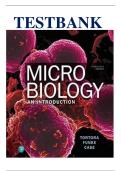
TEST BANK B 3 q 3 q T 3 q 3 q
MICROBIOLOGY:
An Introduction 3
B
q 3 q T 3 q
13TH 3q
B 3 q T 3 q EDITION
Tortora|Funke|Case
TEST BANK B 3 q 3 q T 3 q 3 q
Downloaded by: Profjoe001 |
3q 3q 3q 3q Want to earn $1.236
3q 3q 3q
Distribution of this document is illegal
3q 3q 3q 3q 3q extra per year?
3q 3q
, Stuvia.com - The Marketplace to Buy and Sell your Study Material
3q 3q 3q 3q 3q 3q 3q 3q 3q 3q
Test Bank Microbiology: An Introduction, 13th Edition Gerard J. Tortora Table
3q 3q 3q 3q 3q 3q 3q 3q 3q 3q
of Contents:
3q 3q
Part I: Fundamentals of Microbiology
3q 3q 3q 3q
Chapter 1. The Microbial World and You
3q 3q 3q 3q 3q 3q 3q
Chapter 2. Chemical Principles
3q 3q 3q 3q
Chapter 3. Observing Microorganisms through a Microscope
3q 3q 3q 3q 3q 3q
Chapter 4. Functional Anatomy of Prokaryotic and Eukaryotic Cells
3q 3q 3q 3q 3q 3q 3q 3q 3q
Chapter 5. Microbial Metabolism
3q 3q 3q 3q
Chapter 6. Microbial Growth 3q 3q 3q
Chapter 7. The Control of Microbial Growth
3q 3q 3q 3q 3q 3q
Chapter 8. Microbial Genetics
3q 3q 3q 3q
Chapter 9. Biotechnology and DNA Technology
3q 3q 3q 3q 3q
Part II: A Survey of the Microbial World
3q 3q 3q 3q 3q 3q 3q 3q
Chapter 10. Classification of Microorganisms
3q 3q 3q 3q 3q
Chapter 11. The Prokaryotes: Domains Bacteria and Archaea
3q 3q 3q 3q 3q 3q 3q
Chapter 12. The Eukaryotes: Fungi, Algae, Protozoa, and Helminths
3q 3q 3q 3q 3q 3q 3q 3q 3q
Chapter 13. Viruses, Viroids, and Prions
3q 3q 3q 3q 3q 3q
Part III: Interaction between Microbe and Host
3q 3q 3q 3q 3q 3q
Chapter 14. Principles of Disease and Epidemiology
3q 3q 3q 3q 3q 3q 3q
Chapter 15. Microbial Mechanisms of Pathogenicity
3q 3q 3q 3q 3q 3q
Chapter 16. Innate Immunity: Nonspecific Defenses of the Host
3q 3q 3q 3q 3q 3q 3q 3q
Chapter 17. Adaptive Immunity: Specific Defenses of the Host
3q 3q 3q 3q 3q 3q 3q 3q 3q
Chapter 18. Practical Applications of Immunology
3q 3q 3q 3q 3q 3q
Chapter 19. DisordersAssociated with the Immune System Chapter
3q 3q 3q 3q 3q 3q 3q 3q
20. Antimicrobial Drugs
3q 3q 3q
Part IV: Microorganisms and Human Disease
3q 3q 3q 3q 3q
Chapter 21. Microbial Diseases of the Skin and Eyes
3q 3q 3q 3q 3q 3q 3q 3q 3q
Chapter 22. Microbial Diseases of the Nervous System
3q 3q 3q 3q 3q 3q 3q 3q
Chapter 23. Microbial Diseases of the Cardiovascular and Lymphatic Systems
3q 3q 3q 3q 3q 3q 3q 3q 3q
Chapter 24. Microbial Diseases of the Respiratory System
3q 3q 3q 3q 3q 3q 3q 3q
Chapter 25. Microbial Diseases of the Digestive System
3q 3q 3q 3q 3q 3q 3q
Chapter 26. Microbial Disease of the Urinary and Reproductive Systems
3q 3q 3q 3q 3q 3q 3q 3q 3q
Part V: Environmental and Applied Microbiology
3q 3q 3q 3q 3q
Chapter 27. Environmental Microbiology
3q 3q 3q
Chapter 28. Applied and Industrial Microbiology
3q 3q 3q 3q 3q 3q
Downloaded by: Profjoe001 | 3q 3q 3q 3q Want to earn $1.236
3q 3q 3q
Distribution of this document is illegal 3q 3q 3q 3q 3q extra per year?
3q 3q
, lOMoAR
3 q cPSD|
Stuvia.com - The Marketplace to Buy and Sell your Study
3q 3q 3q 3q 3q 3q 3q 3q 3q
Material
3q
MICROBIOLOGY: An Introduction, 13e (Tortora, Funke, Case) 3q 3q 3q 3q 3q 3q
Chapter 1: 3q The Microbial World and You
3q 3q 3q 3q
1.1 Multiple-Choice Questions 3q
1) Microorganisms areinvolved in each of the followingprocesses EXCEPT 3q 3q 3q 3q 3q 3q 3q 3q 3q
A) infection.
B) decomposition oforganic material. 3q 3q 3q
C) O2 production.
3q
D) food production.
E) smog production. 3q
Answer: E
3q
Section: 1.1
3q 3q
Bloom'sTaxonomy:Remembering 3q 3q
Learning Outcome: 1.1
3q 3q 3q
Global Outcome: 5 3q
2) Eachof the following organisms would be considered a microbe EXCEPT
3q 3q 3q 3q 3q 3q 3q 3q 3q 3q
A) yeast.
B) protozoan.
C) bacterium.
D) mushroom.
E) virus.
Answer: D
3q 3q
Section:
3q
1.1
Bloom'sTaxonomy:Remembering 3q 3q
Learning Outcome: 1.4
3q 3q 3q
3) Theterm used to describea disease-causing microorganism is
3q 3q 3q 3q 3q 3q 3q 3q
A) microbe.
B) bacterium.
C) virus.
D) pathogen.
E) infection.
Answer: D
3q 3q
Section:
3q
1.1
Bloom'sTaxonomy:Remembering 3q 3q
Learning Outcome: 1.1
3q 3q 3q
1
.
Downloaded by: Profjoe001 |
3q 3q 3q 3q Want to earn $1.236
3q 3q 3q
Distribution of this document is illegal
3q 3q 3q 3q 3q extra per year?
3q 3q
, lOMoAR
3 q cPSD|
Stuvia.com - The Marketplace to Buy and Sell your Study
3q 3q 3q 3q 3q 3q 3q 3q 3q
Material
3q
4) Commoncommercial benefits of microorganisms include synthesis of
3q 3q 3q 3q 3q 3q 3q
A) riboflavin.
B) acetone.
C) insulin.
D) aspirin.
E) riboflavin,acetoneandinsulin. 3q 3q 3q
Answer: E
3q 3 q
Section: 1.1 3q
Bloom'sTaxonomy:Remembering
3q 3q
ASMcue Outcome: 6.3
3q 3q 3q
Learning Outcome: 1.1 3q
5) Whatfactors contribute to the risingincidence of antibiotic resistance?
3q 3q 3q 3q 3q 3q 3q 3q 3q
A) overuse of the specific drugs 3q 3q 3q 3q
B) misuse of the specific drugs 3q 3q 3q 3q
C) randommutations inbacterial genomes 3q 3q 3q 3q
D) random mutations, overuse and misuse of specific drugs
3q 3q 3q 3q 3q 3q 3q
E) overuseandmisuseofspecificdrugs 3q 3q 3q 3q 3q
Answer: D
3q 3 q
Section: 1.5 3q
Bloom'sTaxonomy:Understanding
3q 3q
ASMcue Outcome: 4.1
3q 3q 3q
Learning Outcome: 1.19 3q
Global Outcome: 5
3q
6) Theformal system forclassifying and naming organisms was developed by
3q 3q 3q 3q 3q 3q 3q 3q 3q 3q
A) Robert Koch. 3q
B) Ignaz Semmelweis. 3q
C) Aristotle.
D) Carolus Linnaeus. 3q
E) Louis Pasteur. BT
Answer: D
3q 3q
Section: 1.2
3q 3q
Bloom'sTaxonomy:Remembering
3q 3q
Learning Outcome: 1.3
3q 3q 3q
7) In the name Staphylococcus aureus, aureus is the
3q 3q 3q 3q 3q 3q 3q
A) genus.
B) domain name. 3q
C) species.
D) kingdom.
E) familyname.
Answer: C
3q 3q
Section: 1.2
3q 3q
Bloom'sTaxonomy:Understanding
3q 3q
Learning Outcome: 1.3
3q 3q 3q
2
.
DoD
wonw
lonalo
daedebdy:bP
y:rodfejonen0y0s1||ejm
oepliw
reacnyjb
ikeur010@
3g@mgam
il.aciol.m
com 3q Want to earn $1.236
3q 3q 3q
3q Distribution of this document is illegal
3q 3q 3q 3q 3q 3q extra per
3q
3q 3q 3q 3q 3q 3q 3q 3q 3q 3q
TEST BANK B 3 q 3 q T 3 q 3 q
MICROBIOLOGY:
An Introduction 3
B
q 3 q T 3 q
13TH 3q
B 3 q T 3 q EDITION
Tortora|Funke|Case
TEST BANK B 3 q 3 q T 3 q 3 q
Downloaded by: Profjoe001 |
3q 3q 3q 3q Want to earn $1.236
3q 3q 3q
Distribution of this document is illegal
3q 3q 3q 3q 3q extra per year?
3q 3q
, Stuvia.com - The Marketplace to Buy and Sell your Study Material
3q 3q 3q 3q 3q 3q 3q 3q 3q 3q
Test Bank Microbiology: An Introduction, 13th Edition Gerard J. Tortora Table
3q 3q 3q 3q 3q 3q 3q 3q 3q 3q
of Contents:
3q 3q
Part I: Fundamentals of Microbiology
3q 3q 3q 3q
Chapter 1. The Microbial World and You
3q 3q 3q 3q 3q 3q 3q
Chapter 2. Chemical Principles
3q 3q 3q 3q
Chapter 3. Observing Microorganisms through a Microscope
3q 3q 3q 3q 3q 3q
Chapter 4. Functional Anatomy of Prokaryotic and Eukaryotic Cells
3q 3q 3q 3q 3q 3q 3q 3q 3q
Chapter 5. Microbial Metabolism
3q 3q 3q 3q
Chapter 6. Microbial Growth 3q 3q 3q
Chapter 7. The Control of Microbial Growth
3q 3q 3q 3q 3q 3q
Chapter 8. Microbial Genetics
3q 3q 3q 3q
Chapter 9. Biotechnology and DNA Technology
3q 3q 3q 3q 3q
Part II: A Survey of the Microbial World
3q 3q 3q 3q 3q 3q 3q 3q
Chapter 10. Classification of Microorganisms
3q 3q 3q 3q 3q
Chapter 11. The Prokaryotes: Domains Bacteria and Archaea
3q 3q 3q 3q 3q 3q 3q
Chapter 12. The Eukaryotes: Fungi, Algae, Protozoa, and Helminths
3q 3q 3q 3q 3q 3q 3q 3q 3q
Chapter 13. Viruses, Viroids, and Prions
3q 3q 3q 3q 3q 3q
Part III: Interaction between Microbe and Host
3q 3q 3q 3q 3q 3q
Chapter 14. Principles of Disease and Epidemiology
3q 3q 3q 3q 3q 3q 3q
Chapter 15. Microbial Mechanisms of Pathogenicity
3q 3q 3q 3q 3q 3q
Chapter 16. Innate Immunity: Nonspecific Defenses of the Host
3q 3q 3q 3q 3q 3q 3q 3q
Chapter 17. Adaptive Immunity: Specific Defenses of the Host
3q 3q 3q 3q 3q 3q 3q 3q 3q
Chapter 18. Practical Applications of Immunology
3q 3q 3q 3q 3q 3q
Chapter 19. DisordersAssociated with the Immune System Chapter
3q 3q 3q 3q 3q 3q 3q 3q
20. Antimicrobial Drugs
3q 3q 3q
Part IV: Microorganisms and Human Disease
3q 3q 3q 3q 3q
Chapter 21. Microbial Diseases of the Skin and Eyes
3q 3q 3q 3q 3q 3q 3q 3q 3q
Chapter 22. Microbial Diseases of the Nervous System
3q 3q 3q 3q 3q 3q 3q 3q
Chapter 23. Microbial Diseases of the Cardiovascular and Lymphatic Systems
3q 3q 3q 3q 3q 3q 3q 3q 3q
Chapter 24. Microbial Diseases of the Respiratory System
3q 3q 3q 3q 3q 3q 3q 3q
Chapter 25. Microbial Diseases of the Digestive System
3q 3q 3q 3q 3q 3q 3q
Chapter 26. Microbial Disease of the Urinary and Reproductive Systems
3q 3q 3q 3q 3q 3q 3q 3q 3q
Part V: Environmental and Applied Microbiology
3q 3q 3q 3q 3q
Chapter 27. Environmental Microbiology
3q 3q 3q
Chapter 28. Applied and Industrial Microbiology
3q 3q 3q 3q 3q 3q
Downloaded by: Profjoe001 | 3q 3q 3q 3q Want to earn $1.236
3q 3q 3q
Distribution of this document is illegal 3q 3q 3q 3q 3q extra per year?
3q 3q
, lOMoAR
3 q cPSD|
Stuvia.com - The Marketplace to Buy and Sell your Study
3q 3q 3q 3q 3q 3q 3q 3q 3q
Material
3q
MICROBIOLOGY: An Introduction, 13e (Tortora, Funke, Case) 3q 3q 3q 3q 3q 3q
Chapter 1: 3q The Microbial World and You
3q 3q 3q 3q
1.1 Multiple-Choice Questions 3q
1) Microorganisms areinvolved in each of the followingprocesses EXCEPT 3q 3q 3q 3q 3q 3q 3q 3q 3q
A) infection.
B) decomposition oforganic material. 3q 3q 3q
C) O2 production.
3q
D) food production.
E) smog production. 3q
Answer: E
3q
Section: 1.1
3q 3q
Bloom'sTaxonomy:Remembering 3q 3q
Learning Outcome: 1.1
3q 3q 3q
Global Outcome: 5 3q
2) Eachof the following organisms would be considered a microbe EXCEPT
3q 3q 3q 3q 3q 3q 3q 3q 3q 3q
A) yeast.
B) protozoan.
C) bacterium.
D) mushroom.
E) virus.
Answer: D
3q 3q
Section:
3q
1.1
Bloom'sTaxonomy:Remembering 3q 3q
Learning Outcome: 1.4
3q 3q 3q
3) Theterm used to describea disease-causing microorganism is
3q 3q 3q 3q 3q 3q 3q 3q
A) microbe.
B) bacterium.
C) virus.
D) pathogen.
E) infection.
Answer: D
3q 3q
Section:
3q
1.1
Bloom'sTaxonomy:Remembering 3q 3q
Learning Outcome: 1.1
3q 3q 3q
1
.
Downloaded by: Profjoe001 |
3q 3q 3q 3q Want to earn $1.236
3q 3q 3q
Distribution of this document is illegal
3q 3q 3q 3q 3q extra per year?
3q 3q
, lOMoAR
3 q cPSD|
Stuvia.com - The Marketplace to Buy and Sell your Study
3q 3q 3q 3q 3q 3q 3q 3q 3q
Material
3q
4) Commoncommercial benefits of microorganisms include synthesis of
3q 3q 3q 3q 3q 3q 3q
A) riboflavin.
B) acetone.
C) insulin.
D) aspirin.
E) riboflavin,acetoneandinsulin. 3q 3q 3q
Answer: E
3q 3 q
Section: 1.1 3q
Bloom'sTaxonomy:Remembering
3q 3q
ASMcue Outcome: 6.3
3q 3q 3q
Learning Outcome: 1.1 3q
5) Whatfactors contribute to the risingincidence of antibiotic resistance?
3q 3q 3q 3q 3q 3q 3q 3q 3q
A) overuse of the specific drugs 3q 3q 3q 3q
B) misuse of the specific drugs 3q 3q 3q 3q
C) randommutations inbacterial genomes 3q 3q 3q 3q
D) random mutations, overuse and misuse of specific drugs
3q 3q 3q 3q 3q 3q 3q
E) overuseandmisuseofspecificdrugs 3q 3q 3q 3q 3q
Answer: D
3q 3 q
Section: 1.5 3q
Bloom'sTaxonomy:Understanding
3q 3q
ASMcue Outcome: 4.1
3q 3q 3q
Learning Outcome: 1.19 3q
Global Outcome: 5
3q
6) Theformal system forclassifying and naming organisms was developed by
3q 3q 3q 3q 3q 3q 3q 3q 3q 3q
A) Robert Koch. 3q
B) Ignaz Semmelweis. 3q
C) Aristotle.
D) Carolus Linnaeus. 3q
E) Louis Pasteur. BT
Answer: D
3q 3q
Section: 1.2
3q 3q
Bloom'sTaxonomy:Remembering
3q 3q
Learning Outcome: 1.3
3q 3q 3q
7) In the name Staphylococcus aureus, aureus is the
3q 3q 3q 3q 3q 3q 3q
A) genus.
B) domain name. 3q
C) species.
D) kingdom.
E) familyname.
Answer: C
3q 3q
Section: 1.2
3q 3q
Bloom'sTaxonomy:Understanding
3q 3q
Learning Outcome: 1.3
3q 3q 3q
2
.
DoD
wonw
lonalo
daedebdy:bP
y:rodfejonen0y0s1||ejm
oepliw
reacnyjb
ikeur010@
3g@mgam
il.aciol.m
com 3q Want to earn $1.236
3q 3q 3q
3q Distribution of this document is illegal
3q 3q 3q 3q 3q 3q extra per
3q