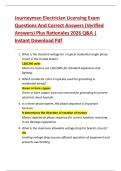
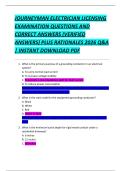
Journeyman Electrician Licensing Exam
Practice Questions And Correct Answers
(Verified Answers) Plus Rationales 2026
Q&A | Instant Download Pdf
1. What is the maximum allowable voltage drop for branch circuits
according to the NEC?
A. 1%
B. 2%
C. 3%
D. 5%
Rationale: The NEC recommends a maximum voltage drop of 3% for branch
circuits to ensure efficiency and proper operation of electrical equipment.
2. Which conductor color is typically used for grounding in residential
wiring?
A. Red
B. Blue
C. Green
,D. White
Rationale: Green or bare copper is used for grounding conductors to ensure
safety and prevent shock hazards.
3. The NEC requires a minimum of how many feet of working space in front
of electrical panels?
A. 2 feet
B. 3 feet
C. 4 feet
D. 6 feet
Rationale: NEC 110.26 mandates at least 6 feet of clear working space in
front of panels for safe access.
4. What type of conduit is required for wet locations?
A. EMT
B. PVC
C. RMC
D. FMC
Rationale: PVC conduit is non-metallic and suitable for wet locations as it
resists corrosion and moisture.
5. What is the standard residential voltage for a single-phase system in the
U.S.?
A. 110V
B. 120/240V
C. 208V
,D. 277V
Rationale: Standard single-phase residential service in the U.S. is 120/240
volts.
6. What is the purpose of a GFCI (Ground Fault Circuit Interrupter)?
A. To prevent overloads
B. To prevent short circuits
C. To protect against ground faults/shock hazards
D. To increase voltage
Rationale: GFCIs detect current leaks to ground and quickly disconnect
power to prevent shock.
7. Which NEC article covers wiring methods?
A. Article 210
B. Article 300
C. Article 430
D. Article 250
Rationale: NEC Article 300 specifies wiring methods, including conduit,
cable types, and installation rules.
8. What is the ampacity of a 12 AWG copper conductor in a typical
residential setting?
A. 10A
B. 20A
C. 30A
D. 25A
, Rationale: 12 AWG copper conductors are rated for 20 amps under normal
residential conditions per NEC Table 310.15(B)(16).
9. Which type of overcurrent protection device is used to protect branch
circuits?
A. Fuse
B. Circuit breaker
C. Transformer
D. Disconnect switch
Rationale: Circuit breakers are standard for protecting branch circuits from
overloads and short circuits.
10. What is the primary purpose of a neutral wire?
A. To carry current to equipment
B. To complete the circuit back to the source
C. To provide grounding
D. To carry only fault current
Rationale: The neutral wire provides a return path for current to complete
the electrical circuit.
11. What is the NEC minimum cover for underground PVC conduit in a
residential driveway?
A. 6 inches
B. 12 inches
C. 18 inches
D. 24 inches
Practice Questions And Correct Answers
(Verified Answers) Plus Rationales 2026
Q&A | Instant Download Pdf
1. What is the maximum allowable voltage drop for branch circuits
according to the NEC?
A. 1%
B. 2%
C. 3%
D. 5%
Rationale: The NEC recommends a maximum voltage drop of 3% for branch
circuits to ensure efficiency and proper operation of electrical equipment.
2. Which conductor color is typically used for grounding in residential
wiring?
A. Red
B. Blue
C. Green
,D. White
Rationale: Green or bare copper is used for grounding conductors to ensure
safety and prevent shock hazards.
3. The NEC requires a minimum of how many feet of working space in front
of electrical panels?
A. 2 feet
B. 3 feet
C. 4 feet
D. 6 feet
Rationale: NEC 110.26 mandates at least 6 feet of clear working space in
front of panels for safe access.
4. What type of conduit is required for wet locations?
A. EMT
B. PVC
C. RMC
D. FMC
Rationale: PVC conduit is non-metallic and suitable for wet locations as it
resists corrosion and moisture.
5. What is the standard residential voltage for a single-phase system in the
U.S.?
A. 110V
B. 120/240V
C. 208V
,D. 277V
Rationale: Standard single-phase residential service in the U.S. is 120/240
volts.
6. What is the purpose of a GFCI (Ground Fault Circuit Interrupter)?
A. To prevent overloads
B. To prevent short circuits
C. To protect against ground faults/shock hazards
D. To increase voltage
Rationale: GFCIs detect current leaks to ground and quickly disconnect
power to prevent shock.
7. Which NEC article covers wiring methods?
A. Article 210
B. Article 300
C. Article 430
D. Article 250
Rationale: NEC Article 300 specifies wiring methods, including conduit,
cable types, and installation rules.
8. What is the ampacity of a 12 AWG copper conductor in a typical
residential setting?
A. 10A
B. 20A
C. 30A
D. 25A
, Rationale: 12 AWG copper conductors are rated for 20 amps under normal
residential conditions per NEC Table 310.15(B)(16).
9. Which type of overcurrent protection device is used to protect branch
circuits?
A. Fuse
B. Circuit breaker
C. Transformer
D. Disconnect switch
Rationale: Circuit breakers are standard for protecting branch circuits from
overloads and short circuits.
10. What is the primary purpose of a neutral wire?
A. To carry current to equipment
B. To complete the circuit back to the source
C. To provide grounding
D. To carry only fault current
Rationale: The neutral wire provides a return path for current to complete
the electrical circuit.
11. What is the NEC minimum cover for underground PVC conduit in a
residential driveway?
A. 6 inches
B. 12 inches
C. 18 inches
D. 24 inches