

Lecture 7
Channels and partnerships
Objectives:
- To consider main types and functions of intermediaries
- To compare the functions and types of distribution channels
- To evaluate the key decisions that determine channel strategy
Role of the intermediary:
- people who get between customers and suppliers
-important that they create relationships with the customer
- Carrying of inventory
- Demand generation or selling
- Physical distribution
- After-sales service (wanting customer to come back)
- Extending credit to customers
- Complementary products
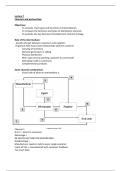
Some channel combinations
- Visual look of what an intermediary is
Channel 1
D to C = direct to consumer
Advantage =
RE-WATCH LECTURE FOR ADVANTAGES
Disadvantage =
Manufacturer needs to talk to every single customer
Loads of info = overwhelmed with customer feedback
Too much data
, Channel 2
Agents and distributors:
- Bring skills to marketing channel producer doesn’t have e.g., language skills, business
knowledge, legal certification.
- They bring market knowledge
- Distributors Collect the bulk and distribute it to a market that they sell
- Normally sell onto wholesalers
Wholesalers:
- Break and store bulk
- Take individual items, small number of items and send off to retailers
Retailers:
- Add value to marketing channel through location but also design, branding, store
personality, atmospherics.
Retailer types:
Channels and partnerships
Objectives:
- To consider main types and functions of intermediaries
- To compare the functions and types of distribution channels
- To evaluate the key decisions that determine channel strategy
Role of the intermediary:
- people who get between customers and suppliers
-important that they create relationships with the customer
- Carrying of inventory
- Demand generation or selling
- Physical distribution
- After-sales service (wanting customer to come back)
- Extending credit to customers
- Complementary products
Some channel combinations
- Visual look of what an intermediary is
Channel 1
D to C = direct to consumer
Advantage =
RE-WATCH LECTURE FOR ADVANTAGES
Disadvantage =
Manufacturer needs to talk to every single customer
Loads of info = overwhelmed with customer feedback
Too much data
, Channel 2
Agents and distributors:
- Bring skills to marketing channel producer doesn’t have e.g., language skills, business
knowledge, legal certification.
- They bring market knowledge
- Distributors Collect the bulk and distribute it to a market that they sell
- Normally sell onto wholesalers
Wholesalers:
- Break and store bulk
- Take individual items, small number of items and send off to retailers
Retailers:
- Add value to marketing channel through location but also design, branding, store
personality, atmospherics.
Retailer types:

