BIOS 242 Week 4 – Controlling Microbial Growth | Chamberlain University | Latest Updated
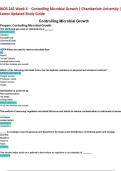
This document provides detailed notes and explanations for Week 4 of BIOS 242 at Chamberlain University, focusing on controlling microbial growth. Topics include sterilization techniques, disinfection methods, evaluation of antimicrobial effectiveness, and mechanisms of microbial death. Perfect for students preparing for exams, discussions, or lab assessments. BIOS 242 Week 4 – Controlling Microbial Growth | Chamberlain University | Latest Updated Study Guide Controlling Microbial Growth Prepare: Controlling Microbial Growth The sterilizing gas used in chemiclaves is . ethylene oxide iodophor formaldehyde chlorinedioxide Glutaraldehyde HEPAfilters are used to remove microbes from air. liquids. human tissues. medicalinstruments. All of the choices are correct. Which of the following microbial forms has the highest resistance to physical and chemical controls? Bacterialendospores Fungal spores Protozoan cysts Naked viruses Yeast Sterilization is achieved by flashpasteurization. hot water. boiling water. steamautoclave. All of the choices are correct. The method of removing vegetative microbial life forms and debris to reduce contamination to safe levels is termed . antisepsis pasteurization sanitization disinfection is a halogen used in gaseous and liquid form for large scale disinfection of drinking water and sewage. Bromine Betadine Fluorine Neon Chlorine The alcohol wipe used on a patient's skin before an injection is an example of . antisepsis disinfection sterilization decontamination sanitization Self-Check: Disinfection Techniques Drag the following terms to their corresponding description. destruction of most microbial life, but often does not kill spore-forming bacteria mechanical removal of most microbes from an animate or inanimate surface and can be accomplished with hot water, steam, or chemicals. prevents bacteria from reproducing and does not kill bacteria destruction of all microbial life including endospores disinfection on a living surface, such as patient’s arm kills bacteria the heating of food (ice-cream) and beverages (milk, juices) to remove harmful microbes. Disinfection Decontamination Bacteriostatic Sterilization Antisepsis Bacteriocide/Bacteriocidal Pasteurization Self-Check: DisinfectionTechniques II is disinfection on a living surface. antisepsis sanitization degermation disinfection Sterilization The most resistant infectious particles are . fungi endospores viruses prions Helminths are the sturdiest and most encountered infectious agents. For this reason, these are used to test the efficacy of autoclaves. viruses helminths fungi prions Endospores
Escuela, estudio y materia
- Institución
- BIOS 242
- Grado
- BIOS 242
Información del documento
- Subido en
- 1 de noviembre de 2025
- Número de páginas
- 15
- Escrito en
- 2025/2026
- Tipo
- Examen
- Contiene
- Preguntas y respuestas
Temas
-
microbial control
-
sterilization methods
-
disinfection techniques
-
bios 242 week 4
-
chemical agents
-
physical control methods
-
microbial death curve
-
autoclaving
-
hospital asepsis
-
antiseptics vs disinfectants

Documento también disponible en un lote