1| General Matters
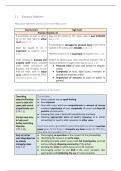
Allocation between County Court and High Court
County Court High Court
Practice Direction 7A
If jurisdiction to start in either May not be started in HC unless value is over £100,000
CC or HC, may start in either (para. 2.1).
court (para 1.1).
Proceedings for damages for personal injury must not be
Must be issued in CC if started in HC unless over £50,000 (para. 2.2).
enactment so requires (para.
2.3). Must be issued in HC if enactment so requires (para. 2.3).
Claim relating to business and Subject to above paras, claim should be started in HC if
property work which included claimant believes it ought to be, due to (para. 2.4):
work under jurisdiction of ● Financial value of claim and amount in dispute,
Business and Property Courts and/or
may be dealt with in either ● Complexity of facts, legal issues, remedies or
court, subject to any rule, PD or procedures involved, and/or
enactment (para. 2.5). ● Importance of outcome of claim to public in
general.
Overriding Objective and Duty of the Court
Overriding This includes:
objective 🡪 enable ● Ensure parties are on equal footing.
court to deal with ● Save expense.
cases justly and at ● Deal with cases which are proportionate to amount of money
proportionate cost involved, importance of case, complexity of issues and financial
(CPR 1.1) position of each party.
● Ensuring that case is dealt with expeditiously and fairly.
(Parties have duty ● Allotting appropriate share of court’s resources to it, whilst
to help court accounting for need to allot resources to other cases.
further overriding
objective Court must seek to give effect to overriding objective when it exercises
(CPR 1.3)). power given by the Rules or interprets any Rules subject to CPR 76.2,
79.2, 80.2, 82.2 and 88.2 (CPR 1.2).
Duty to further ● Encouraging co-operation in the conduct of the proceedings.
overriding objective ● Identifying the issues at an early stage.
by actively ● Deciding promptly which issues need full investigation and trial
managing cases and accordingly disposing summarily of the others.
(CPR 1.4) ● Deciding the order in which issues are to be resolved.
● Encouraging parties to use ADR if the court considers that
appropriate and facilitating the use of such procedure.
, ● Helping the parties to settle the whole or part of the case.
● Fixing timetables/otherwise controlling the progress of the case.
● Considering whether likely benefits of a step justify its cost.
● Dealing with as many aspects of the case as it can at same time.
● Dealing with the case without parties needing to attend at court.
● Making use of technology.
● Giving directions to ensure that trial proceeds quickly &
efficiently.
ADR: General Principles and Timing
General principles
Benefits ● Lower costs ● A wider range of issues/outcomes may be
● Speed of settlement considered
● Choice of forum ● Shared future interests may be protected
● Control of process ● Use of a problem-solving approach
● Flexibility of process ● Risk management
● Confidentiality
Things to ● How important is minimising ● Is a future relationship
consider costs? important?
● How important is fast ● Is an expert’s view important to
resolution? the issues?
● How much control do we want? ● Would neutral assistance be
● What are our main objectives? valuable?
Not ● A precedent is needed ● High levels of animosity
appropriate ● A court order is important ● There is a power imbalance
where… ● Interim orders are needed ● Are quasi-criminal allegations
● Evidential rules are important ● Having a day in court is
● A case is really strong important to a party
● A case is really complex ● Enforcement may be an issue
Responsibily ● Furthering overriding objective. ● Ensure objective reasons are
of lawyers ● Ensure client is sufficiently identified/evidenced if not using.
aware of ADR alternatives. ● Assist in selection of appropriate
● Provide information on ADR, third party to conduct ADR.
including pros and cons. ● Advise on strengths and
● Advise client on pre-action weaknesses of case for use of
obligations relating to ADR. non-adjudicative ADR.
● Advise client on overriding ● Consider and advise offers for
objective obligations to ADR. non-adjudicative ADR.
● Make client aware of penalties ● Advising on/drafting terms.
for not considering ADR. ● If got authority to settle on
● Get clear instructions of form of behalf of a client, must act
ADR to be used if selected. within that on basis of
sufficiently clear instructions.
Responsibility ● To engage in ADR wherever it offers reasonable prospect of producing
of parties just settlement at a proportionate cost.
, ● Should do this without need for court intervention.
● Continuing duty to consider it throughout the litigation.
Approach of Can only compel parties to consider. But strongly encourage.
the courts ● Ungley order 🡪 compel parties to consider at case-management
conference or pre-trial review.
● Directions questionnaires require parties to inform court whether
they want 1-month stay to settle the claim or if not possible at this
stage.
Halsey [2004] 🡪 in considering whether winning party acted unreasonably
in failing to agree to ADR, court will consider circumstances of case,
including (but not limited to):
● Nature of dispute (if needs determination of issues of law or a legal
precedent, contains allegations of fraud or requires urgent
injunctive relief, will not be suitable for ADR).
● Merits of the case.
● Extent to which other settlement methods have been attempted
(mediation may succeed where direct settlement discussions failed).
● Whether costs of ADR would have been disproportionately high.
● Whether delay in setting up/attending would have been prejudicial
(if proposed at late stage in litigation and likely to result in trial
delay, may be able to refuse).
● Whether ADR had reasonable prospect of success.
Distinction between rejecting offer of ADR and failure to initiate
proceedings: Vale of Glamorgan Council v Roberts.
Silence to invitation to initiate ADR is also considered unreasonable: PGF II
SA v OMFS Co 1 Ltd.
Sanctions for refusing to engage in ADR:
● Depriving party of costs even if successful in litigation.
● Ordering them to pay some/all of the other side’s costs.
● Ordering them to pay costs on an indemnity basis.
● Ordering a higher interest rate to be paid on damages awarded.
● Depriving a party of interest on damages awarded to them.
Timing Use of ADR
Procedural factors to consider: Practical factors to consider:
● Pre-selection of ADR in a contract. ● Overriding objective.
● Benefits of using at pre-action stage. ● Position as to costs.
● Whether to use on issue of ● Timeframe for reaching resolution.
proceedings. ● Issues in the case and strength of case.
● Using it at interim stage – interim ● Availability of information/evidence.
orders can support use of ADR. ● Importance of interim applications.
, Stages of Civil Claim
PRE-ACTION PROTOCOLS
Compulsory CLAIM SERVED
CLAIM ISSUED
Sanctions if not done
(Involves the
(adjournment, strike out) (Involves the other side in the
If no time (e.g., because of court in claim)
claim)
limitation) can issue
proceedings protectively
DISCLOSURE OF
DEFENCE FILED AND SERVED TRACK ALLOCATION DOCUMENTS
(File with court and serve to (Depends on (only existence/fact
other side) complexity and cost) of it, not a copy)
PRE-TRIAL REVIEW
EXCHANGE WITNESS Ensures case is trial
EXCHANGE
STATEMENTS EXPERT REPORTS ready; all directions
(normally simultaneously (unless have complied with; all
but not always, sometimes single joint evidence filed.
multiple rounds) expert) Normally not much
time between this
and trial
TRIAL JUDGMENT ENFORCEMENT
Allocation between County Court and High Court
County Court High Court
Practice Direction 7A
If jurisdiction to start in either May not be started in HC unless value is over £100,000
CC or HC, may start in either (para. 2.1).
court (para 1.1).
Proceedings for damages for personal injury must not be
Must be issued in CC if started in HC unless over £50,000 (para. 2.2).
enactment so requires (para.
2.3). Must be issued in HC if enactment so requires (para. 2.3).
Claim relating to business and Subject to above paras, claim should be started in HC if
property work which included claimant believes it ought to be, due to (para. 2.4):
work under jurisdiction of ● Financial value of claim and amount in dispute,
Business and Property Courts and/or
may be dealt with in either ● Complexity of facts, legal issues, remedies or
court, subject to any rule, PD or procedures involved, and/or
enactment (para. 2.5). ● Importance of outcome of claim to public in
general.
Overriding Objective and Duty of the Court
Overriding This includes:
objective 🡪 enable ● Ensure parties are on equal footing.
court to deal with ● Save expense.
cases justly and at ● Deal with cases which are proportionate to amount of money
proportionate cost involved, importance of case, complexity of issues and financial
(CPR 1.1) position of each party.
● Ensuring that case is dealt with expeditiously and fairly.
(Parties have duty ● Allotting appropriate share of court’s resources to it, whilst
to help court accounting for need to allot resources to other cases.
further overriding
objective Court must seek to give effect to overriding objective when it exercises
(CPR 1.3)). power given by the Rules or interprets any Rules subject to CPR 76.2,
79.2, 80.2, 82.2 and 88.2 (CPR 1.2).
Duty to further ● Encouraging co-operation in the conduct of the proceedings.
overriding objective ● Identifying the issues at an early stage.
by actively ● Deciding promptly which issues need full investigation and trial
managing cases and accordingly disposing summarily of the others.
(CPR 1.4) ● Deciding the order in which issues are to be resolved.
● Encouraging parties to use ADR if the court considers that
appropriate and facilitating the use of such procedure.
, ● Helping the parties to settle the whole or part of the case.
● Fixing timetables/otherwise controlling the progress of the case.
● Considering whether likely benefits of a step justify its cost.
● Dealing with as many aspects of the case as it can at same time.
● Dealing with the case without parties needing to attend at court.
● Making use of technology.
● Giving directions to ensure that trial proceeds quickly &
efficiently.
ADR: General Principles and Timing
General principles
Benefits ● Lower costs ● A wider range of issues/outcomes may be
● Speed of settlement considered
● Choice of forum ● Shared future interests may be protected
● Control of process ● Use of a problem-solving approach
● Flexibility of process ● Risk management
● Confidentiality
Things to ● How important is minimising ● Is a future relationship
consider costs? important?
● How important is fast ● Is an expert’s view important to
resolution? the issues?
● How much control do we want? ● Would neutral assistance be
● What are our main objectives? valuable?
Not ● A precedent is needed ● High levels of animosity
appropriate ● A court order is important ● There is a power imbalance
where… ● Interim orders are needed ● Are quasi-criminal allegations
● Evidential rules are important ● Having a day in court is
● A case is really strong important to a party
● A case is really complex ● Enforcement may be an issue
Responsibily ● Furthering overriding objective. ● Ensure objective reasons are
of lawyers ● Ensure client is sufficiently identified/evidenced if not using.
aware of ADR alternatives. ● Assist in selection of appropriate
● Provide information on ADR, third party to conduct ADR.
including pros and cons. ● Advise on strengths and
● Advise client on pre-action weaknesses of case for use of
obligations relating to ADR. non-adjudicative ADR.
● Advise client on overriding ● Consider and advise offers for
objective obligations to ADR. non-adjudicative ADR.
● Make client aware of penalties ● Advising on/drafting terms.
for not considering ADR. ● If got authority to settle on
● Get clear instructions of form of behalf of a client, must act
ADR to be used if selected. within that on basis of
sufficiently clear instructions.
Responsibility ● To engage in ADR wherever it offers reasonable prospect of producing
of parties just settlement at a proportionate cost.
, ● Should do this without need for court intervention.
● Continuing duty to consider it throughout the litigation.
Approach of Can only compel parties to consider. But strongly encourage.
the courts ● Ungley order 🡪 compel parties to consider at case-management
conference or pre-trial review.
● Directions questionnaires require parties to inform court whether
they want 1-month stay to settle the claim or if not possible at this
stage.
Halsey [2004] 🡪 in considering whether winning party acted unreasonably
in failing to agree to ADR, court will consider circumstances of case,
including (but not limited to):
● Nature of dispute (if needs determination of issues of law or a legal
precedent, contains allegations of fraud or requires urgent
injunctive relief, will not be suitable for ADR).
● Merits of the case.
● Extent to which other settlement methods have been attempted
(mediation may succeed where direct settlement discussions failed).
● Whether costs of ADR would have been disproportionately high.
● Whether delay in setting up/attending would have been prejudicial
(if proposed at late stage in litigation and likely to result in trial
delay, may be able to refuse).
● Whether ADR had reasonable prospect of success.
Distinction between rejecting offer of ADR and failure to initiate
proceedings: Vale of Glamorgan Council v Roberts.
Silence to invitation to initiate ADR is also considered unreasonable: PGF II
SA v OMFS Co 1 Ltd.
Sanctions for refusing to engage in ADR:
● Depriving party of costs even if successful in litigation.
● Ordering them to pay some/all of the other side’s costs.
● Ordering them to pay costs on an indemnity basis.
● Ordering a higher interest rate to be paid on damages awarded.
● Depriving a party of interest on damages awarded to them.
Timing Use of ADR
Procedural factors to consider: Practical factors to consider:
● Pre-selection of ADR in a contract. ● Overriding objective.
● Benefits of using at pre-action stage. ● Position as to costs.
● Whether to use on issue of ● Timeframe for reaching resolution.
proceedings. ● Issues in the case and strength of case.
● Using it at interim stage – interim ● Availability of information/evidence.
orders can support use of ADR. ● Importance of interim applications.
, Stages of Civil Claim
PRE-ACTION PROTOCOLS
Compulsory CLAIM SERVED
CLAIM ISSUED
Sanctions if not done
(Involves the
(adjournment, strike out) (Involves the other side in the
If no time (e.g., because of court in claim)
claim)
limitation) can issue
proceedings protectively
DISCLOSURE OF
DEFENCE FILED AND SERVED TRACK ALLOCATION DOCUMENTS
(File with court and serve to (Depends on (only existence/fact
other side) complexity and cost) of it, not a copy)
PRE-TRIAL REVIEW
EXCHANGE WITNESS Ensures case is trial
EXCHANGE
STATEMENTS EXPERT REPORTS ready; all directions
(normally simultaneously (unless have complied with; all
but not always, sometimes single joint evidence filed.
multiple rounds) expert) Normally not much
time between this
and trial
TRIAL JUDGMENT ENFORCEMENT