Art History: BA2 – Sem 1 –
2025/26
Prof. Ulrike Müller
Italian Renaissance
(The story of art – Gombrich, p 150-153, 167-174, 183-199, 215-245) -> zie samenvatting boek
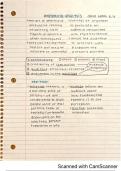
1240 -> 1265 -> 1290/95
Every picture has the same cross shape, only the apearance of Jesus and the 2 figures changes
(More depth by use of shadows)
➔ The Scrovegni Frescoes (1305 – 1310) - Giotto
Fresco = wall painting technique on wet plaster
- 39 scene
- Old and New testament
https://www.khanacademy.org/humanities/ap-art-
history/early-europe-and-colonial-americas/medieval-
europe-islamic-world/v/giotto-arena-scrovegni-chapel-
padua-c-1305-part-1-of-4 -> vid about the chapel
Scrovegni = name of the patron -> idea of naming after patron
blossomed in Renaissance
Seen in the Scrovegni Frescoes:
- Focus on Realism
- Jesus = NOT center
- Human emotions -> Virgin Mary, saints and angles show signs
of suffering
- Figures + landscape play role in creating perspective
- Symbolism of tree
,Enrico Scrovegni:
- Rich banker
- Tension between faith and economic development
o Chapel = religious place BUT owned privately
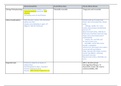
Byzantine style (4th – 13th century) Proto-Renaissance (early 14th century)
• Abstraction - Naturalism
• Frontal representation - Different perspectives
• Symmetry + symbolism - Real, worldly space
• Flat gold backgorund - Intuitive depth
• Tight composition o Not yet scientific
• Generic facial features - Human facial expressions
• Personal input not appreciated - Imitations of sculpture in Grisailles of
Pedestals and surfaces
Social and political context
- Urbanisation
- Changing social and political structures
- “Renaissance”
- Humanism
- Science and commerce
- Discovery of the world
Urbanisation
City = trade and crafts center, resources are gathered outside of the city
- Transition from agrarian to urban society
- Production -> processing of raw materials
- Growth of cities along trade routes (e.g. Florence – Bruges)
- Coin economy -> money took place of trade economy
- Merchant class (burghers/patricians) gains influence
Changin social structures
- Rise of the urban burgher class/ patriciate
o Upper layer of wealthy merchants/ bankers
o Power and status from wealth rather than family background
- Middling groups formed by craftsmen -> members of guild
o Guild = interest group for people with same job
- Large group of unskilled workers
Feudalism -> free republics
Feudalism = hierarchical, land-based system -> limited possibilities to move between layers
Since fall of Western roman empire -> early modern era (500 – 1500)
, - Small group holds economic and social power
- Land allocated by feudal lords to vassal
- Vassal gave his loyalty, military assistance and tax revenue
In renaissance Italy
- Flourishing cities buy independency from Holy Roman Emperor
- Emergence of “publico” (=informed, urban citizenry)
- Political independence informs visual culture and iconography
o Iconography = imagery or symbolism of a work of art that conveys particular
meanings
The renaissance
- Emergence of the Renaissance in Italy’s independent city states
o 14th century Florence: ‘Proto-Renaissance’
o 15th century: Renaissance in Medici Florence, Rome and Veneto
- Until ca. 1450: Renaissance mainly restricted to Italy
- After 1450: growing dissemination in Western and Central Europe
- Strong increase of dissemination of Italian culture after France’s invasion in Italy
1494
Concept of the Renaissance
= “rebirth” of “revival”
➔ Rebirth of classical antiquity
Counterin the medieval view of the world
Recurse to art and architecture of classical antiquity
Core classical ideals
- Secular focus
- Attention to individual
- Observation of real world
Renaissance humanism
- Emphasizes reason, observation and individual improvement
- Human values > religious dogmas
- Fame and legacy as new goals
E.g. Leonardo Da Vinci taking inspiration from ancient Roman Architect
Vitruvius, who described the correlations of ideal human body
proportions with geometry
Medieval Christian thought Classical thought
- Divine authority - Rationality
- Mankind dependent on God - Human potential, individualism
- Spiritual symbolism - Geometric harmony
- Orientation to metaphysical - Symmetry
world - Secular interest in fysical nature
- Instructional religious art - Sensory experience
o Scientific observations of
Art has to educate illiterate nature etc.
Intrinsic value of art
Idea that art van copy nature
, Cultural/ technical innovations
- Mathematical linear perspective
- Printing press in Europe
- Double-entry system of book-keeping and successive rise of Italian banking
powerhouses -> emergence of new patrons
Global impact
1492:
- Spanish inquisition
- Discovery America
Colonial expansion -> Africa and transatlantic slave trade
From 1517 -> Protestant reformation (Martin Luther) -> conflict between catholic and
protestants
“Renaissance after ‘dark’ middle ages” is a problematic idea
Renaissance in Florence
Northern Italy since 14th century:
- Rise of wealthy burgers
- Wealth from trade and banking
- Independent city-states
- Status and prestige leads to rivalry -> Stimulating growth
- Florence: Republic run by powerful families (e.g. Medici)
- Strong economic growth during 15th century
Cathedral of Florence becomes symbol of city’s pride and ambition
- 1436
- Dome by Filippo Brunelleschi
- Campanile (bel tower) by Giotto
- Baptistery with important Renaissance decorations
The Baptistery
= hall or chapel close to church for baptisms (usually centrally planned around
baptismal font.)
- Roman architecture, 11th century
o Completed 1059
o Classical style
o Roman (round) arches
o Corinthian capitals
- Notable artworks: 3 sets of Bronze doors
o South doors by Andrea Pisano 1329
2025/26
Prof. Ulrike Müller
Italian Renaissance
(The story of art – Gombrich, p 150-153, 167-174, 183-199, 215-245) -> zie samenvatting boek
1240 -> 1265 -> 1290/95
Every picture has the same cross shape, only the apearance of Jesus and the 2 figures changes
(More depth by use of shadows)
➔ The Scrovegni Frescoes (1305 – 1310) - Giotto
Fresco = wall painting technique on wet plaster
- 39 scene
- Old and New testament
https://www.khanacademy.org/humanities/ap-art-
history/early-europe-and-colonial-americas/medieval-
europe-islamic-world/v/giotto-arena-scrovegni-chapel-
padua-c-1305-part-1-of-4 -> vid about the chapel
Scrovegni = name of the patron -> idea of naming after patron
blossomed in Renaissance
Seen in the Scrovegni Frescoes:
- Focus on Realism
- Jesus = NOT center
- Human emotions -> Virgin Mary, saints and angles show signs
of suffering
- Figures + landscape play role in creating perspective
- Symbolism of tree
,Enrico Scrovegni:
- Rich banker
- Tension between faith and economic development
o Chapel = religious place BUT owned privately
Byzantine style (4th – 13th century) Proto-Renaissance (early 14th century)
• Abstraction - Naturalism
• Frontal representation - Different perspectives
• Symmetry + symbolism - Real, worldly space
• Flat gold backgorund - Intuitive depth
• Tight composition o Not yet scientific
• Generic facial features - Human facial expressions
• Personal input not appreciated - Imitations of sculpture in Grisailles of
Pedestals and surfaces
Social and political context
- Urbanisation
- Changing social and political structures
- “Renaissance”
- Humanism
- Science and commerce
- Discovery of the world
Urbanisation
City = trade and crafts center, resources are gathered outside of the city
- Transition from agrarian to urban society
- Production -> processing of raw materials
- Growth of cities along trade routes (e.g. Florence – Bruges)
- Coin economy -> money took place of trade economy
- Merchant class (burghers/patricians) gains influence
Changin social structures
- Rise of the urban burgher class/ patriciate
o Upper layer of wealthy merchants/ bankers
o Power and status from wealth rather than family background
- Middling groups formed by craftsmen -> members of guild
o Guild = interest group for people with same job
- Large group of unskilled workers
Feudalism -> free republics
Feudalism = hierarchical, land-based system -> limited possibilities to move between layers
Since fall of Western roman empire -> early modern era (500 – 1500)
, - Small group holds economic and social power
- Land allocated by feudal lords to vassal
- Vassal gave his loyalty, military assistance and tax revenue
In renaissance Italy
- Flourishing cities buy independency from Holy Roman Emperor
- Emergence of “publico” (=informed, urban citizenry)
- Political independence informs visual culture and iconography
o Iconography = imagery or symbolism of a work of art that conveys particular
meanings
The renaissance
- Emergence of the Renaissance in Italy’s independent city states
o 14th century Florence: ‘Proto-Renaissance’
o 15th century: Renaissance in Medici Florence, Rome and Veneto
- Until ca. 1450: Renaissance mainly restricted to Italy
- After 1450: growing dissemination in Western and Central Europe
- Strong increase of dissemination of Italian culture after France’s invasion in Italy
1494
Concept of the Renaissance
= “rebirth” of “revival”
➔ Rebirth of classical antiquity
Counterin the medieval view of the world
Recurse to art and architecture of classical antiquity
Core classical ideals
- Secular focus
- Attention to individual
- Observation of real world
Renaissance humanism
- Emphasizes reason, observation and individual improvement
- Human values > religious dogmas
- Fame and legacy as new goals
E.g. Leonardo Da Vinci taking inspiration from ancient Roman Architect
Vitruvius, who described the correlations of ideal human body
proportions with geometry
Medieval Christian thought Classical thought
- Divine authority - Rationality
- Mankind dependent on God - Human potential, individualism
- Spiritual symbolism - Geometric harmony
- Orientation to metaphysical - Symmetry
world - Secular interest in fysical nature
- Instructional religious art - Sensory experience
o Scientific observations of
Art has to educate illiterate nature etc.
Intrinsic value of art
Idea that art van copy nature
, Cultural/ technical innovations
- Mathematical linear perspective
- Printing press in Europe
- Double-entry system of book-keeping and successive rise of Italian banking
powerhouses -> emergence of new patrons
Global impact
1492:
- Spanish inquisition
- Discovery America
Colonial expansion -> Africa and transatlantic slave trade
From 1517 -> Protestant reformation (Martin Luther) -> conflict between catholic and
protestants
“Renaissance after ‘dark’ middle ages” is a problematic idea
Renaissance in Florence
Northern Italy since 14th century:
- Rise of wealthy burgers
- Wealth from trade and banking
- Independent city-states
- Status and prestige leads to rivalry -> Stimulating growth
- Florence: Republic run by powerful families (e.g. Medici)
- Strong economic growth during 15th century
Cathedral of Florence becomes symbol of city’s pride and ambition
- 1436
- Dome by Filippo Brunelleschi
- Campanile (bel tower) by Giotto
- Baptistery with important Renaissance decorations
The Baptistery
= hall or chapel close to church for baptisms (usually centrally planned around
baptismal font.)
- Roman architecture, 11th century
o Completed 1059
o Classical style
o Roman (round) arches
o Corinthian capitals
- Notable artworks: 3 sets of Bronze doors
o South doors by Andrea Pisano 1329