Addiction
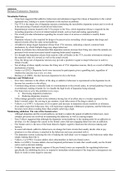
Biological Explanation: Dopamine
Mesolimbic Pathway
- It has been suggested that addictive behaviours and substances trigger the release of dopamine in the ventral
tegmental area, leading to a sense of pleasure in the nucleus accumbens.
- The VTA is the major site of dopamine neurons constituting the mesolimbic dopamine system and is involved
in the processing of natural reward driven behaviours.
- Dopaminergic neurons located in the VTA project to the NAc, where dopamine release is required for the
rewarding properties of survival related natural stimuli, such as food and mating opportunities.
- The circuit provides information regarding the reward value of an action or stimulus to modify future
behaviour.
- Dopamine release is also required for drugs to be perceived as rewarding, which suggests that drugs and
natural rewards affect the same reward pathway.
- All addictive drugs trigger dopamine release from VTA neurons, indicating a shared, common brain
mechanism, by which multiple drugs may shape behaviour.
- Studies in primates have demonstrated that dopamine neurons increase their firing rate when the animals are
presented with reward associated stimuli requiring behavioural responses.
- It is thought that dopamine release from neurons with cell bodies in the VTA encodes information relating to
the expected value of a reward, as well as the actual reward.
- Thus, the firing rate of dopamine neurons may provide a predictive signal to shape behaviour in order to
obtain rewards.
- Not all drugs of abuse rapidly increase the firing rate of VTA dopamine neurons, likely as a result of differing
mechanisms of action.
- Joutsa et al (2012): Dopamine levels were increased in participants given a gambling task, regardless of
whether the outcome was a win. or a loss.
- Boileau et al (2003): Alcohol increases dopamine levels in the brain.
Tolerance and Withdrawal
- Over time, tolerance to the effects of the drug or addictive behaviour is experienced as the dopamine levels
become less sensitive to the effects.
- Consistent drug misuse eventually leads to overstimulation in the reward centre, its reward pathways become
overwhelmed, making it harder for it to handle the high levels of dopamine being released.
- The brain tries to solve this problem in two ways:
Decreasing dopamine production
Reducing dopamine receptors
- Either change generally results in the substance having less of an effect due to a weaker response by the
brain’s reward centre- the craving to use remains, it just takes more of the drug to satisfy it.
- Volkow et al (1997): A decrease in D2 receptors and decrease in dopamine release manifests as tolerance.
- If an addict stops their behaviour, they will experience unpleasant withdrawal symptoms, and the behaviour
becomes more about avoiding these than actually achieving a high.
Maintaining addiction: The role of the frontal cortex
- Although dopamine and the reward pathway can help to explain the appeal of addictive behaviours, more
complex processes are involved in maintaining the addiction, as well as causing relapse.
- Nora Volkow suggested that although the dopamine reward pathway is the starting point for an addiction to
develop, it is the changes this causes in the frontal cortex that turn engaging behaviour into an addiction.
- The frontal cortex is the area of the brain linked to higher cognitive functions like decision making and
memory
- In some individuals, addictive behaviours can change the brain circuits that usually decide what to pay
attention to so that salience is attached to the behaviour and cues associated with it.
- The dopamine system is playing the role of making the individual want to engage in the behaviour rather than
simply making them like it.
- Volkow et al (1992): Cocaine addicts show abnormalities in their pre-frontal cortex.
- Bolla et al (2003): Cocaine addicts showed impaired performance in tasks that would usually use the frontal
cortex such as decision making.
- Evidence suggests that specific regions of the pre-frontal cortex are responsible for regulating behaviour-
specifically for inhibiting the drive to respond to immediate reinforcement if the long-term consequences are
likely to result in some negative outcome.
Biological Explanation: Dopamine
Mesolimbic Pathway
- It has been suggested that addictive behaviours and substances trigger the release of dopamine in the ventral
tegmental area, leading to a sense of pleasure in the nucleus accumbens.
- The VTA is the major site of dopamine neurons constituting the mesolimbic dopamine system and is involved
in the processing of natural reward driven behaviours.
- Dopaminergic neurons located in the VTA project to the NAc, where dopamine release is required for the
rewarding properties of survival related natural stimuli, such as food and mating opportunities.
- The circuit provides information regarding the reward value of an action or stimulus to modify future
behaviour.
- Dopamine release is also required for drugs to be perceived as rewarding, which suggests that drugs and
natural rewards affect the same reward pathway.
- All addictive drugs trigger dopamine release from VTA neurons, indicating a shared, common brain
mechanism, by which multiple drugs may shape behaviour.
- Studies in primates have demonstrated that dopamine neurons increase their firing rate when the animals are
presented with reward associated stimuli requiring behavioural responses.
- It is thought that dopamine release from neurons with cell bodies in the VTA encodes information relating to
the expected value of a reward, as well as the actual reward.
- Thus, the firing rate of dopamine neurons may provide a predictive signal to shape behaviour in order to
obtain rewards.
- Not all drugs of abuse rapidly increase the firing rate of VTA dopamine neurons, likely as a result of differing
mechanisms of action.
- Joutsa et al (2012): Dopamine levels were increased in participants given a gambling task, regardless of
whether the outcome was a win. or a loss.
- Boileau et al (2003): Alcohol increases dopamine levels in the brain.
Tolerance and Withdrawal
- Over time, tolerance to the effects of the drug or addictive behaviour is experienced as the dopamine levels
become less sensitive to the effects.
- Consistent drug misuse eventually leads to overstimulation in the reward centre, its reward pathways become
overwhelmed, making it harder for it to handle the high levels of dopamine being released.
- The brain tries to solve this problem in two ways:
Decreasing dopamine production
Reducing dopamine receptors
- Either change generally results in the substance having less of an effect due to a weaker response by the
brain’s reward centre- the craving to use remains, it just takes more of the drug to satisfy it.
- Volkow et al (1997): A decrease in D2 receptors and decrease in dopamine release manifests as tolerance.
- If an addict stops their behaviour, they will experience unpleasant withdrawal symptoms, and the behaviour
becomes more about avoiding these than actually achieving a high.
Maintaining addiction: The role of the frontal cortex
- Although dopamine and the reward pathway can help to explain the appeal of addictive behaviours, more
complex processes are involved in maintaining the addiction, as well as causing relapse.
- Nora Volkow suggested that although the dopamine reward pathway is the starting point for an addiction to
develop, it is the changes this causes in the frontal cortex that turn engaging behaviour into an addiction.
- The frontal cortex is the area of the brain linked to higher cognitive functions like decision making and
memory
- In some individuals, addictive behaviours can change the brain circuits that usually decide what to pay
attention to so that salience is attached to the behaviour and cues associated with it.
- The dopamine system is playing the role of making the individual want to engage in the behaviour rather than
simply making them like it.
- Volkow et al (1992): Cocaine addicts show abnormalities in their pre-frontal cortex.
- Bolla et al (2003): Cocaine addicts showed impaired performance in tasks that would usually use the frontal
cortex such as decision making.
- Evidence suggests that specific regions of the pre-frontal cortex are responsible for regulating behaviour-
specifically for inhibiting the drive to respond to immediate reinforcement if the long-term consequences are
likely to result in some negative outcome.