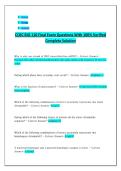
BASIC NUTRITION LATEST
EXAM
1. The capacity of the cell's mitochondria to produce ATP energy is
referred to as?
A. bioregeneraion
B. biothermogenesis
C. bioexpenditure
D. bioenergetics - ANSWERS-D
2. Lysomal degradation of organelles, unfolded proteins, and foreign
extracellular materials is know as:
A. Mitophagy
B. autophagy
C. mitogenesis
D. apoptosis - ANSWERS-B
3. Which of the following is NOT associated with mitochondrial
toxicity?
A. alcohol ingestion
B. glyphosate
C. diet high in processed/simple carbohydrates
END OF
PAGE
1
, BASIC NUTRITION LATEST
EXAM
D. diet that puts an individual in a caloric deficit - ANSWERS-D
4. Enterocyte tight junctions determine the level of gut permeability.
Destruction of tight junctions results in all the following EXCEPT:
A. results in LPS endotoxemia
B. passage of potentially antigenic large protein molecules found in
food.
C. release of anti-inflammatory mediators from the GALT/Peyers
patches (gastrointestinal associated typhoid tissue)
D. medical/surgical intervention to repair - ANSWERS-D
5. Many patients are taking multiple medications; a prince known as
polypharmacy. Common medications that disturb nutrient kinetics
include all of the following EXCEPT:
A. antacids
B. antibiotics
C. anti-inflammatory
D. pre-biotics - ANSWERS-D
END OF
PAGE
2
, BASIC NUTRITION LATEST
EXAM
6. Which of the following is NOT a biomarker of mitochondrial
function?
A. coenzyme Q10
B. B vitamins
C. insulin
D. alpha-lipoid acid
E. TCA (krebs cycle) intermediates (citrate) - ANSWERS-C
7. Glucose:
A. generates 9 kcal per gram consumed
B. requires modification in the liver before being processed by cells of
the body
C. is the preferred energy source for some cancers (glioblastoma)
D. is an essential nutrient for the human body - ANSWERS-C
8. The following question concerns body composition. Visceral adipose
tissue (VAT)
A. is a risk factor for cardiovascular disease when increased
END OF
PAGE
3
, BASIC NUTRITION LATEST
EXAM
B. parallels the accumulation of fat in white adipose tissue (WAT) or
subcutaneous storage
C. consists of a greater number of anti-inflammatory type macrophages
D. behaves metabolically similar to brown fat - ANSWERS-A
9. Which of the following compounds contribute/s to the intracellular
pool of antioxidants?
A. Glutathione
B. uric acid
C. superoxide dismutase
D. none of the above
E. both a & c - ANSWERS-E
10. In all of the following circumstances mitochondria function is
impacted negatively EXCEPT:
A. aging
B. cancer
C. environmental toxicity including medications & pesticides
D. fasting - ANSWERS-D
END OF
PAGE
4
EXAM
1. The capacity of the cell's mitochondria to produce ATP energy is
referred to as?
A. bioregeneraion
B. biothermogenesis
C. bioexpenditure
D. bioenergetics - ANSWERS-D
2. Lysomal degradation of organelles, unfolded proteins, and foreign
extracellular materials is know as:
A. Mitophagy
B. autophagy
C. mitogenesis
D. apoptosis - ANSWERS-B
3. Which of the following is NOT associated with mitochondrial
toxicity?
A. alcohol ingestion
B. glyphosate
C. diet high in processed/simple carbohydrates
END OF
PAGE
1
, BASIC NUTRITION LATEST
EXAM
D. diet that puts an individual in a caloric deficit - ANSWERS-D
4. Enterocyte tight junctions determine the level of gut permeability.
Destruction of tight junctions results in all the following EXCEPT:
A. results in LPS endotoxemia
B. passage of potentially antigenic large protein molecules found in
food.
C. release of anti-inflammatory mediators from the GALT/Peyers
patches (gastrointestinal associated typhoid tissue)
D. medical/surgical intervention to repair - ANSWERS-D
5. Many patients are taking multiple medications; a prince known as
polypharmacy. Common medications that disturb nutrient kinetics
include all of the following EXCEPT:
A. antacids
B. antibiotics
C. anti-inflammatory
D. pre-biotics - ANSWERS-D
END OF
PAGE
2
, BASIC NUTRITION LATEST
EXAM
6. Which of the following is NOT a biomarker of mitochondrial
function?
A. coenzyme Q10
B. B vitamins
C. insulin
D. alpha-lipoid acid
E. TCA (krebs cycle) intermediates (citrate) - ANSWERS-C
7. Glucose:
A. generates 9 kcal per gram consumed
B. requires modification in the liver before being processed by cells of
the body
C. is the preferred energy source for some cancers (glioblastoma)
D. is an essential nutrient for the human body - ANSWERS-C
8. The following question concerns body composition. Visceral adipose
tissue (VAT)
A. is a risk factor for cardiovascular disease when increased
END OF
PAGE
3
, BASIC NUTRITION LATEST
EXAM
B. parallels the accumulation of fat in white adipose tissue (WAT) or
subcutaneous storage
C. consists of a greater number of anti-inflammatory type macrophages
D. behaves metabolically similar to brown fat - ANSWERS-A
9. Which of the following compounds contribute/s to the intracellular
pool of antioxidants?
A. Glutathione
B. uric acid
C. superoxide dismutase
D. none of the above
E. both a & c - ANSWERS-E
10. In all of the following circumstances mitochondria function is
impacted negatively EXCEPT:
A. aging
B. cancer
C. environmental toxicity including medications & pesticides
D. fasting - ANSWERS-D
END OF
PAGE
4