1
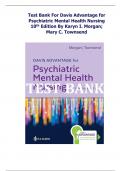
Test Bank
chemistry by Julia Burdge
4th Edition
1-1
Copyright © 2016 McGraw-Hill Education. All rights reserved. No reproduction or distribution without the prior written consent of
McGraw-Hill Education.
, 2
Chapter 01
Chemistry: The Central Science
1. What is a unifying principle that explains a body of experimental observations?
A. Law
B. Hypothesis
C. Theory
D. Phenomena
E. Prediction
Blooms: 2. Understand
Difficulty: Easy
Gradable: automatic
Subtopic: Scientific Method
Topic: Study of Chemistry
2. Which of the following is a tentative explanation for a set of observations?
A. Law
B. Hypothesis
C. Theory
D. Phenomena
E. Prediction
Blooms: 2. Understand
Difficulty: Easy
Gradable: automatic
Subtopic: Scientific Method
Topic: Study of Chemistry
3. What is the term used for findings that are summarized based on a pattern or trend?
A. Law
B. Hypothesis
C. Theory
D. Phenomena
E. Prediction
Blooms: 2. Understand
Difficulty: Easy
Gradable: automatic
Subtopic: Scientific Method
Topic: Study of Chemistry
4. Which of the following activities is not a part of good science?
A. Proposing a theory
B. Developing a hypothesis
C. Making quantitative observations
D. Designing experiments
E. Indulging in speculation
Blooms: 2. Understand
Difficulty: Easy
Gradable: automatic
Subtopic: Scientific Method
Topic: Study of Chemistry
5. Which of the following is a ‘substance’ according to the definition given in your textbook?
A. Air
B. Tap water
C. Sea water
D. Water
E. Toothpaste
Blooms: 3. Apply
Difficulty: Medium
Gradable: automatic
Subtopic: Classification and States of Matter
Subtopic: Properties of Matter
Topic: Study of Chemistry
1-2
Copyright © 2016 McGraw-Hill Education. All rights reserved. No reproduction or distribution without the prior written consent of
McGraw-Hill Education.
, 3
6. Which of the following cannot be separated into simpler substances by chemical means?
A. Element
B. Emulsion
C. Compound
D. Homogeneous mixture
E. Heterogeneous mixture
Blooms: 4. Analyze
Difficulty: Medium
Gradable: automatic
Subtopic: Classification and States of Matter
Subtopic: Properties of Matter
Topic: Study of Chemistry
7. If a liquid contains 60% sugar and 40% water throughout its composition then what is it called?
A. Solute
B. Compound
C. Homogeneous mixture
D. Heterogeneous mixture
E. Solvent
Blooms: 4. Analyze
Difficulty: Medium
Gradable: automatic
Subtopic: Classification and States of Matter
Subtopic: Properties of Matter
Topic: Study of Chemistry
8. Which of the following does not have a uniform composition throughout?
A. Element
B. Compound
C. Homogeneous mixture
D. Heterogeneous mixture
E. Solvent
Blooms: 3. Apply
Difficulty: Easy
Gradable: automatic
Subtopic: Classification and States of Matter
Subtopic: Properties of Matter
Topic: Study of Chemistry
9. Which of the following is not an SI base unit?
A. Meter
B. Ampere
C. Second
D. Gram
E. Kelvin
Blooms: 2. Understand
Difficulty: Medium
Gradable: automatic
Subtopic: Measurement (SI Units)
Topic: Study of Chemistry
10. The SI base unit of mass is
A. mg.
B. g.
C. kg.
D. metric ton.
E. lb.
Blooms: 1. Remember
Difficulty: Medium
Gradable: automatic
Subtopic: Measurement (SI Units)
Topic: Study of Chemistry
1-3
Copyright © 2016 McGraw-Hill Education. All rights reserved. No reproduction or distribution without the prior written consent of
McGraw-Hill Education.
, 4
11. The SI prefix mega- (M) means
A. 10–6
B. 10–3
C. 103
D. 106
E. 109
Blooms: 1. Remember
Difficulty: Easy
Gradable: automatic
Subtopic: Measurement (SI Units)
Topic: Study of Chemistry
12. The SI prefixes milli- and mega- represent, respectively
A. 106 and 10–6
B. 10–3 and 106
C. 103 and 10–6
D. 10–3 and 109
E. 10–6 and 10–3
.
Blooms: 1. Remember
Difficulty: Medium
Gradable: automatic
Subtopic: Measurement (SI Units)
Topic: Study of Chemistry
13. How many micrograms are in 65.3 kg?
A. 0.653 μg
B. 6.53 × 10⁷ μg
C. 6.53 × 10⁴ μg
D. 6.53 × 10⁻⁸ μg
E. 6.53 × 10¹⁰ μg
Blooms: 3. Apply
Difficulty: Hard
Gradable: automatic
Subtopic: Dimensional Analysis
Subtopic: Measurement (SI Units)
Subtopic: Scientific Notation and Significant Figures
Topic: Study of Chemistry
14. A dose of medication was prescribed to be 35 microliters. Which of the following expresses that volume in centiliters?
A. 3.5 × 10⁵ cL
B. 3.5 × 10⁴ cL
C. 3.5 cL
D. 3.5 × 10⁻⁴ cL
E. 3.5 × 10⁻³ cL
Blooms: 3. Apply
Difficulty: Hard
Gradable: automatic
Subtopic: Dimensional Analysis
Subtopic: Measurement (SI Units)
Subtopic: Scientific Notation and Significant Figures
Topic: Study of Chemistry
15. How many milliliters is 0.0055 L?
A. 0.55 mL
B. 5.5 mL
C. 0.5 mL
D. 0.0000055 mL
E. 182 mL
Blooms: 3. Apply
Difficulty: Medium
Gradable: automatic
Subtopic: Dimensional Analysis
Subtopic: Measurement (SI Units)
Subtopic: Scientific Notation and Significant Figures
Topic: Study of Chemistry
1-4
Copyright © 2016 McGraw-Hill Education. All rights reserved. No reproduction or distribution without the prior written consent of
McGraw-Hill Education.
Test Bank
chemistry by Julia Burdge
4th Edition
1-1
Copyright © 2016 McGraw-Hill Education. All rights reserved. No reproduction or distribution without the prior written consent of
McGraw-Hill Education.
, 2
Chapter 01
Chemistry: The Central Science
1. What is a unifying principle that explains a body of experimental observations?
A. Law
B. Hypothesis
C. Theory
D. Phenomena
E. Prediction
Blooms: 2. Understand
Difficulty: Easy
Gradable: automatic
Subtopic: Scientific Method
Topic: Study of Chemistry
2. Which of the following is a tentative explanation for a set of observations?
A. Law
B. Hypothesis
C. Theory
D. Phenomena
E. Prediction
Blooms: 2. Understand
Difficulty: Easy
Gradable: automatic
Subtopic: Scientific Method
Topic: Study of Chemistry
3. What is the term used for findings that are summarized based on a pattern or trend?
A. Law
B. Hypothesis
C. Theory
D. Phenomena
E. Prediction
Blooms: 2. Understand
Difficulty: Easy
Gradable: automatic
Subtopic: Scientific Method
Topic: Study of Chemistry
4. Which of the following activities is not a part of good science?
A. Proposing a theory
B. Developing a hypothesis
C. Making quantitative observations
D. Designing experiments
E. Indulging in speculation
Blooms: 2. Understand
Difficulty: Easy
Gradable: automatic
Subtopic: Scientific Method
Topic: Study of Chemistry
5. Which of the following is a ‘substance’ according to the definition given in your textbook?
A. Air
B. Tap water
C. Sea water
D. Water
E. Toothpaste
Blooms: 3. Apply
Difficulty: Medium
Gradable: automatic
Subtopic: Classification and States of Matter
Subtopic: Properties of Matter
Topic: Study of Chemistry
1-2
Copyright © 2016 McGraw-Hill Education. All rights reserved. No reproduction or distribution without the prior written consent of
McGraw-Hill Education.
, 3
6. Which of the following cannot be separated into simpler substances by chemical means?
A. Element
B. Emulsion
C. Compound
D. Homogeneous mixture
E. Heterogeneous mixture
Blooms: 4. Analyze
Difficulty: Medium
Gradable: automatic
Subtopic: Classification and States of Matter
Subtopic: Properties of Matter
Topic: Study of Chemistry
7. If a liquid contains 60% sugar and 40% water throughout its composition then what is it called?
A. Solute
B. Compound
C. Homogeneous mixture
D. Heterogeneous mixture
E. Solvent
Blooms: 4. Analyze
Difficulty: Medium
Gradable: automatic
Subtopic: Classification and States of Matter
Subtopic: Properties of Matter
Topic: Study of Chemistry
8. Which of the following does not have a uniform composition throughout?
A. Element
B. Compound
C. Homogeneous mixture
D. Heterogeneous mixture
E. Solvent
Blooms: 3. Apply
Difficulty: Easy
Gradable: automatic
Subtopic: Classification and States of Matter
Subtopic: Properties of Matter
Topic: Study of Chemistry
9. Which of the following is not an SI base unit?
A. Meter
B. Ampere
C. Second
D. Gram
E. Kelvin
Blooms: 2. Understand
Difficulty: Medium
Gradable: automatic
Subtopic: Measurement (SI Units)
Topic: Study of Chemistry
10. The SI base unit of mass is
A. mg.
B. g.
C. kg.
D. metric ton.
E. lb.
Blooms: 1. Remember
Difficulty: Medium
Gradable: automatic
Subtopic: Measurement (SI Units)
Topic: Study of Chemistry
1-3
Copyright © 2016 McGraw-Hill Education. All rights reserved. No reproduction or distribution without the prior written consent of
McGraw-Hill Education.
, 4
11. The SI prefix mega- (M) means
A. 10–6
B. 10–3
C. 103
D. 106
E. 109
Blooms: 1. Remember
Difficulty: Easy
Gradable: automatic
Subtopic: Measurement (SI Units)
Topic: Study of Chemistry
12. The SI prefixes milli- and mega- represent, respectively
A. 106 and 10–6
B. 10–3 and 106
C. 103 and 10–6
D. 10–3 and 109
E. 10–6 and 10–3
.
Blooms: 1. Remember
Difficulty: Medium
Gradable: automatic
Subtopic: Measurement (SI Units)
Topic: Study of Chemistry
13. How many micrograms are in 65.3 kg?
A. 0.653 μg
B. 6.53 × 10⁷ μg
C. 6.53 × 10⁴ μg
D. 6.53 × 10⁻⁸ μg
E. 6.53 × 10¹⁰ μg
Blooms: 3. Apply
Difficulty: Hard
Gradable: automatic
Subtopic: Dimensional Analysis
Subtopic: Measurement (SI Units)
Subtopic: Scientific Notation and Significant Figures
Topic: Study of Chemistry
14. A dose of medication was prescribed to be 35 microliters. Which of the following expresses that volume in centiliters?
A. 3.5 × 10⁵ cL
B. 3.5 × 10⁴ cL
C. 3.5 cL
D. 3.5 × 10⁻⁴ cL
E. 3.5 × 10⁻³ cL
Blooms: 3. Apply
Difficulty: Hard
Gradable: automatic
Subtopic: Dimensional Analysis
Subtopic: Measurement (SI Units)
Subtopic: Scientific Notation and Significant Figures
Topic: Study of Chemistry
15. How many milliliters is 0.0055 L?
A. 0.55 mL
B. 5.5 mL
C. 0.5 mL
D. 0.0000055 mL
E. 182 mL
Blooms: 3. Apply
Difficulty: Medium
Gradable: automatic
Subtopic: Dimensional Analysis
Subtopic: Measurement (SI Units)
Subtopic: Scientific Notation and Significant Figures
Topic: Study of Chemistry
1-4
Copyright © 2016 McGraw-Hill Education. All rights reserved. No reproduction or distribution without the prior written consent of
McGraw-Hill Education.