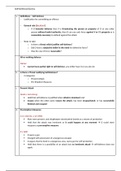
Experimental
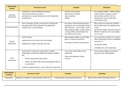
How does it work? Strengths Limitations
method
- conducted in a well-controlled environment - accurate measurements - low ecological validity – artificial setting
- researcher decides the procedure - high control of variables makes it harder to apply to real-life
Laboratory
- participants are randomly allocated to each independent - easy to replicate - demand characteristics from the
experiments
variable group - reliable experimenter may cause bias thus
confounding results
- done in everyday, real life, environments of participants - low chance of demand characteristics: - little control over extraneous variables
- the experimenter still manipulates the independent participants won’t purposefully change which might impact the reliability of the
Field experiments variable, but in a real life setting their behaviour = more realistic results results
- high ecological validity: it takes place in - low internal validity (not well structured)
a natural setting and participants are - difficult to replicate as the same setting
more likely to act natural can’t be used
- real-life setting - high ecological validity: research takes - Low control over variables: so a cause &
place in a natural environment effect relationship cannot be established
- experimenter has no control over the variables
Natural accurately
- low chance of demand characteristics
experiments - Independent variable is naturally occurring
- low internal validity
- Unreliable and can’t be replicated
- used when the researcher is interested in a specific - an accurate cause & effect in the - lower external validity (not universal
independent variable that CANNOT BE randomly assigned, experiment because it lacks randomisation)
like:
- reduces the difficulty & ethical
Quasi o innate characteristics (personality) concerns
experiments
o create a set initial criteria to then investigate further as
an experiment
- a specific sampling method is used, rather than randomised
Observational
How does it work? Strengths Limitations
technique
Naturalistic Behaviour is studied in a natural situation where the - realistic picture of spontaneous behaviour - little control of all the other things that are
How does it work? Strengths Limitations
method
- conducted in a well-controlled environment - accurate measurements - low ecological validity – artificial setting
- researcher decides the procedure - high control of variables makes it harder to apply to real-life
Laboratory
- participants are randomly allocated to each independent - easy to replicate - demand characteristics from the
experiments
variable group - reliable experimenter may cause bias thus
confounding results
- done in everyday, real life, environments of participants - low chance of demand characteristics: - little control over extraneous variables
- the experimenter still manipulates the independent participants won’t purposefully change which might impact the reliability of the
Field experiments variable, but in a real life setting their behaviour = more realistic results results
- high ecological validity: it takes place in - low internal validity (not well structured)
a natural setting and participants are - difficult to replicate as the same setting
more likely to act natural can’t be used
- real-life setting - high ecological validity: research takes - Low control over variables: so a cause &
place in a natural environment effect relationship cannot be established
- experimenter has no control over the variables
Natural accurately
- low chance of demand characteristics
experiments - Independent variable is naturally occurring
- low internal validity
- Unreliable and can’t be replicated
- used when the researcher is interested in a specific - an accurate cause & effect in the - lower external validity (not universal
independent variable that CANNOT BE randomly assigned, experiment because it lacks randomisation)
like:
- reduces the difficulty & ethical
Quasi o innate characteristics (personality) concerns
experiments
o create a set initial criteria to then investigate further as
an experiment
- a specific sampling method is used, rather than randomised
Observational
How does it work? Strengths Limitations
technique
Naturalistic Behaviour is studied in a natural situation where the - realistic picture of spontaneous behaviour - little control of all the other things that are