Memory
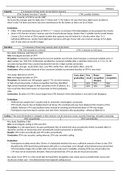
Capacity A measure of how much can be held in memory
STM: limited, less than 7 chunks LTM: possibly limitless
Key study: Capacity of STM by Jacobs 1887
He found the average span for digits was 9.3 items and 7.3 for letters. He says that more digits were recalled as
there’s only 9 of them and there was less remembrance for the letters as there are 26 of them.
Evaluation:
+ Miller 1956 concluded that span of STM is 7 +- 2 items, to enhance STM letter&digits can be grouped into chunks
+ Simon 1974 found a shorter memory span for 8 word phrases (large chunks) than 1-syllable words (small chunks)
- Cowan’s 2011 review of STM capacity studies that capacity may be limited to 4 chunks rather than 7+-2.
- Individual differences. Jacobs found digit span increases with age: 8 year olds can recall an average of 6.6 digits,
and 19 year olds can recall 8.6 digits
Duration A measure of how long memory lasts in the brain
STM: few seconds to a minute LTM: 2 minutes to 100 years
Key study: Peterson and Peterson 1959
Aim: investigate duration of STM
Procedure: Conducted a lab experiment to test 24 students over 8 trials. Each trial gave a consonant syllable and a 3-
digit number (ex. THX 512). Participants recalled the consonant syllable after a retention interval (3, 6, 9, 12, 15, 18
seconds) during which they counted backwards from the 3-digit number presented.
Findings: On average, recall within 3sec. was 90%, within 9sec. 20% and within 18sec. only 2%
Conclusion: When verbal rehearsal of the consonant syllable is prevented duration of STM is very short
Key study: Bahrick et al 1975 Years after Free Photo- Name-
Aim: investigate duration of LTM graduating recall recognition recognition
Procedure: He tested over 400 people, aged 17-74, for their memory (50 pics)
of high school classmates. A photo-recognition test they identified 15 60% 90% 90%
high school yearbook images of their classmates from 50 photos. In a 48 30% 70% 80%
free-recall test they listed names of classmates in their graduating
class.
Conclusion: Duration of LTM is much longer than STM however if the information is not used it will disappear.
Evaluation:
- Artificial task: people don’t usually need to remember meaningless consonants.
- STM results may be due to displacement not decay: the counting task may have displaced the memory of the
syllable. Reitman 1974 used auditory tones instead of counting and found duration of STM was longer.
- Participants may have kept in contact and seen their classmates after graduating = rehearsal (Bahrick’s)
Coding The way information is changed so that memory can be stored as visual, acoustic (hearing), semantic (meaning)
STM: acoustically LTM: semantically
Key study: Baddeley 1966
Aim: to investigate coding in STM and LTM
Procedure: In a lab experiment, he gave participants lists of words that were acoustically similar (sounded alike) or
dissimilar and lists of words that were semantically similar (synonyms) or dissimilar.
Results: STM codes acoustically and LTM codes semantically.
Conclusion: STM uses acoustic coding whereas LTM uses semantic coding.
Evaluation:
- Participants recalled words after 20min; it’s debatable whether this was a sufficient amount of time to test LTM.
- Brandimonte 1992 found that participants did well on a visual task, even though verbal rehearsal was prevented.
STM translates images into verbal code, but verbal code wasn’t available, meaning STM uses visual codes too.
- LTM may not be exclusively semantic: Research proved that LTM can also be visual and acoustic.
Key study: Frost 1972: In a free recall task he found that recognition uses visual cues to provide faster access and
recall uses verbal cues – this demonstrate that separate coding occurs.
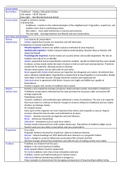
Capacity A measure of how much can be held in memory
STM: limited, less than 7 chunks LTM: possibly limitless
Key study: Capacity of STM by Jacobs 1887
He found the average span for digits was 9.3 items and 7.3 for letters. He says that more digits were recalled as
there’s only 9 of them and there was less remembrance for the letters as there are 26 of them.
Evaluation:
+ Miller 1956 concluded that span of STM is 7 +- 2 items, to enhance STM letter&digits can be grouped into chunks
+ Simon 1974 found a shorter memory span for 8 word phrases (large chunks) than 1-syllable words (small chunks)
- Cowan’s 2011 review of STM capacity studies that capacity may be limited to 4 chunks rather than 7+-2.
- Individual differences. Jacobs found digit span increases with age: 8 year olds can recall an average of 6.6 digits,
and 19 year olds can recall 8.6 digits
Duration A measure of how long memory lasts in the brain
STM: few seconds to a minute LTM: 2 minutes to 100 years
Key study: Peterson and Peterson 1959
Aim: investigate duration of STM
Procedure: Conducted a lab experiment to test 24 students over 8 trials. Each trial gave a consonant syllable and a 3-
digit number (ex. THX 512). Participants recalled the consonant syllable after a retention interval (3, 6, 9, 12, 15, 18
seconds) during which they counted backwards from the 3-digit number presented.
Findings: On average, recall within 3sec. was 90%, within 9sec. 20% and within 18sec. only 2%
Conclusion: When verbal rehearsal of the consonant syllable is prevented duration of STM is very short
Key study: Bahrick et al 1975 Years after Free Photo- Name-
Aim: investigate duration of LTM graduating recall recognition recognition
Procedure: He tested over 400 people, aged 17-74, for their memory (50 pics)
of high school classmates. A photo-recognition test they identified 15 60% 90% 90%
high school yearbook images of their classmates from 50 photos. In a 48 30% 70% 80%
free-recall test they listed names of classmates in their graduating
class.
Conclusion: Duration of LTM is much longer than STM however if the information is not used it will disappear.
Evaluation:
- Artificial task: people don’t usually need to remember meaningless consonants.
- STM results may be due to displacement not decay: the counting task may have displaced the memory of the
syllable. Reitman 1974 used auditory tones instead of counting and found duration of STM was longer.
- Participants may have kept in contact and seen their classmates after graduating = rehearsal (Bahrick’s)
Coding The way information is changed so that memory can be stored as visual, acoustic (hearing), semantic (meaning)
STM: acoustically LTM: semantically
Key study: Baddeley 1966
Aim: to investigate coding in STM and LTM
Procedure: In a lab experiment, he gave participants lists of words that were acoustically similar (sounded alike) or
dissimilar and lists of words that were semantically similar (synonyms) or dissimilar.
Results: STM codes acoustically and LTM codes semantically.
Conclusion: STM uses acoustic coding whereas LTM uses semantic coding.
Evaluation:
- Participants recalled words after 20min; it’s debatable whether this was a sufficient amount of time to test LTM.
- Brandimonte 1992 found that participants did well on a visual task, even though verbal rehearsal was prevented.
STM translates images into verbal code, but verbal code wasn’t available, meaning STM uses visual codes too.
- LTM may not be exclusively semantic: Research proved that LTM can also be visual and acoustic.
Key study: Frost 1972: In a free recall task he found that recognition uses visual cues to provide faster access and
recall uses verbal cues – this demonstrate that separate coding occurs.