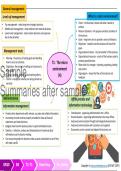
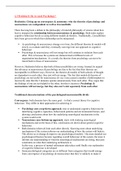
Inequality and poverty
Piracy, counterfeiting and bootlegging
• Inequality – the degree to which people don’t have the
• Piracy – people stealing other people’s intellectual property. same opportunities in life and are treated differently.
• Counterfeiting – making goods that intentionally look like • Poverty – when people have little or no money and can’t
other products. pay for basic needs.
• Bootlegging – illegally manufacturing goods for sale. • Children from poor families often receive inferior
• . education compared to wealthy people.
• . • Inequality and poverty contribute to higher crime rates,
• . which increases the need for security.
The relationship between piracy
and copyright
T1:
• Intellectual property is owned by the creator.
Contemporary Inclusivity
Sample
• Patent laws safeguard new inventions - inventors
can apply for patents to prevent others from socio-economic • Inclusivity – giving everyone equal opportunities.
producing or selling the same item. • Prevents discrimination based on age, race, gender,
• Trademarks (™) identify businesses and products. issues (A) sexual orientation, disabilities or HIV status.
• Copyright grants exclusive rights to creators over • Inclusivity will decrease inequality as more people
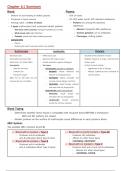
Summaries after sample
•
•
•
their original works.
.
.
.
•
get new opportunities.
.
• .
HIV and Aids Unemployment and an
• Young, economically active people often become infected.
unproductive labour force
• HIV-positive people take much longer to heal from other illnesses. • Unemployment – where people want to and are able to
• HIV-positive people often don’t fully recover from other illnesses work but can’t find a job.
and develop Aids. • Often caused by a lack of skills or having the wrong skills
• Shrinks the economically active labour force, increases costs and for the job market.
lowers productivity. • An unproductive labour force produces less than it should
• . due to a lack of training/education.
• . • .
• .
GR10 BS T2-T1 Mind Map Via Afrika Copyright © www.summariessa.co.za (DO NOT COPY)
,Sample
Summaries after sample
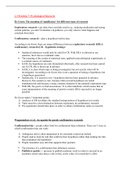
, How do businesses address What is social responsibility?
socio-economic issues? • Social responsibility – the moral obligation to give
Unemployment, inequality something back to society and act ethically.
and poverty
• Businesses want their customers to have as much Definition of corporate social
disposable income as possible.
• If more people have decent jobs, more people can responsibility (CSR)
buy goods/services.
• Provide good investment opportunities. • CSR - the commitment of businesses to fulfil social
• Taking in volunteers allows the business to get extra duties.
workers and gives the volunteers work experience
T2: Social • Businesses have an obligation to enhance the
quality of life for employees, shareholders, and the
Sample •
for future jobs.
.
responsibility
of business •
community.
CSR is viewed as an investment in the future of the
community and business.
An unproductive labour force • .
Summaries after sample •
•
•
Workers are poorly trained or not trained.
Give employees in-service training and provide bursaries.
.
Who are stakeholders in a
business?
HIV and Aids • The community around a business - businesses prosper from a
prosperous community.
• HIV-positive employees can’t perform their duties to • Suppliers - every business depends on its supplier to get stock,
the full extent. raw materials or inputs.
• Have a clear HIV and Aids policy, run an awareness • Trade unions.
campaign, distribute condoms, give financial support • Employees - businesses must pay fair salaries and offer good
to NGOs helping HIV-positive people and supply anti- working conditions, training, development and job security.
retroviral medicines. • Competitors - competition makes you think creatively or unite.
• . • Government - government regulations limit businesses.
• Consumers - businesses must ensure their products/services are
of good quality, safe and reasonably priced.
•
GR10 BS T2-T2 Mind Map Via Afrika Copyright © www.summariessa.co.za (DO NOT COPY)
Piracy, counterfeiting and bootlegging
• Inequality – the degree to which people don’t have the
• Piracy – people stealing other people’s intellectual property. same opportunities in life and are treated differently.
• Counterfeiting – making goods that intentionally look like • Poverty – when people have little or no money and can’t
other products. pay for basic needs.
• Bootlegging – illegally manufacturing goods for sale. • Children from poor families often receive inferior
• . education compared to wealthy people.
• . • Inequality and poverty contribute to higher crime rates,
• . which increases the need for security.
The relationship between piracy
and copyright
T1:
• Intellectual property is owned by the creator.
Contemporary Inclusivity
Sample
• Patent laws safeguard new inventions - inventors
can apply for patents to prevent others from socio-economic • Inclusivity – giving everyone equal opportunities.
producing or selling the same item. • Prevents discrimination based on age, race, gender,
• Trademarks (™) identify businesses and products. issues (A) sexual orientation, disabilities or HIV status.
• Copyright grants exclusive rights to creators over • Inclusivity will decrease inequality as more people
Summaries after sample
•
•
•
their original works.
.
.
.
•
get new opportunities.
.
• .
HIV and Aids Unemployment and an
• Young, economically active people often become infected.
unproductive labour force
• HIV-positive people take much longer to heal from other illnesses. • Unemployment – where people want to and are able to
• HIV-positive people often don’t fully recover from other illnesses work but can’t find a job.
and develop Aids. • Often caused by a lack of skills or having the wrong skills
• Shrinks the economically active labour force, increases costs and for the job market.
lowers productivity. • An unproductive labour force produces less than it should
• . due to a lack of training/education.
• . • .
• .
GR10 BS T2-T1 Mind Map Via Afrika Copyright © www.summariessa.co.za (DO NOT COPY)
,Sample
Summaries after sample
, How do businesses address What is social responsibility?
socio-economic issues? • Social responsibility – the moral obligation to give
Unemployment, inequality something back to society and act ethically.
and poverty
• Businesses want their customers to have as much Definition of corporate social
disposable income as possible.
• If more people have decent jobs, more people can responsibility (CSR)
buy goods/services.
• Provide good investment opportunities. • CSR - the commitment of businesses to fulfil social
• Taking in volunteers allows the business to get extra duties.
workers and gives the volunteers work experience
T2: Social • Businesses have an obligation to enhance the
quality of life for employees, shareholders, and the
Sample •
for future jobs.
.
responsibility
of business •
community.
CSR is viewed as an investment in the future of the
community and business.
An unproductive labour force • .
Summaries after sample •
•
•
Workers are poorly trained or not trained.
Give employees in-service training and provide bursaries.
.
Who are stakeholders in a
business?
HIV and Aids • The community around a business - businesses prosper from a
prosperous community.
• HIV-positive employees can’t perform their duties to • Suppliers - every business depends on its supplier to get stock,
the full extent. raw materials or inputs.
• Have a clear HIV and Aids policy, run an awareness • Trade unions.
campaign, distribute condoms, give financial support • Employees - businesses must pay fair salaries and offer good
to NGOs helping HIV-positive people and supply anti- working conditions, training, development and job security.
retroviral medicines. • Competitors - competition makes you think creatively or unite.
• . • Government - government regulations limit businesses.
• Consumers - businesses must ensure their products/services are
of good quality, safe and reasonably priced.
•
GR10 BS T2-T2 Mind Map Via Afrika Copyright © www.summariessa.co.za (DO NOT COPY)