General management
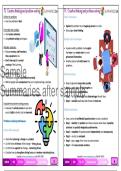
Levels of management What is a micro environment?
• Vision – the business’s dream and what it wants to
• Top management - make long-term strategic decisions.
achieve.
• Middle-level management - make medium-term tactical decisions.
• Mission statement – the purpose and basic activities of
• Lower-level management - make routine decisions and supervise
the business.
day-to-day activities.
• Goals – long-term aims to provide a sense of direction.
• Objectives – explains how the business will reach the
goals.
Management tasks • Organisational culture - the ‘personality’ of the business.
• Planning - the process of setting goals and deciding • Organisational resources - assets of the business used to
produce goods/services.
how to carry out activities. T1: The micro • Main tasks of a manager – planning, organising, leading
• Organising - the process of setting out recourses to
Sample
•
•
meet goals.
Leading - guiding, motivating and inspiring others.
Control - ensure the activities are being carried out
correctly.
environment
(A) •
and control.
Organogram – shows the flow of instructions and
feedback.
Summaries after sample
Administration Office practice and
Information management information technology
• Provide other departments with relevant, accurate and reliable information. • Centralisation - organising administration into 1 office.
• Accounting records must be properly recorded to draw up financial • Decentralisation - organising administration into many offices.
statements and make decisions. • Improved communication through technological advancements.
• Budgets show how the business plans to spend estimated income. • Improved communication with customers and suppliers.
• Statistics – collection, analysis and interpretation of numerical data/ • Documents can be scanned and adapted for business use.
information used in decision-making. • .
• Cost accounting helps the business make accurate calculations to see if they • .
will make a profit.
• .
GR10 BS T1-T1 Mind Map Via Afrika Copyright © www.summariessa.co.za (DO NOT COPY)
,Sample
Summaries after sample
, The institutional environment The physical environment
• Includes bureaucratic and legal issues encountered by businesses. • Evaluate availability, cost, and sustainability of resources.
• Non-official issues - customs and traditions of local communities. • Evaluate availability and accessibility of infrastructure like transport,
• . ports, storage, and telecommunication.
• . • Consider environmental factors - air, land, water, or noise pollution.
• .
The international environment
•
• Political uncertainties in Zimbabwe have led to Balance of payments of the country
a large influx of refugees in South Africa -
increase resource demands in SA. • Negative balance of payments - if a country
• Events outside SA's borders can directly affect imports more than it exports.
local businesses. T3: The macro • Positive balance of payments results in a
• . stronger rand against other currencies - makes
environment imported goods cheaper.
Sample
• .
The legal and political environment
• Positive political environment – good relationship
between a stable government and business.
•
•
.
Income distribution
Summaries after sample
• The legal system has jurisdiction to oversee employment,
tax, workplace, trademark, patent, intellectual property
rights, the sale of goods, property rights, consumerism,
fair competition, and environmental protection.
•
•
Redistribution of income - allows people in the lower income brackets to
buy goods and services they wouldn’t otherwise be able to afford.
Unemployment - high unemployment reduces the market for businesses
to sell.
• .
• HIV and Aids - economically active individuals that become HIV-positive
affect the country's productivity.
The technological environment
• Online shopping increases the potential customer base and
creates new business opportunities.
The social, cultural and demographic environment
• Automated equipment requires less employees and does
dangerous/repetitive jobs instead of people. • The macro-environment's social and cultural aspects influence business
• Computers allow for the development and recording of ideas. operations.
• Postal services, faxes, messengers, and couriers have been • Demographics - population characteristics like age, gender balance,
replaced by emails. education, skills, and racial groups.
• Videocams and computers allow for meetings to take place • Businesses need to adapt to changes in the community's demographics,
without leaving home. education levels, norms, values, and attitudes towards health and lifestyle.
• .
GR10 BS T1-T3 Mind Map Via Afrika Copyright © www.summariessa.co.za (DO NOT COPY)
,Sample
Summaries after sample
Levels of management What is a micro environment?
• Vision – the business’s dream and what it wants to
• Top management - make long-term strategic decisions.
achieve.
• Middle-level management - make medium-term tactical decisions.
• Mission statement – the purpose and basic activities of
• Lower-level management - make routine decisions and supervise
the business.
day-to-day activities.
• Goals – long-term aims to provide a sense of direction.
• Objectives – explains how the business will reach the
goals.
Management tasks • Organisational culture - the ‘personality’ of the business.
• Planning - the process of setting goals and deciding • Organisational resources - assets of the business used to
produce goods/services.
how to carry out activities. T1: The micro • Main tasks of a manager – planning, organising, leading
• Organising - the process of setting out recourses to
Sample
•
•
meet goals.
Leading - guiding, motivating and inspiring others.
Control - ensure the activities are being carried out
correctly.
environment
(A) •
and control.
Organogram – shows the flow of instructions and
feedback.
Summaries after sample
Administration Office practice and
Information management information technology
• Provide other departments with relevant, accurate and reliable information. • Centralisation - organising administration into 1 office.
• Accounting records must be properly recorded to draw up financial • Decentralisation - organising administration into many offices.
statements and make decisions. • Improved communication through technological advancements.
• Budgets show how the business plans to spend estimated income. • Improved communication with customers and suppliers.
• Statistics – collection, analysis and interpretation of numerical data/ • Documents can be scanned and adapted for business use.
information used in decision-making. • .
• Cost accounting helps the business make accurate calculations to see if they • .
will make a profit.
• .
GR10 BS T1-T1 Mind Map Via Afrika Copyright © www.summariessa.co.za (DO NOT COPY)
,Sample
Summaries after sample
, The institutional environment The physical environment
• Includes bureaucratic and legal issues encountered by businesses. • Evaluate availability, cost, and sustainability of resources.
• Non-official issues - customs and traditions of local communities. • Evaluate availability and accessibility of infrastructure like transport,
• . ports, storage, and telecommunication.
• . • Consider environmental factors - air, land, water, or noise pollution.
• .
The international environment
•
• Political uncertainties in Zimbabwe have led to Balance of payments of the country
a large influx of refugees in South Africa -
increase resource demands in SA. • Negative balance of payments - if a country
• Events outside SA's borders can directly affect imports more than it exports.
local businesses. T3: The macro • Positive balance of payments results in a
• . stronger rand against other currencies - makes
environment imported goods cheaper.
Sample
• .
The legal and political environment
• Positive political environment – good relationship
between a stable government and business.
•
•
.
Income distribution
Summaries after sample
• The legal system has jurisdiction to oversee employment,
tax, workplace, trademark, patent, intellectual property
rights, the sale of goods, property rights, consumerism,
fair competition, and environmental protection.
•
•
Redistribution of income - allows people in the lower income brackets to
buy goods and services they wouldn’t otherwise be able to afford.
Unemployment - high unemployment reduces the market for businesses
to sell.
• .
• HIV and Aids - economically active individuals that become HIV-positive
affect the country's productivity.
The technological environment
• Online shopping increases the potential customer base and
creates new business opportunities.
The social, cultural and demographic environment
• Automated equipment requires less employees and does
dangerous/repetitive jobs instead of people. • The macro-environment's social and cultural aspects influence business
• Computers allow for the development and recording of ideas. operations.
• Postal services, faxes, messengers, and couriers have been • Demographics - population characteristics like age, gender balance,
replaced by emails. education, skills, and racial groups.
• Videocams and computers allow for meetings to take place • Businesses need to adapt to changes in the community's demographics,
without leaving home. education levels, norms, values, and attitudes towards health and lifestyle.
• .
GR10 BS T1-T3 Mind Map Via Afrika Copyright © www.summariessa.co.za (DO NOT COPY)
,Sample
Summaries after sample