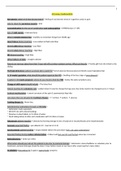
HFST BLZ Name
1 2 Descriptive statistics
1 3 Inferential statistics
1 5 Population
1 5 Parameter
1 5 Sample
1 5 Statistic
1 5 Statistical inference
1 5 Confidence level
1 5 Significance level
2 13 Variable
2 13 Values
2 13 Data
2 14 Interval
2 14 Nominal
2 14 Ordinal
2 32 Univariate
2 32 Bivariate
2 32 Cross tabulation table
3 46 Classes
3 46 Histogram
3 49 Class interval widths
3 50 Shapes of histograms
3 57 Stem-and-leaf display
3 59 Relative frequency distribution
3 64 Cross-sectional data
3 64 Time-series data
3 65 Line chart
3 74 Scatter diagram
4 98 Measures of central location
4 98 Mean
4 100 Median
4 101 Mode
4 103 The best central location
4 108 Measures of variability
4 108 Range
4 108 Variance
4 112 Standard deviation
4 113 Empirical rule
4 114 Chebysheff's theorem
4 115 Coefficient of variation
4 117 Percentile
4 118 Quartiles
4 118 Locating percentiles
4 120 Interquartile range
4 120 Boxplot
4 127 Covariance
4 128 Coefficient of correlation
,4 132 Least squares method
4 139 Coefficient of determination
4 141 Correlation is not causation
4 153 General guidelines for data
6 174 Random experiment
6 175 Classical approach
6 176 Relative frequency approach
6 176 Subjective approach
6 177 Probability of an event
6 177 Interpreting probability
6 179 Joint probability
6 181 Marginal probability
6 181 Conditional probability
6 183 Independence
6 184 Union
6 189 Complement
6 189 Multiplication rule
6 191 Addition rule
6 193 Probability rule
7 215 Discrete random variable
7 215 Continious random variable
7 215 Probability distribution
7 219 Expected value
7 239 Binomial distribution
7 240 Binomial experiment
7 241 Binomial random variable
7 242 Cumulative probability
8 259 Probability density function
8 264 Normal distribution
8 266 Standard normal random variable
8 285 Student T distribution
8 291 Chi-squared distribution
8 295 F-distribution
9 302 Sampling distribution
, Definition
Methods of organizing, summarizing and presenting data in a informative way
Methods to draw conclusions or inferences about characteristics of populations based on sample data
Group of all items of interest to a statistics practioner
A descriptive measure of a population (says something about the population, like mean, variance)
Set of data drawn from the studied population
A descriptive measure of a sample (says something about the sample)
The process of making an estimate, prediction or decision about a population based on sample data
The proportion of times that an estimating procedure will be correct (95% of the times the test will be a succes)
The test will be wrong 5% of the time
A characteristic of a population or sample (it changes constantly)
Are possible observations of the variable (euro's)
Are the observed values of a variable (also called datum)
Are real numbers, such as heights, weights, incomes and distances (also called quantitative or numerical)
Are categories like man, woman, single, married ect..
Appear to be nominal but the order of their value has a meaning, for example poor, fair, good, very good) (Order)
Techniques applied to single sets of data
Depict the relationship between variables
Describe the relationship between two nominal variables
Number of observations that fall into each of a series of intervals
Gives a clear view on how the observations are distributed
How wide the classes should be (sturges formula)
Symmetric, postively and negatively skewed, unimodal and bimodal, bell shaped histograms
Split an observation into two parts, the stem and the leaf
Divide the frequences by the number of observations (ogive)
The observations are measured at the same time
The observations represent measurements at successive points in time
Time-series data are graphically shown on it
Shows the relationship between two variables (postive and negative linear relationship)
Mean, median and mode
Also known as average. Population mean = µ. Sample mean = X̅
Is calculated by placing all the observations in order. The observation that falls in the middle is the median
The observation that occurs with the greatest frequency is the mode
Mean is mostly used, mode not so much. Median is not sensitive to extreme values.
Range, variance, standard deviation and Coefficient of variation
Very simple, the range is the largest observation minus the smallest observation
Most important, it measures variability and play a role in most statistics tests
The positive square root of the variance.
If the histogram is bell shaped, the emprical rule can be used to interpret the standard deviation
Can be used for all shapes of histograms to interpret the standard deviation
Formula to show if the standard deviation is big or large compared to the number of observations
The P-th percentile is the value for which P percent are less than that value and (100%-P)% are greater than that value
Special name for the 25th, 50th and 75th percentiles
Formula to locate the location of any percentile
Another measure of variability. The interquartile range is the difference between Q3 and Q1. shows the middle 50%
This technique graphs five statistics: minimum and maximum observations and first, second and third quartiles
Measures the linear relationship between two interval variables
It continues with the covariance number to show lower and upper limits (-1 and +1)
1 2 Descriptive statistics
1 3 Inferential statistics
1 5 Population
1 5 Parameter
1 5 Sample
1 5 Statistic
1 5 Statistical inference
1 5 Confidence level
1 5 Significance level
2 13 Variable
2 13 Values
2 13 Data
2 14 Interval
2 14 Nominal
2 14 Ordinal
2 32 Univariate
2 32 Bivariate
2 32 Cross tabulation table
3 46 Classes
3 46 Histogram
3 49 Class interval widths
3 50 Shapes of histograms
3 57 Stem-and-leaf display
3 59 Relative frequency distribution
3 64 Cross-sectional data
3 64 Time-series data
3 65 Line chart
3 74 Scatter diagram
4 98 Measures of central location
4 98 Mean
4 100 Median
4 101 Mode
4 103 The best central location
4 108 Measures of variability
4 108 Range
4 108 Variance
4 112 Standard deviation
4 113 Empirical rule
4 114 Chebysheff's theorem
4 115 Coefficient of variation
4 117 Percentile
4 118 Quartiles
4 118 Locating percentiles
4 120 Interquartile range
4 120 Boxplot
4 127 Covariance
4 128 Coefficient of correlation
,4 132 Least squares method
4 139 Coefficient of determination
4 141 Correlation is not causation
4 153 General guidelines for data
6 174 Random experiment
6 175 Classical approach
6 176 Relative frequency approach
6 176 Subjective approach
6 177 Probability of an event
6 177 Interpreting probability
6 179 Joint probability
6 181 Marginal probability
6 181 Conditional probability
6 183 Independence
6 184 Union
6 189 Complement
6 189 Multiplication rule
6 191 Addition rule
6 193 Probability rule
7 215 Discrete random variable
7 215 Continious random variable
7 215 Probability distribution
7 219 Expected value
7 239 Binomial distribution
7 240 Binomial experiment
7 241 Binomial random variable
7 242 Cumulative probability
8 259 Probability density function
8 264 Normal distribution
8 266 Standard normal random variable
8 285 Student T distribution
8 291 Chi-squared distribution
8 295 F-distribution
9 302 Sampling distribution
, Definition
Methods of organizing, summarizing and presenting data in a informative way
Methods to draw conclusions or inferences about characteristics of populations based on sample data
Group of all items of interest to a statistics practioner
A descriptive measure of a population (says something about the population, like mean, variance)
Set of data drawn from the studied population
A descriptive measure of a sample (says something about the sample)
The process of making an estimate, prediction or decision about a population based on sample data
The proportion of times that an estimating procedure will be correct (95% of the times the test will be a succes)
The test will be wrong 5% of the time
A characteristic of a population or sample (it changes constantly)
Are possible observations of the variable (euro's)
Are the observed values of a variable (also called datum)
Are real numbers, such as heights, weights, incomes and distances (also called quantitative or numerical)
Are categories like man, woman, single, married ect..
Appear to be nominal but the order of their value has a meaning, for example poor, fair, good, very good) (Order)
Techniques applied to single sets of data
Depict the relationship between variables
Describe the relationship between two nominal variables
Number of observations that fall into each of a series of intervals
Gives a clear view on how the observations are distributed
How wide the classes should be (sturges formula)
Symmetric, postively and negatively skewed, unimodal and bimodal, bell shaped histograms
Split an observation into two parts, the stem and the leaf
Divide the frequences by the number of observations (ogive)
The observations are measured at the same time
The observations represent measurements at successive points in time
Time-series data are graphically shown on it
Shows the relationship between two variables (postive and negative linear relationship)
Mean, median and mode
Also known as average. Population mean = µ. Sample mean = X̅
Is calculated by placing all the observations in order. The observation that falls in the middle is the median
The observation that occurs with the greatest frequency is the mode
Mean is mostly used, mode not so much. Median is not sensitive to extreme values.
Range, variance, standard deviation and Coefficient of variation
Very simple, the range is the largest observation minus the smallest observation
Most important, it measures variability and play a role in most statistics tests
The positive square root of the variance.
If the histogram is bell shaped, the emprical rule can be used to interpret the standard deviation
Can be used for all shapes of histograms to interpret the standard deviation
Formula to show if the standard deviation is big or large compared to the number of observations
The P-th percentile is the value for which P percent are less than that value and (100%-P)% are greater than that value
Special name for the 25th, 50th and 75th percentiles
Formula to locate the location of any percentile
Another measure of variability. The interquartile range is the difference between Q3 and Q1. shows the middle 50%
This technique graphs five statistics: minimum and maximum observations and first, second and third quartiles
Measures the linear relationship between two interval variables
It continues with the covariance number to show lower and upper limits (-1 and +1)