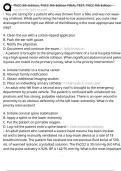
TNCC 9th Edition, TNCC 9th Edition FINAL TEST, TNCC 9th Edition
Study online at https://quizlet.com/_goe28h
1. You are caring for a patient who was thrown from a bike and was not wear-
ing a helmet. While performing the head-to-toe assessment, you note clear
drainage from the right ear. Which of the following is the most appropriate next
step?
A. Clean the ear with a cotton-tipped applicator.
B. Pack the ear with gauze.
C. Notify the physician
D. Document and continue the exam.: C. Notify the physician
2. A patient is brought to the emergency department of a rural hospital follow-
ing a high-speed motor vehicle collision. When significant abdominal and pelvic
injuries are noted in the primary survey, what is the priority intervention?
A. Initiate transfer to a trauma center
B. Attempt family notification
C. Obtain additional imaging studies
D. Place an indwelling urinary catheter: A. Initiate transfer to a trauma center
3. An adult who fell from a second story roof is brought to the emergency
department by private vehicle. The patient is confused with unlabored res-
pirations and has strong, palpable radial pulses. There is an open wound in
proximity to an obvious deformity of the left lower extremity. What is the
priority intervention?
A. Initiate cervical spine stabilization
B. Apply a splint to the lower extremity
C. Put the patient on portable oxygen.
D. Log roll the patient onto a spine board: A. Initiate cervical spine stabilization
4. An adult patient who sustained a severe head trauma has been intubat-
ed and is being manually ventilated via a bag-mask device at a rate of 18
breaths/minute. The patient has received one intravenous fluid bolus of 500
mL of warmed isotonic crystalloid solution. The PaCO2 is 30 mm Hg (4.0 kPa),
and the pulse oximetry is 92%. BP is 142/70 mm Hg. What is the most important
, TNCC 9th Edition, TNCC 9th Edition FINAL TEST, TNCC 9th Edition
Study online at https://quizlet.com/_goe28h
intervention to manage the cerebral blood flow?
A. Decrease the rate of manual ventilation.
B. Initiate another fluid bolus.
C. Recheck endotracheal tube placement.
D. Increase the amount of oxygen delivered.: A. Decrease the rate of manual ventilation.
5. An adult patient is brought to the emergency department following a vehicle
"roll-over" with prolonged extrication. Assessment reveals swelling and bruis-
ing to the right proximal thigh and a weak pedal pulse. Skin is pale, cool, and
moist. What is the most appropriate initial intervention?
A. Application of a tourniquet to the affected extremity
B. Application of a pelvic binder
C. Fluid resuscitation to maintain a urine output of 0.5 mL/kg/hour
D. Oxygen to maintain the ETCO2 between 30-35 mm Hg (3.9-4.6 kPa): B. Application
of a pelvic binder
6. An adult arrives at the emergency department with superficial burns to the
extremities following a house fire. The patient is reporting a headache with
nausea and is drowsy and confused. What is the most likely cause of these
symptoms?
A. Capillary leak syndrome
B. Rhabdomyolysis
C. Carbon monoxide poisoning
D. Hypothermia:
7. Using the American College of Surgeons Guidelines for Screening Patients
with Suspected Spine Injury, what assessment finding would prompt the nurse
to prepare a patient for cervical spine imaging?
A. Alert with no neurologic deficits or neck pain
B. Multiple abrasions to the extremities
, TNCC 9th Edition, TNCC 9th Edition FINAL TEST, TNCC 9th Edition
Study online at https://quizlet.com/_goe28h
C. Ecchymosis to the flank
D. Responds to verbal stimulation using AVPU:
8. A 5-month pregnant patient arrives in the emergency department stating
she tripped and fell, landing on her abdomen. Assessment reveals bruising
to the abdomen, both arms, and her neck. She states she does not take any
medications and has not had any prenatal care. The nurse suspects the findings
are most likely related to which of the following?
A.Intentional violence
B.Pregnancy-related changes
C.Undiagnosed embolus
D.Iron deficiency:
9. During the primary survey of an unconscious patient with multi-system trau-
ma, the nurse notes snoring respirations. Which priority nursing intervention
should be performed next?
A.Open the airway with the head-tilt/chin-lift maneuver
B.Auscultate bilateral breath sounds
C.Assist respirations using a bag-mask device
D.Insert an oropharyngeal airway if there is no gag reflex:
10. An adult was thrown against a concrete wall during a factory explosion and
sustained a femur fracture, liver laceration, and a small subdural hematoma.
These injuries most likely occurred during what level of blast trauma?
A.Primary
B.Secondary
C.Tertiary
D.Quaternary:
11. A patient presents to the emergency department with a degloving injury
involving the entire forearm. What should the nurse consider when planning
care for a patient with this injury?
Study online at https://quizlet.com/_goe28h
1. You are caring for a patient who was thrown from a bike and was not wear-
ing a helmet. While performing the head-to-toe assessment, you note clear
drainage from the right ear. Which of the following is the most appropriate next
step?
A. Clean the ear with a cotton-tipped applicator.
B. Pack the ear with gauze.
C. Notify the physician
D. Document and continue the exam.: C. Notify the physician
2. A patient is brought to the emergency department of a rural hospital follow-
ing a high-speed motor vehicle collision. When significant abdominal and pelvic
injuries are noted in the primary survey, what is the priority intervention?
A. Initiate transfer to a trauma center
B. Attempt family notification
C. Obtain additional imaging studies
D. Place an indwelling urinary catheter: A. Initiate transfer to a trauma center
3. An adult who fell from a second story roof is brought to the emergency
department by private vehicle. The patient is confused with unlabored res-
pirations and has strong, palpable radial pulses. There is an open wound in
proximity to an obvious deformity of the left lower extremity. What is the
priority intervention?
A. Initiate cervical spine stabilization
B. Apply a splint to the lower extremity
C. Put the patient on portable oxygen.
D. Log roll the patient onto a spine board: A. Initiate cervical spine stabilization
4. An adult patient who sustained a severe head trauma has been intubat-
ed and is being manually ventilated via a bag-mask device at a rate of 18
breaths/minute. The patient has received one intravenous fluid bolus of 500
mL of warmed isotonic crystalloid solution. The PaCO2 is 30 mm Hg (4.0 kPa),
and the pulse oximetry is 92%. BP is 142/70 mm Hg. What is the most important
, TNCC 9th Edition, TNCC 9th Edition FINAL TEST, TNCC 9th Edition
Study online at https://quizlet.com/_goe28h
intervention to manage the cerebral blood flow?
A. Decrease the rate of manual ventilation.
B. Initiate another fluid bolus.
C. Recheck endotracheal tube placement.
D. Increase the amount of oxygen delivered.: A. Decrease the rate of manual ventilation.
5. An adult patient is brought to the emergency department following a vehicle
"roll-over" with prolonged extrication. Assessment reveals swelling and bruis-
ing to the right proximal thigh and a weak pedal pulse. Skin is pale, cool, and
moist. What is the most appropriate initial intervention?
A. Application of a tourniquet to the affected extremity
B. Application of a pelvic binder
C. Fluid resuscitation to maintain a urine output of 0.5 mL/kg/hour
D. Oxygen to maintain the ETCO2 between 30-35 mm Hg (3.9-4.6 kPa): B. Application
of a pelvic binder
6. An adult arrives at the emergency department with superficial burns to the
extremities following a house fire. The patient is reporting a headache with
nausea and is drowsy and confused. What is the most likely cause of these
symptoms?
A. Capillary leak syndrome
B. Rhabdomyolysis
C. Carbon monoxide poisoning
D. Hypothermia:
7. Using the American College of Surgeons Guidelines for Screening Patients
with Suspected Spine Injury, what assessment finding would prompt the nurse
to prepare a patient for cervical spine imaging?
A. Alert with no neurologic deficits or neck pain
B. Multiple abrasions to the extremities
, TNCC 9th Edition, TNCC 9th Edition FINAL TEST, TNCC 9th Edition
Study online at https://quizlet.com/_goe28h
C. Ecchymosis to the flank
D. Responds to verbal stimulation using AVPU:
8. A 5-month pregnant patient arrives in the emergency department stating
she tripped and fell, landing on her abdomen. Assessment reveals bruising
to the abdomen, both arms, and her neck. She states she does not take any
medications and has not had any prenatal care. The nurse suspects the findings
are most likely related to which of the following?
A.Intentional violence
B.Pregnancy-related changes
C.Undiagnosed embolus
D.Iron deficiency:
9. During the primary survey of an unconscious patient with multi-system trau-
ma, the nurse notes snoring respirations. Which priority nursing intervention
should be performed next?
A.Open the airway with the head-tilt/chin-lift maneuver
B.Auscultate bilateral breath sounds
C.Assist respirations using a bag-mask device
D.Insert an oropharyngeal airway if there is no gag reflex:
10. An adult was thrown against a concrete wall during a factory explosion and
sustained a femur fracture, liver laceration, and a small subdural hematoma.
These injuries most likely occurred during what level of blast trauma?
A.Primary
B.Secondary
C.Tertiary
D.Quaternary:
11. A patient presents to the emergency department with a degloving injury
involving the entire forearm. What should the nurse consider when planning
care for a patient with this injury?