a
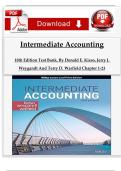
Intermediate Accounting
18th Edition Test Bank, By Donald E. Kieso, Jerry J.
Weygandt And Terry D. Warfield Chapter 1-23
,Test Bank For
Intermediate Accounting, 18th Edition, By Donald E. Kieso, Jerry J. Weygandt And
Terry D. Warfield
Chapter 1-23
CHAPTER 1
THE ENVIRONMENT AND CONCEPTUAL FRAMEWORK OF FINANCIAL
REPORTING
IFRS questions are available at the end of this chapter.
TRUE-FALSE—Conceptual
1. Financial statements are the principal means through which a company communicates its
financial information to those outside it.
Ans: T, LO: 1, Bloom: K, Difficulty: Easy, Min: 1, AACSB: Knowledge, AICPA BC: None, AICPA AC: Reporting, AICPA PC: None, IMA: Reporting &
Control: Financial Statement Preparation, IFRS: None
2. Users of financial reports of a company use the information provided by these reports to
make capital allocation decisions.
Ans: T, LO: 1, Bloom: K, Difficulty: Easy, Min: 1, AACSB: Knowledge, AICPA BC: None, AICPA AC: Reporting, AICPA PC: None, IMA: Reporting &
Control: Financial Statement Preparation, IFRS: None
3. An effective process of capital allocation provides an efficient market for buying and selling
securities and obtaining and granting credit.
Ans: T, LO: 1, Bloom: K, Difficulty: Easy, Min: 1, AACSB: Knowledge, AICPA BC: None, AICPA AC: Reporting, AICPA PC: None, IMA: Reporting &
Control: Financial Statement Preparation, IFRS: None
4. Investors are interested in financial reporting because it provides information that is useful
for making decisions.
Ans: T, LO: 1, Bloom: K, Difficulty: Easy, Min: 1, AACSB: Knowledge, AICPA BC: None, AICPA AC: Reporting, AICPA PC: None, IMA: Reporting &
Control: Financial Statement Preparation, IFRS: None
5. Users of financial accounting statements have both coinciding and conflicting needs for
information of various types.
Ans: T, LO: 1, Bloom: K, Difficulty: Easy, Min: 1, AACSB: Knowledge, AICPA BC: None, AICPA AC: Reporting, AICPA PC: None, IMA: Reporting &
Control: Financial Statement Preparation, IFRS: None
6. Although the FASB has developed a conceptual framework, no Statements of Financial
Accounting Concepts have been issued to date.
Ans: F, LO: 1, Bloom: K, Difficulty: Moderate, Min: 1, AACSB: Knowledge, AICPA BC: None, AICPA AC: Reporting, AICPA PC: None, IMA: Reporting &
Control: Financial Statement Analysis, IFRS: None
7. The passage of a new FASB Accounting Standards Update requires the support of five of
the seven board members.
Ans: F, LO: 1, Bloom: K, Difficulty: Easy, Min: 1, AACSB: Knowledge, AICPA BC: None, AICPA AC: Reporting, AICPA PC: None, IMA: Reporting &
Control: Financial Statement Preparation, IFRS: None
8. Statements of Financial Accounting Concepts set forth fundamental objectives and
concepts that are used by the FASB in developing future standards of financial accounting
and reporting.
,19-2
Ans: T, LO: 1, Bloom: K, Difficulty: Easy, Min: 1, AACSB: Knowledge, AICPA BC: None, AICPA AC: Reporting, AICPA PC: None, IMA: Reporting &
Control: Financial Statement Analysis, IFRS: None
9. The FASB‘s Codification creates a new set of GAAP.
Ans: F, LO: 1, Bloom: K, Difficulty: Easy, Min: 1, AACSB: Knowledge, AICPA BC: None, AICPA AC: Reporting, AICPA PC: None, IMA: Reporting &
Control: Financial Statement Analysis, IFRS: None
10. The objective of financial reporting is to report the plans made by a company to improve the
productivity of its employees.
Ans: F, LO: 1, Bloom: K, Difficulty: Easy, Min: 1, AACSB: Knowledge, AICPA BC: None, AICPA AC: Reporting, AICPA PC: None, IMA: Reporting &
Control: Financial Statement Preparation, IFRS: None
11. A soundly developed conceptual framework enables the FASB to issue more useful and
consistent pronouncements over time.
Ans: T, LO: 2, Bloom: K, Difficulty: Easy, Min: 1, AACSB: Knowledge, AICPA BC: None, AICPA AC: Reporting, AICPA PC: None, IMA: Reporting &
Control: Financial Statement Analysis, IFRS: None
12. A conceptual framework is a coherent system of concepts that flow from an objective.
Ans: T, LO: 2, Bloom: K, Difficulty: Easy, Min: 1, AACSB: Knowledge, AICPA BC: None, AICPA AC: Reporting, AICPA PC: None, IMA: Reporting &
Control: Financial Statement Analysis, IFRS: None
13. The first level of the conceptual framework identifies the recognition, measurement, and
disclosure concepts used in establishing accounting standards.
Ans: F, LO: 2, Bloom: K, Difficulty: Easy, Min: 1, AACSB: Knowledge, AICPA BC: None, AICPA AC: Reporting, AICPA PC: None, IMA: Reporting &
Control: Financial Statement Analysis, IFRS: None
14. The objective of financial reporting serves as the foundation of the conceptual framework.
Ans: T, LO: 2, Bloom: K, Difficulty: Easy, Min: 1, AACSB: Knowledge, AICPA BC: None, AICPA AC: Reporting, AICPA PC: None, IMA: Reporting &
Control: Financial Statement Analysis, IFRS: None
15. Users of financial statements are assumed to need no knowledge of business and financial
accounting matters to understand the information contained in financial statements.
Ans: F, LO: 2, Bloom: K, Difficulty: Easy, Min: 1, AACSB: Knowledge, AICPA BC: None, AICPA AC: Reporting, AICPA PC: None, IMA: Reporting &
Control: Financial Statement Analysis, IFRS: None
16. Relevance and faithful representation are the two fundamental qualities that make
accounting information useful for decision-making.
Ans: T, LO: 2, Bloom: K, Difficulty: Easy, Min: 1, AACSB: Knowledge, AICPA BC: None, AICPA AC: Reporting, AICPA PC: None, IMA: Reporting &
Control: Financial Statement Analysis, IFRS: None
17. The idea of consistency does not mean that companies cannot switch from one accounting
method to another.
Ans: T, LO: 2, Bloom: C, Difficulty: Moderate, Min: 1, AACSB: Knowledge, AICPA BC: None, AICPA AC: Reporting, AICPA PC: None, IMA: Reporting &
Control: Financial Statement Analysis, IFRS: None
18. Timeliness and neutrality are two ingredients of relevance.
Ans: F, LO: 2, Bloom: K, Difficulty: Easy, Min: 1, AACSB: Knowledge, AICPA BC: None, AICPA AC: Reporting, AICPA PC: None, IMA: Reporting &
Control: Financial Statement Analysis, IFRS: None
19. Verifiability and predictive value are two ingredients of faithful representation.
Ans: F, LO: 2, Bloom: K, Difficulty: Easy, Min: 1, AACSB: Knowledge, AICPA BC: None, AICPA AC: Reporting, AICPA PC: None, IMA: Reporting &
Control: Financial Statement Analysis, IFRS: None
20. Revenues, gains, and distributions to owners all increase equity.
Ans: F, LO: 2, Bloom: C, Difficulty: Moderate, Min: 1, AACSB: Knowledge, AICPA BC: None, AICPA AC: Measurement Analysis and Interpretation,
AICPA PC: None, IMA: Reporting & Control: Financial Statement Analysis, IFRS: None
21. Comprehensive income includes all changes in equity during a period except those
resulting from investments by owners and distributions to owners.
, 19-3
Ans: T, LO: 2, Bloom: K, Difficulty: Easy, Min: 1, AACSB: Knowledge, AICPA BC: None, AICPA AC: Measurement Analysis and Interpretation, AICPA
PC: None, IMA: Reporting & Control: Financial Statement Analysis, IFRS: None
22. Accounting standards are now less likely to require the reporting or disclosure of fair value
information.
Ans: F, LO: 3, Bloom: K, Difficulty: Moderate, Min: 1, AACSB: Knowledge, AICPA BC: None, AICPA AC: Reporting, AICPA PC: None, IMA: Reporting &
Control: Financial Statement Preparation, IFRS: None
23. The second level of the conceptual framework provides the qualitative characteristics that
make accounting information useful and the elements of financial statements.
Ans: T, LO: 3, Bloom: K, Difficulty: Moderate, Min: 1, AACSB: Knowledge, AICPA BC: None, AICPA AC: Reporting, AICPA PC: None, IMA: Reporting &
Control: Financial Statement Analysis, IFRS: None
24. The historical cost principle would be of limited usefulness if not for the going concern
assumption.
Ans: T, LO: 3, Bloom: C, Difficulty: Moderate, Min: 1, AACSB: Knowledge, AICPA BC: None, AICPA AC: Reporting, AICPA PC: None, IMA: Reporting &
Control: Financial Statement Analysis, IFRS: None
25. The economic entity assumption means that economic activity can be identified with a
particular legal entity.
Ans: F, LO: 3, Bloom: K, Difficulty: Easy, Min: 1, AACSB: Knowledge, AICPA BC: None, AICPA AC: Reporting, AICPA PC: None, IMA: Reporting &
Control: Financial Statement Analysis, IFRS: None
26. The expense recognition principle states that debits must equal credits in each transaction.
Ans: F, LO: 3, Bloom: K, Difficulty: Easy, Min: 1, AACSB: Knowledge, AICPA BC: None, AICPA AC: Measurement Analysis and Interpretation, AICPA
PC: None, IMA: Reporting & Control: Financial Statement Analysis, IFRS: None
27. Revenues are recognized in the accounting period in which the performance obligation is
satisfied.
Ans: T, LO: 3 Bloom: K, Difficulty: Moderate, Min: 1, AACSB: Knowledge, AICPA BC: None, AICPA AC: Measurement Analysis and Interpretation, AICPA
PC: None, IMA: Reporting & Control: Financial Statement Analysis, IFRS: None
28. Supplementary information may include details or amounts that present a different
perspective from that adopted in the financial statements.
Ans: T, LO: 3, Bloom: K, Difficulty: Easy, Min: 1, AACSB: Knowledge, AICPA BC: None, AICPA AC: Reporting, AICPA PC: None, IMA: Reporting &
Control: Financial Statement Analysis, IFRS: None
29. To justify requiring a particular measurement or disclosure, the benefits to be derived from it
must equal the costs associated with it.
Ans: F, LO: 3, Bloom: C, Difficulty: Moderate, Min: 1, AACSB: Knowledge, AICPA BC: None, AICPA AC: Reporting, AICPA PC: None, IMA: Reporting &
Control: Financial Statement Analysis, IFRS: None
30. In cost-benefit analysis, costs are generally more difficult to quantify than are benefits.
Ans: F, LO: 3, Bloom: C, Difficulty: Moderate, Min: 1, AACSB: Knowledge, AICPA BC: None, AICPA AC: Reporting, AICPA PC: None, IMA: Reporting &
Control: Financial Statement Analysis, IFRS: None
31. GAAP is a product of careful logic or empirical findings and is not influenced by political
action.
Ans: F, LO: 4 Bloom: K, Difficulty: Easy, Min: 1, AACSB: Knowledge, AICPA BC: None, AICPA AC: Reporting, AICPA PC: None, IMA: Reporting &
Control: Financial Statement Preparation, IFRS: None
32. The Public Company Accounting Oversight Board has oversight and enforcement authority
and establishes auditing and independence standards and rules.
Ans: T, LO: 4, Bloom: K, Difficulty: Easy, Min: 1, AACSB: Knowledge, AICPA BC: None, AICPA AC: Reporting, AICPA PC: None, IMA: Reporting &
Control: Financial Statement Preparation, IFRS: None
Intermediate Accounting
18th Edition Test Bank, By Donald E. Kieso, Jerry J.
Weygandt And Terry D. Warfield Chapter 1-23
,Test Bank For
Intermediate Accounting, 18th Edition, By Donald E. Kieso, Jerry J. Weygandt And
Terry D. Warfield
Chapter 1-23
CHAPTER 1
THE ENVIRONMENT AND CONCEPTUAL FRAMEWORK OF FINANCIAL
REPORTING
IFRS questions are available at the end of this chapter.
TRUE-FALSE—Conceptual
1. Financial statements are the principal means through which a company communicates its
financial information to those outside it.
Ans: T, LO: 1, Bloom: K, Difficulty: Easy, Min: 1, AACSB: Knowledge, AICPA BC: None, AICPA AC: Reporting, AICPA PC: None, IMA: Reporting &
Control: Financial Statement Preparation, IFRS: None
2. Users of financial reports of a company use the information provided by these reports to
make capital allocation decisions.
Ans: T, LO: 1, Bloom: K, Difficulty: Easy, Min: 1, AACSB: Knowledge, AICPA BC: None, AICPA AC: Reporting, AICPA PC: None, IMA: Reporting &
Control: Financial Statement Preparation, IFRS: None
3. An effective process of capital allocation provides an efficient market for buying and selling
securities and obtaining and granting credit.
Ans: T, LO: 1, Bloom: K, Difficulty: Easy, Min: 1, AACSB: Knowledge, AICPA BC: None, AICPA AC: Reporting, AICPA PC: None, IMA: Reporting &
Control: Financial Statement Preparation, IFRS: None
4. Investors are interested in financial reporting because it provides information that is useful
for making decisions.
Ans: T, LO: 1, Bloom: K, Difficulty: Easy, Min: 1, AACSB: Knowledge, AICPA BC: None, AICPA AC: Reporting, AICPA PC: None, IMA: Reporting &
Control: Financial Statement Preparation, IFRS: None
5. Users of financial accounting statements have both coinciding and conflicting needs for
information of various types.
Ans: T, LO: 1, Bloom: K, Difficulty: Easy, Min: 1, AACSB: Knowledge, AICPA BC: None, AICPA AC: Reporting, AICPA PC: None, IMA: Reporting &
Control: Financial Statement Preparation, IFRS: None
6. Although the FASB has developed a conceptual framework, no Statements of Financial
Accounting Concepts have been issued to date.
Ans: F, LO: 1, Bloom: K, Difficulty: Moderate, Min: 1, AACSB: Knowledge, AICPA BC: None, AICPA AC: Reporting, AICPA PC: None, IMA: Reporting &
Control: Financial Statement Analysis, IFRS: None
7. The passage of a new FASB Accounting Standards Update requires the support of five of
the seven board members.
Ans: F, LO: 1, Bloom: K, Difficulty: Easy, Min: 1, AACSB: Knowledge, AICPA BC: None, AICPA AC: Reporting, AICPA PC: None, IMA: Reporting &
Control: Financial Statement Preparation, IFRS: None
8. Statements of Financial Accounting Concepts set forth fundamental objectives and
concepts that are used by the FASB in developing future standards of financial accounting
and reporting.
,19-2
Ans: T, LO: 1, Bloom: K, Difficulty: Easy, Min: 1, AACSB: Knowledge, AICPA BC: None, AICPA AC: Reporting, AICPA PC: None, IMA: Reporting &
Control: Financial Statement Analysis, IFRS: None
9. The FASB‘s Codification creates a new set of GAAP.
Ans: F, LO: 1, Bloom: K, Difficulty: Easy, Min: 1, AACSB: Knowledge, AICPA BC: None, AICPA AC: Reporting, AICPA PC: None, IMA: Reporting &
Control: Financial Statement Analysis, IFRS: None
10. The objective of financial reporting is to report the plans made by a company to improve the
productivity of its employees.
Ans: F, LO: 1, Bloom: K, Difficulty: Easy, Min: 1, AACSB: Knowledge, AICPA BC: None, AICPA AC: Reporting, AICPA PC: None, IMA: Reporting &
Control: Financial Statement Preparation, IFRS: None
11. A soundly developed conceptual framework enables the FASB to issue more useful and
consistent pronouncements over time.
Ans: T, LO: 2, Bloom: K, Difficulty: Easy, Min: 1, AACSB: Knowledge, AICPA BC: None, AICPA AC: Reporting, AICPA PC: None, IMA: Reporting &
Control: Financial Statement Analysis, IFRS: None
12. A conceptual framework is a coherent system of concepts that flow from an objective.
Ans: T, LO: 2, Bloom: K, Difficulty: Easy, Min: 1, AACSB: Knowledge, AICPA BC: None, AICPA AC: Reporting, AICPA PC: None, IMA: Reporting &
Control: Financial Statement Analysis, IFRS: None
13. The first level of the conceptual framework identifies the recognition, measurement, and
disclosure concepts used in establishing accounting standards.
Ans: F, LO: 2, Bloom: K, Difficulty: Easy, Min: 1, AACSB: Knowledge, AICPA BC: None, AICPA AC: Reporting, AICPA PC: None, IMA: Reporting &
Control: Financial Statement Analysis, IFRS: None
14. The objective of financial reporting serves as the foundation of the conceptual framework.
Ans: T, LO: 2, Bloom: K, Difficulty: Easy, Min: 1, AACSB: Knowledge, AICPA BC: None, AICPA AC: Reporting, AICPA PC: None, IMA: Reporting &
Control: Financial Statement Analysis, IFRS: None
15. Users of financial statements are assumed to need no knowledge of business and financial
accounting matters to understand the information contained in financial statements.
Ans: F, LO: 2, Bloom: K, Difficulty: Easy, Min: 1, AACSB: Knowledge, AICPA BC: None, AICPA AC: Reporting, AICPA PC: None, IMA: Reporting &
Control: Financial Statement Analysis, IFRS: None
16. Relevance and faithful representation are the two fundamental qualities that make
accounting information useful for decision-making.
Ans: T, LO: 2, Bloom: K, Difficulty: Easy, Min: 1, AACSB: Knowledge, AICPA BC: None, AICPA AC: Reporting, AICPA PC: None, IMA: Reporting &
Control: Financial Statement Analysis, IFRS: None
17. The idea of consistency does not mean that companies cannot switch from one accounting
method to another.
Ans: T, LO: 2, Bloom: C, Difficulty: Moderate, Min: 1, AACSB: Knowledge, AICPA BC: None, AICPA AC: Reporting, AICPA PC: None, IMA: Reporting &
Control: Financial Statement Analysis, IFRS: None
18. Timeliness and neutrality are two ingredients of relevance.
Ans: F, LO: 2, Bloom: K, Difficulty: Easy, Min: 1, AACSB: Knowledge, AICPA BC: None, AICPA AC: Reporting, AICPA PC: None, IMA: Reporting &
Control: Financial Statement Analysis, IFRS: None
19. Verifiability and predictive value are two ingredients of faithful representation.
Ans: F, LO: 2, Bloom: K, Difficulty: Easy, Min: 1, AACSB: Knowledge, AICPA BC: None, AICPA AC: Reporting, AICPA PC: None, IMA: Reporting &
Control: Financial Statement Analysis, IFRS: None
20. Revenues, gains, and distributions to owners all increase equity.
Ans: F, LO: 2, Bloom: C, Difficulty: Moderate, Min: 1, AACSB: Knowledge, AICPA BC: None, AICPA AC: Measurement Analysis and Interpretation,
AICPA PC: None, IMA: Reporting & Control: Financial Statement Analysis, IFRS: None
21. Comprehensive income includes all changes in equity during a period except those
resulting from investments by owners and distributions to owners.
, 19-3
Ans: T, LO: 2, Bloom: K, Difficulty: Easy, Min: 1, AACSB: Knowledge, AICPA BC: None, AICPA AC: Measurement Analysis and Interpretation, AICPA
PC: None, IMA: Reporting & Control: Financial Statement Analysis, IFRS: None
22. Accounting standards are now less likely to require the reporting or disclosure of fair value
information.
Ans: F, LO: 3, Bloom: K, Difficulty: Moderate, Min: 1, AACSB: Knowledge, AICPA BC: None, AICPA AC: Reporting, AICPA PC: None, IMA: Reporting &
Control: Financial Statement Preparation, IFRS: None
23. The second level of the conceptual framework provides the qualitative characteristics that
make accounting information useful and the elements of financial statements.
Ans: T, LO: 3, Bloom: K, Difficulty: Moderate, Min: 1, AACSB: Knowledge, AICPA BC: None, AICPA AC: Reporting, AICPA PC: None, IMA: Reporting &
Control: Financial Statement Analysis, IFRS: None
24. The historical cost principle would be of limited usefulness if not for the going concern
assumption.
Ans: T, LO: 3, Bloom: C, Difficulty: Moderate, Min: 1, AACSB: Knowledge, AICPA BC: None, AICPA AC: Reporting, AICPA PC: None, IMA: Reporting &
Control: Financial Statement Analysis, IFRS: None
25. The economic entity assumption means that economic activity can be identified with a
particular legal entity.
Ans: F, LO: 3, Bloom: K, Difficulty: Easy, Min: 1, AACSB: Knowledge, AICPA BC: None, AICPA AC: Reporting, AICPA PC: None, IMA: Reporting &
Control: Financial Statement Analysis, IFRS: None
26. The expense recognition principle states that debits must equal credits in each transaction.
Ans: F, LO: 3, Bloom: K, Difficulty: Easy, Min: 1, AACSB: Knowledge, AICPA BC: None, AICPA AC: Measurement Analysis and Interpretation, AICPA
PC: None, IMA: Reporting & Control: Financial Statement Analysis, IFRS: None
27. Revenues are recognized in the accounting period in which the performance obligation is
satisfied.
Ans: T, LO: 3 Bloom: K, Difficulty: Moderate, Min: 1, AACSB: Knowledge, AICPA BC: None, AICPA AC: Measurement Analysis and Interpretation, AICPA
PC: None, IMA: Reporting & Control: Financial Statement Analysis, IFRS: None
28. Supplementary information may include details or amounts that present a different
perspective from that adopted in the financial statements.
Ans: T, LO: 3, Bloom: K, Difficulty: Easy, Min: 1, AACSB: Knowledge, AICPA BC: None, AICPA AC: Reporting, AICPA PC: None, IMA: Reporting &
Control: Financial Statement Analysis, IFRS: None
29. To justify requiring a particular measurement or disclosure, the benefits to be derived from it
must equal the costs associated with it.
Ans: F, LO: 3, Bloom: C, Difficulty: Moderate, Min: 1, AACSB: Knowledge, AICPA BC: None, AICPA AC: Reporting, AICPA PC: None, IMA: Reporting &
Control: Financial Statement Analysis, IFRS: None
30. In cost-benefit analysis, costs are generally more difficult to quantify than are benefits.
Ans: F, LO: 3, Bloom: C, Difficulty: Moderate, Min: 1, AACSB: Knowledge, AICPA BC: None, AICPA AC: Reporting, AICPA PC: None, IMA: Reporting &
Control: Financial Statement Analysis, IFRS: None
31. GAAP is a product of careful logic or empirical findings and is not influenced by political
action.
Ans: F, LO: 4 Bloom: K, Difficulty: Easy, Min: 1, AACSB: Knowledge, AICPA BC: None, AICPA AC: Reporting, AICPA PC: None, IMA: Reporting &
Control: Financial Statement Preparation, IFRS: None
32. The Public Company Accounting Oversight Board has oversight and enforcement authority
and establishes auditing and independence standards and rules.
Ans: T, LO: 4, Bloom: K, Difficulty: Easy, Min: 1, AACSB: Knowledge, AICPA BC: None, AICPA AC: Reporting, AICPA PC: None, IMA: Reporting &
Control: Financial Statement Preparation, IFRS: None