1 of 80
NR507 Midterm Exam / NR 507 Week 4 Midterm 200 Advanced
Pathophysiology Midterm Exam Latest Version Chamberlain College of
Nursing (VERSION A) 2025/2026 ||Brand new version!!
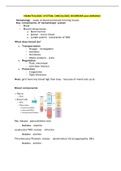
Neutrophils - ......ANSWER........make up about 70% of our white blood cell.
So, they are typically the first cells to arrive at any type of invasion.
They're literally will start migrating towards that invasion site within minutes after the
invasion occurs, how directed by the release of chemicals that rapidly circulate through
our bloodstream.
Neutrophils will arrive at the invasion site in high numbers within a few hours.
can destroy anywhere from 5 to 20 bacteria before they wear out. They exhaust their supply
of digested chemicals
Monocytes - ......ANSWER........Monocytes take a little longer to get there, but within 24
hours they're also going to be at that invasion site. And once they become actively involved
in the inflammatory response, we then refer to them as macrophages.
Opsonization and adherence - ......ANSWER........Plasma proteins like complement and
antibodies will coat foreign material, and that facilitates the adherence of the white blood
cell.
Eosinophils - ......ANSWER........primarily the cleanup cells. They come in and get rid of the
last bit of debris.
,2 of 80
Abscess formation - ......ANSWER........the debris that our body normally reabsorbs and
recycles. Sometimes in more extensive invasions, we have more pus than our body can
absorb in each period, and then that pus can form an abscess, which can become painful
and problematic in another way
Alpha-1 antitrypsin, - ......ANSWER........an important protein produced by the liver
the different enzymes that've been released from white blood cells are deactivated by this
Deficiency of this protein contributes to chronic inflammations
Interleukin-1 - ......ANSWER........Anytime our white blood cells are digesting pathogen,
they're releasing this chemical signal molecule,
The more pathogen or white blood cells release, the more interleukin-1. That are white
blood cells release. Increasing interleukin-1 levels in circulation, circulate through our
blood stream up to the brain.
as those levels of interleukin-1 increase, they stimulate the hypothalamus, The part of the
brain that regulates body temperature, to release yet another chemical, prostaglandin.
As our pathogen level decreases, the WBCs do not release as much interleukin-1. That
decreases the stimulus of the hypothalamus = prostaglandin synthesis decreases, and the
hypothalamus resets itself back to whatever an individual's core body temperature is
normally.
Prostaglandin - ......ANSWER........comes not just from our peripheral area but also is made
in the central nervous system by the hypothalamus.
,3 of 80
Prostaglandin works in the brain like a stimulus to reset the thermostat of the
hypothalamus which increases your core body temperature.
prostaglandin also contributes to the pain symptom by stimulating nerve endings
As our body temperature and our core starts to increase, we see a peripheral
vasoconstriction, this occurs to shunt blood and also body heat inward. Which gives us the
phenomena of paleness and chills.
As prostaglandin synthesis decreases - We now see peripheral vasodilation occurring to
release all of that internal body heat. And when that fever breaks we then see that visually
as sweating and flushing
Medications like aspirin, ibuprofen, or acetaminophen reduce fever by blocking the
synthesis of prostaglandin in the central nervous system, so aspirin and ibuprofen
specifically work in the peripheral system as well to decrease pain and inflammation
Symptoms of a fever, increase in body temperature has a overall beneficial purpose
- ......ANSWER........First, it is inhibitory for some pathogens that prefer 98.6 or 37 degrees
Celsius. Fortunately, many pathogens are very temperature sensitive. So, increasing the
temperature to 100, 101, 102 degrees Fahrenheit, literally will cook out or kill those
microorganisms in large numbers.
when you increase the temperature, chemical reactions go faster. And increasing our body
temperature by even a few days increases the action of phagocytic white blood cells and
chemical mediators like interferon.
Increased body temperature also speeds the chemical reactions involved in body repair
, 4 of 80
Endogenous pyrogens. - ......ANSWER........Interleukin-1 and prostaglandins are known as
endogenous pyrogens.
Chemicals that our body makes naturally as part of our natural defense mechanism.
So when your body is under the control of endogenous pyrogens, interleukin and
prostaglandins, we would not typically see a dangerous or deadly fever occur.
Exogenous pyrogens - ......ANSWER........chemicals that are not part of our own natural
process but from outside, exogenous.
So, when we have a bacterial infection, particularly the gram-negative organisms that
create endotoxins, they release these toxic chemicals that can stimulate the
hypothalamus and increase the temperature.
Some viral infections trigger excessive release of interleukin 1. So, it's our own natural
chemical, but it's being, its release is being triggered not by a natural process but by the
viral infection.
These result in very high temperatures related to sepsis, influenza, etc. And these are not
beneficial fever responses.
B cell (made in bone marrow) receptors & T-cell (made in thymus) receptors
- ......ANSWER........DNA is shuffled around and created at random - which is why
antibodies can be created that are dangerous to your own body by interfering with proteins
needed for regular body function.
to overcome this - natural proteins are floating around in spaces where B-cells and T-cells
are created. If they bond with the natural proteins (recognizes "self") - they are destroyed
before they are released into circulation (this is the 1st line of defense)
NR507 Midterm Exam / NR 507 Week 4 Midterm 200 Advanced
Pathophysiology Midterm Exam Latest Version Chamberlain College of
Nursing (VERSION A) 2025/2026 ||Brand new version!!
Neutrophils - ......ANSWER........make up about 70% of our white blood cell.
So, they are typically the first cells to arrive at any type of invasion.
They're literally will start migrating towards that invasion site within minutes after the
invasion occurs, how directed by the release of chemicals that rapidly circulate through
our bloodstream.
Neutrophils will arrive at the invasion site in high numbers within a few hours.
can destroy anywhere from 5 to 20 bacteria before they wear out. They exhaust their supply
of digested chemicals
Monocytes - ......ANSWER........Monocytes take a little longer to get there, but within 24
hours they're also going to be at that invasion site. And once they become actively involved
in the inflammatory response, we then refer to them as macrophages.
Opsonization and adherence - ......ANSWER........Plasma proteins like complement and
antibodies will coat foreign material, and that facilitates the adherence of the white blood
cell.
Eosinophils - ......ANSWER........primarily the cleanup cells. They come in and get rid of the
last bit of debris.
,2 of 80
Abscess formation - ......ANSWER........the debris that our body normally reabsorbs and
recycles. Sometimes in more extensive invasions, we have more pus than our body can
absorb in each period, and then that pus can form an abscess, which can become painful
and problematic in another way
Alpha-1 antitrypsin, - ......ANSWER........an important protein produced by the liver
the different enzymes that've been released from white blood cells are deactivated by this
Deficiency of this protein contributes to chronic inflammations
Interleukin-1 - ......ANSWER........Anytime our white blood cells are digesting pathogen,
they're releasing this chemical signal molecule,
The more pathogen or white blood cells release, the more interleukin-1. That are white
blood cells release. Increasing interleukin-1 levels in circulation, circulate through our
blood stream up to the brain.
as those levels of interleukin-1 increase, they stimulate the hypothalamus, The part of the
brain that regulates body temperature, to release yet another chemical, prostaglandin.
As our pathogen level decreases, the WBCs do not release as much interleukin-1. That
decreases the stimulus of the hypothalamus = prostaglandin synthesis decreases, and the
hypothalamus resets itself back to whatever an individual's core body temperature is
normally.
Prostaglandin - ......ANSWER........comes not just from our peripheral area but also is made
in the central nervous system by the hypothalamus.
,3 of 80
Prostaglandin works in the brain like a stimulus to reset the thermostat of the
hypothalamus which increases your core body temperature.
prostaglandin also contributes to the pain symptom by stimulating nerve endings
As our body temperature and our core starts to increase, we see a peripheral
vasoconstriction, this occurs to shunt blood and also body heat inward. Which gives us the
phenomena of paleness and chills.
As prostaglandin synthesis decreases - We now see peripheral vasodilation occurring to
release all of that internal body heat. And when that fever breaks we then see that visually
as sweating and flushing
Medications like aspirin, ibuprofen, or acetaminophen reduce fever by blocking the
synthesis of prostaglandin in the central nervous system, so aspirin and ibuprofen
specifically work in the peripheral system as well to decrease pain and inflammation
Symptoms of a fever, increase in body temperature has a overall beneficial purpose
- ......ANSWER........First, it is inhibitory for some pathogens that prefer 98.6 or 37 degrees
Celsius. Fortunately, many pathogens are very temperature sensitive. So, increasing the
temperature to 100, 101, 102 degrees Fahrenheit, literally will cook out or kill those
microorganisms in large numbers.
when you increase the temperature, chemical reactions go faster. And increasing our body
temperature by even a few days increases the action of phagocytic white blood cells and
chemical mediators like interferon.
Increased body temperature also speeds the chemical reactions involved in body repair
, 4 of 80
Endogenous pyrogens. - ......ANSWER........Interleukin-1 and prostaglandins are known as
endogenous pyrogens.
Chemicals that our body makes naturally as part of our natural defense mechanism.
So when your body is under the control of endogenous pyrogens, interleukin and
prostaglandins, we would not typically see a dangerous or deadly fever occur.
Exogenous pyrogens - ......ANSWER........chemicals that are not part of our own natural
process but from outside, exogenous.
So, when we have a bacterial infection, particularly the gram-negative organisms that
create endotoxins, they release these toxic chemicals that can stimulate the
hypothalamus and increase the temperature.
Some viral infections trigger excessive release of interleukin 1. So, it's our own natural
chemical, but it's being, its release is being triggered not by a natural process but by the
viral infection.
These result in very high temperatures related to sepsis, influenza, etc. And these are not
beneficial fever responses.
B cell (made in bone marrow) receptors & T-cell (made in thymus) receptors
- ......ANSWER........DNA is shuffled around and created at random - which is why
antibodies can be created that are dangerous to your own body by interfering with proteins
needed for regular body function.
to overcome this - natural proteins are floating around in spaces where B-cells and T-cells
are created. If they bond with the natural proteins (recognizes "self") - they are destroyed
before they are released into circulation (this is the 1st line of defense)