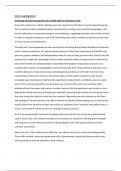
WEEK 5 STUDY GUIDE
Alterations in Neurobiological Functions
• Comprehensive Review
• Exam Study Guide
• Focused on Key Concepts
, lOMoARcPSD|51648332
Alterations in Neurobiological Functions
DEPRESSION
Introduction to Depression
Major depressive disorder is a mood disorder characterized by depressive
symptoms that last longer than 2 weeks. Though the exact cause is unknown,
depression can be influenced by genetic and environmental factors. Stressful
life events, such as giving birth or experiencing emotional trauma, can also
impact the development of depression. Recent research has tied depression to
decreased activity of the prefrontal cortex (Buelt, 2023). The prefrontal cortex
controls attention, memory, mood, and personality.
This learning module focuses on disease processes associated with depression
and enables you to meet the following course outcomes:
CO 1: Analyze pathophysiologic mechanisms associated with selected
disease states across the lifespan.
CO 2: Examine the way in which homeostatic, adaptive, and
compensatory physiological mechanisms can be supported and/or altered
through specific therapeutic interventions across the lifespan.
CO 3: Distinguish risk factors associated with selected disease states
across the lifespan.
CO 4: Integrate advanced pathophysiological concepts in the diagnosis
and treatment of health problems in selected populations.
Recognizing Depression
The nurse practitioner (NP) is discussing a client’s reason for seeking care.
Which client statements should the NP recognize as being associated with
depression? Select all that apply.
“I feel so hopeless, and everyone says I look sad.”
“Lately, I cannot seem to remember anything without writing it down.”
“My partner is frustrated because I can’t make decisions about our upcoming
vacation.”
Downloaded by Benjamin Luca ()
, lOMoARcPSD|51648332
“I have so much more energy these days.”
“Never in my life have I felt so worthless; I feel guilty about everything.”
---------------
Symptoms of depression can include difficulty making decisions, feeling
hopeless and sad, and feeling guilt or self-negativity.
Impaired recent and immediate memory or episodes of extreme energy are
not associated with major depressive disorders.
------------------
Tricyclic Antidepressants
The nurse practitioner (NP) prescribes a tricyclic antidepressant for a client
with newly diagnosed major depressive disorder (MDD). Which statement
should the NP include when providing client education?
“This medication will take 2–4 weeks to reach a therapeutic blood level.”
“Most clients notice a change in their mood within 36 hours after the first
dose.”
“Generally, 5–7 days are needed for the medication to start working.”
“Your symptoms should improve over the next 3–4 months.”
-----------
It takes 2 to 4 weeks for tricyclic antidepressants to reach a therapeutic blood
level.
Within 36 hours and 5 to 7 days are both too short for a therapeutic blood level
of the drug to be achieved. Improvement in depression should be
demonstrated sooner than 3 to 4 months.
---------------
Acetylcholine and Mood
Which statement best explains how acetylcholine impacts mood?
Acetylcholine regulates neural circuits in the hippocampus and prefrontal
cortex.
Acetylcholine targets both serotonin and norepinephrine systems.
Acetylcholine contributes to normal muscle contraction.
Acetylcholine binds to receptors on the presynaptic neuron.
--------
Acetylcholine is involved in regulating neural circuits associated with mood and
emotion, particularly in brain regions such as the hippocampus and prefrontal
cortex. Changes in acetylcholine levels or receptor function in these areas may
impact mood regulation and contribute to depressive symptoms.
Downloaded by Benjamin Luca ()
, lOMoARcPSD|51648332
Acetylcholine's impact on muscle contraction is not related to its impact on
mood. Acetylcholine binds to postsynaptic (not presynaptic) neuron
receptors. Acetylcholine acts on two main types of receptors: muscarinic
receptors and nicotinic receptors.
-----
Normal Physiology of Serotonin and
Norepinephrine
Serotonin and norepinephrine are chemical messengers that, along with
dopamine and acetylcholine, play a crucial role in communication between
nerve cells (neurons) in the brain. These neurotransmitters are involved in
various physiological processes and are particularly relevant to the
understanding of depression. Click each section below to learn more about the
normal physiology of neurotransmitters.
Serotonin
Synthesis and Release: Serotonin is synthesized in the neurons from the
amino acid tryptophan. Once synthesized, serotonin is stored in vesicles within
the nerve terminals.
Release and Reuptake: When a nerve impulse reaches the end of a neuron,
serotonin is released into the synapse (the gap between neurons). After
release, some of the serotonin binds to receptors on the postsynaptic neuron,
transmitting the signal. The remaining serotonin is taken back up into the
presynaptic neuron through a process called reuptake, where it can be
recycled.
Receptors: Serotonin binds to specific receptors on the postsynaptic neuron.
There are various subtypes of serotonin receptors (e.g., 5-HT1, 5-HT2), and
their activation can have different effects on mood, emotion, and other
physiological functions.
Norepinephrine
Synthesis and Release: Norepinephrine is synthesized from the amino acid
tyrosine. Like serotonin, it is stored in vesicles in the nerve terminals.
Release and Reuptake: Upon a nerve impulse, norepinephrine is released
into the synapse. It then binds to receptors on the postsynaptic neuron. The
unbound norepinephrine is also subject to reuptake into the presynaptic
neuron for recycling.
Receptors: Norepinephrine primarily acts on adrenergic receptors, of which
there are alpha and beta subtypes. The activation of these receptors can have
various effects on mood, alertness, and other physiological responses.
Downloaded by Benjamin Luca ()
Alterations in Neurobiological Functions
• Comprehensive Review
• Exam Study Guide
• Focused on Key Concepts
, lOMoARcPSD|51648332
Alterations in Neurobiological Functions
DEPRESSION
Introduction to Depression
Major depressive disorder is a mood disorder characterized by depressive
symptoms that last longer than 2 weeks. Though the exact cause is unknown,
depression can be influenced by genetic and environmental factors. Stressful
life events, such as giving birth or experiencing emotional trauma, can also
impact the development of depression. Recent research has tied depression to
decreased activity of the prefrontal cortex (Buelt, 2023). The prefrontal cortex
controls attention, memory, mood, and personality.
This learning module focuses on disease processes associated with depression
and enables you to meet the following course outcomes:
CO 1: Analyze pathophysiologic mechanisms associated with selected
disease states across the lifespan.
CO 2: Examine the way in which homeostatic, adaptive, and
compensatory physiological mechanisms can be supported and/or altered
through specific therapeutic interventions across the lifespan.
CO 3: Distinguish risk factors associated with selected disease states
across the lifespan.
CO 4: Integrate advanced pathophysiological concepts in the diagnosis
and treatment of health problems in selected populations.
Recognizing Depression
The nurse practitioner (NP) is discussing a client’s reason for seeking care.
Which client statements should the NP recognize as being associated with
depression? Select all that apply.
“I feel so hopeless, and everyone says I look sad.”
“Lately, I cannot seem to remember anything without writing it down.”
“My partner is frustrated because I can’t make decisions about our upcoming
vacation.”
Downloaded by Benjamin Luca ()
, lOMoARcPSD|51648332
“I have so much more energy these days.”
“Never in my life have I felt so worthless; I feel guilty about everything.”
---------------
Symptoms of depression can include difficulty making decisions, feeling
hopeless and sad, and feeling guilt or self-negativity.
Impaired recent and immediate memory or episodes of extreme energy are
not associated with major depressive disorders.
------------------
Tricyclic Antidepressants
The nurse practitioner (NP) prescribes a tricyclic antidepressant for a client
with newly diagnosed major depressive disorder (MDD). Which statement
should the NP include when providing client education?
“This medication will take 2–4 weeks to reach a therapeutic blood level.”
“Most clients notice a change in their mood within 36 hours after the first
dose.”
“Generally, 5–7 days are needed for the medication to start working.”
“Your symptoms should improve over the next 3–4 months.”
-----------
It takes 2 to 4 weeks for tricyclic antidepressants to reach a therapeutic blood
level.
Within 36 hours and 5 to 7 days are both too short for a therapeutic blood level
of the drug to be achieved. Improvement in depression should be
demonstrated sooner than 3 to 4 months.
---------------
Acetylcholine and Mood
Which statement best explains how acetylcholine impacts mood?
Acetylcholine regulates neural circuits in the hippocampus and prefrontal
cortex.
Acetylcholine targets both serotonin and norepinephrine systems.
Acetylcholine contributes to normal muscle contraction.
Acetylcholine binds to receptors on the presynaptic neuron.
--------
Acetylcholine is involved in regulating neural circuits associated with mood and
emotion, particularly in brain regions such as the hippocampus and prefrontal
cortex. Changes in acetylcholine levels or receptor function in these areas may
impact mood regulation and contribute to depressive symptoms.
Downloaded by Benjamin Luca ()
, lOMoARcPSD|51648332
Acetylcholine's impact on muscle contraction is not related to its impact on
mood. Acetylcholine binds to postsynaptic (not presynaptic) neuron
receptors. Acetylcholine acts on two main types of receptors: muscarinic
receptors and nicotinic receptors.
-----
Normal Physiology of Serotonin and
Norepinephrine
Serotonin and norepinephrine are chemical messengers that, along with
dopamine and acetylcholine, play a crucial role in communication between
nerve cells (neurons) in the brain. These neurotransmitters are involved in
various physiological processes and are particularly relevant to the
understanding of depression. Click each section below to learn more about the
normal physiology of neurotransmitters.
Serotonin
Synthesis and Release: Serotonin is synthesized in the neurons from the
amino acid tryptophan. Once synthesized, serotonin is stored in vesicles within
the nerve terminals.
Release and Reuptake: When a nerve impulse reaches the end of a neuron,
serotonin is released into the synapse (the gap between neurons). After
release, some of the serotonin binds to receptors on the postsynaptic neuron,
transmitting the signal. The remaining serotonin is taken back up into the
presynaptic neuron through a process called reuptake, where it can be
recycled.
Receptors: Serotonin binds to specific receptors on the postsynaptic neuron.
There are various subtypes of serotonin receptors (e.g., 5-HT1, 5-HT2), and
their activation can have different effects on mood, emotion, and other
physiological functions.
Norepinephrine
Synthesis and Release: Norepinephrine is synthesized from the amino acid
tyrosine. Like serotonin, it is stored in vesicles in the nerve terminals.
Release and Reuptake: Upon a nerve impulse, norepinephrine is released
into the synapse. It then binds to receptors on the postsynaptic neuron. The
unbound norepinephrine is also subject to reuptake into the presynaptic
neuron for recycling.
Receptors: Norepinephrine primarily acts on adrenergic receptors, of which
there are alpha and beta subtypes. The activation of these receptors can have
various effects on mood, alertness, and other physiological responses.
Downloaded by Benjamin Luca ()