ATI Proctored Mental Health Study Guide
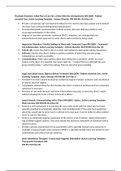
ATI Proctored Mental Health Study Guide Psychotic Disorders: Initial Plan of Care for a Client Who Has Schizophrenia (RN QSEN - Patient-centered Care, Active Learning Template - System Disorder, RM MH RN 10.0 Chp 15) • Provide a structured, safe environment (milieu) for the client to decrease anxiety and to distract the client from constant thinking about hallucinations • Promote therapeutic communication to lower anxiety, decrease defensive patterns, and encourage participation in the milieu. • Program of assertive community treatment (PACT): Intensive case management and interprofessional team approach to assist clients with community‑living needs. Depressive Disorders: Priority Findings to Share with Treatment Team (RN QSEN - Teamwork and Collaboration, Active Learning Template - System Disorder, RM MH RN 10.0 Chp 13) • Suicide risk: Assess the client’s risk for suicide and implement appropriate safety precautions. • Self‑care: Monitor the client’s ability to perform activities of daily living and encourage independence as much as possible. • Communication: Make observations rather than asking direct questions, which can cause anxiety in the client. For example, the nurse might say, “I noticed that you attended the unit group meeting today,” rather than asking, “Did you enjoy the group meeting Legal and Ethical Issues: Right to Refuse Treatment (RN QSEN - Patient-centered Care, Active Learning Template - Basic Concept, RM MH RN 10.0 Chp 2) • Freedom from harm related to physical or pharmacological restraint, seclusion, and any physical or mental abuse or neglect • A psychiatric advance directive that includes the client’s treatment preferences if an involuntary admission is necessary • Provision of care with the least restrictive interventions necessary to meet the client’s needs without allowing him to be a threat to himself or others Sexual Assault: Communicating with a Client (RN QSEN - Safety , Active Learning Template - Basic Concept, RM MH RN 10.0 Chp 33) • Perform a self‑assessment. It is vital that the nurse who works with the client who has been sexually assaulted be empathetic, objective, and nonjudgmental. If the nurse feels emotional about the assault due to some event or person in his own past, it can be better to allow another nurse to care for the client. • Perform an initial and ongoing assessment of the client’s level of anxiety, coping mechanisms, and available support systems. The nurse should also assess for indications of emotional and/or physical trauma. • Provide a private environment for an examination with a specially trained nurse‑advocate, if available. A sexual assault nurse examiner (SANE) is a specially trained nurse who performs such examinations and collects forensic evidence. Brain Stimulation Therapies: Transcranial Magnetic Stimulation (Active Learning Template - Therapeutic Procedure, RM MH RN 10.0 Chp 10) • TMS is a noninvasive therapy that uses magnetic pulsations to stimulate the cerebral cortex of the brain • TMS is approved by the United States Food and Drug Administration (FDA) for the treatment of major depressive disorder for clients who are not responsive to pharmacological treatment. • TMS is commonly prescribed daily for a period of 4 to 6 weeks.●TMS can be performed as an outpatient procedure.●The TMS procedure lasts 30 to 40 min.●A noninvasive electromagnet is placed on the client’s scalp, allowing the magnetic pulsations to pass through.●The client is alert during the procedure.●Clients might feel a tapping or knocking sensation in the head, scalp skin contraction, and tightening of the jaw muscles during the procedure. • Common adverse effects include mild discomfort or a tingling sensation at the site of the electromagnet and headaches.●Monitor for lightheadedness after the procedure.●Seizures are a rare but potential complication.●TMS is not associated with systemic adverse effects or neurologic deficits. Suicide: Risk Factors for Suicide (Active Learning Template - Basic Concept, RM MH RN 10.0 Chp 30) • While females are more likely to attempt suicide, adolescent, middle, and older adult males are more likely to have a completed suicide. Other individuals at increased risk for suicide include active military personnel/veterans; those who are lesbian, gay, bisexual, or transgender; and people who have a comorbid mental illness, such as depressive disorders, substance use disorders, schizophrenia, bipolar disorder, and personality disorders. • OLDER ADULT CLIENTS: Untreated depression●Loss of employment and finances●Feelings of isolation, powerlessness●Prior attempts at suicide (older adult clients are more likely to succeed)●Change in functional ability●Alcohol or other substance use disorder●Loss of loved ones. • BIOLOGICAL FACTORS●Family history of suicide●Physical disorders, such as AIDS, cancer, cardiovascular disease, stroke, chronic kidney disease, cirrhosis, dementia, epilepsy, head injury, Huntington’s disease, and multiple sclerosis. • ENVIRONMENTAL FACTORS●Access to lethal methods, such as firearms●Lack of access to adequate mental health care●Unemployment. Medications for Psychotic Disorders: Assessment Tools to Determine Adverse Effects of Medication (Active Learning Template - Medication, RM MH RN 10.0 Chp 24). • Abnormal Involuntary Movement Scale (AIMS): This tool is used to monitor involuntary movements and tardive dyskinesia in clients who take antipsychotic medication. • World Health Organization Disability Assessment Schedule (WHODAS): This scale helps to determine the client’s level of global functioning. Mental Health Issues of Children and Adolescents: Behavioral Management of Autism Spectrum Disorder (RN QSEN - Patient-centered Care, Active Learning Template - System Disorder, RM MH RN 10.0 Chp 28) • Encourage parents to participate in the child’s care and treatment plan as much as possible. • Use short, concise, and developmentally appropriate communication. • Identify desired behaviors and reward them. Substance Use and Addictive Disorders: Interventions for Alcohol Withdrawal (RN QSEN - Safety , Active Learning Template - System Disorder, RM MH RN 10.0 Chp 18) • Monitor vital signs and neurological status. • Provide for client safety by implementing seizure precautions. • Encourage the client to adhere to the treatment plan Family and Community Violence: Providing Immediate Safety (RN QSEN - Safety , Active Learning Template - Basic Concept, RM MH RN 10.0 Chp 32) • Help client develop a safety plan, identify behaviors and situations that might trigger violence, and provide information regarding safe places to live. • Encourage participation in support groups. • Use case management to coordinate community, medical, criminal justice, and social services. • Use crisis intervention techniques to help resolve family or community situations where violence has been devastating. Care of Clients Who are Dying and/or Grieving: Planning Care for Bereavement (RN QSEN - Patient-centered Care, Active Learning Template - Basic Concept, RM MH RN 10.0 Chp 27) • Accepting the reality of the loss. • Processing the pain of grief. The client uses coping mechanisms to deal with the emotional pain of the loss. • Adjusting to a world without the lost entity. The client changes the environment to accommodate the absence of the deceased. • Finding an enduring connection with the lost entity during embarking on a new life. The client finds a way to keep the lost entity a part of her life while at the same time moving forward with life and establishing new relationships. Anxiety Disorders: Clinical Findings of Posttraumatic Stress Disorder (Active Learning Template - System Disorder, RM MH RN 10.0 Chp 11) • Re-experiencing the trauma through intrusive distressing recollections of the event, flashbacks, and nightmares. • Emotional numbness and avoidance of places, people, and activities that are reminders of the trauma. • Increased arousal such as difficulty sleeping and concentrating, feeling jumpy, and being easily irritated and angered. Bipolar Disorders: Manifestations of Mania (Active Learning Template - System Disorder, RM MH RN 10.0 Chp 14) • Labile mood with euphoria • Agitation and irritability • Restlessness●Dislike of interference and intolerance of criticism • Increase in talking and activity • Flight of ideas: rapid, continuous speech with sudden and frequent topic change Neurocognitive Disorders: Expected Findings of Alzheimer's Disease (Active Learning Template - System Disorder, RM MH RN 10.0 Chp 17) • gradual deterioration of function over months or years • Impairments in memory, judgment, speech (aphasia), ability to recognize familiar objects (agnosia), executive functioning (managing daily tasks), and movement (apraxia); impairments do not change throughout the day. • Level of consciousness is usually unchanged Personality Disorders: Manifestations of Borderline Personality Disorder (Active Learning Template - System Disorder, RM MH RN 10.0 Chp 16) • inflexibility/maladaptive responses to stress • Compulsiveness and lack of social restraint • Inability to emotionally connect in social and professional relationships • Tendency to provoke interpersonal conflict • Ability to merge personal boundaries with others Personality Disorders: Planning Care for a Client Who Has Paranoid Personality Disorder (RN QSEN - Patient-centered Care, Active Learning Template - System Disorder, RM MH RN 10.0 Chp 16) • Clients who have personality disorders can evoke • intense emotions in the nurse. • Awareness of personal reactions to stress promotes • effective nursing care. • Therapeutic communication and intervention are • promoted when client behaviors are anticipated Stress and Defense Mechanisms: Identifying Defense Mechanisms (RN QSEN - Patient-centered Care, Active Learning Template - Basic Concept, RM MH RN 10.0 Chp 4) • Altruism: Dealing with anxiety by reaching out to others • Sublimation : Dealing with unacceptable feelings or impulses by unconsciously substituting acceptable forms of expression. • Rationalization : Creating reasonable and acceptable explanations for unacceptable behavior Creating and Maintaining a Therapeutic and Safe Environment: Phases of the Therapeutic Relationship (Active Learning Template - Basic Concept, RM MH RN 10.0 Chp 5) • Orientation NURSE : introduce self to the client and state purpose.Set the contract: meeting time, place, frequency, duration, and date of ss confidentiality.Build trust by establishing expectations and boundaries.Set goals with the re the client’s ideas,issues, and re the meaning of testing ce limits on testing or other inappropriate behaviors. • Working NURSE: Maintain relationship according to the rm ongoing assessment to plan and evaluate therapeutic itate the client’s expression of needs and rage the client to te the client’s r positive behavioral re and deal with resistance and other defense nize transference and countertransference ess the client’s problems and goals, and revise plans as necessary.Support the client’s adaptive alternatives and use of new coping skills. • Termination NURSE provide opportunity for the client to discuss thoughts and feelings about termination and ss the client’s previous experience with separations and t the client’s feelings about the therapeutic work in the nurse-client relationship.Summarize goals and w memories of work in the ss own feelings about sessions to validate the experience with the ss ways for the client to incorporate new healthy behaviors into life.Maintain limits of final termination. Neurocognitive Disorders: Home Safety for a Client Who Has Alzheimer's Disease (RN QSEN - Safety , Active Learning Template - Basic Concept, RM MH RN 10.0 Chp 17) • Install childproof door locks. • Place the client’s mattress on the floor. • install light fixtures above stairs Medications for Bipolar Disorders: Adverse Effects of Lamotrigine (Active Learning Template - Medication, RM MH RN 10.0 Chp 23) • Double or blurred vision • dizziness, • headache, nausea, vomiting Medications for Psychotic Disorders: Adverse Effects of Thioridazine Therapy (RN QSEN - Patient-centered Care, Active Learning Template - Medication, RM MH RN 10.0 Chp 24) • Agranulocytosis • Pseudoparkinsonism • Akathisia Medications for Children and Adolescents Who Have Mental Health Issues: Evaluating Client Understanding of Methylphenidate (RN QSEN - Patient-centered Care, Active Learning Template - Medication, RM MH RN 10.0 Chp 25) • Monitor the client’s height and weight and compare to baseline height and weight. • Administer medication right before or after meals. • Encourage children to eat at regular meal times and to avoid unhealthy food choices. Medications for Substance Use Disorders: Managing Alcohol Withdrawal (RN QSEN - Safety , Active Learning Template - Medication, RM MH RN 10.0 Chp 26) • Administer around‑the‑clock or PRN. • Obtain baseline vital signs. • Monitor vital signs and neurological status on an ongoing basis. • Provide for seizure precautions. Medications for Depressive Disorders: Clinical Findings of Serotonin Syndrome (Active Learning Template - System Disorder, RM MH RN 10.0 Chp 22) • Mental confusion, difficulty concentrating • Abdominal pain • Diarrhea • Agitation • Fever • Anxiety●Hallucinations●Hyperreflexia, incoordination●Diaphoresis●Tremor
Escuela, estudio y materia
- Institución
- Ati mental health
- Grado
- Ati mental health
Información del documento
- Subido en
- 4 de enero de 2021
- Número de páginas
- 6
- Escrito en
- 2020/2021
- Tipo
- OTRO
- Personaje
- Desconocido
Temas
-
ati proctored mental health study guide

Documento también disponible en un lote