CONDITIONS FINAL EXAM USAHS WITH
CORRECT SOLUTIONS
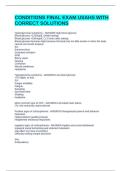
Hyperglycemia symptoms - ANSWER-high blood glucose
Blood glucose >125mg/dL (while fasting)
Blood glucose >180mg/dL (1-2 hours after eating)
Blood glucose becomes high because the body has too little insulin or when the body
cannot use insulin properly
SX:
Extreme thirst
Increased urination
SOB
Blurry vision
Nausea
Confusion
Muscle weakness
Headache
Hypoglycemia symptoms - ANSWER-Low blood glucose
<70 mg/dL or less
SX:
hunger irritability
Fatigue
Sweating
fast heart beat
Shaking
headache
Most common type of CHF - ANSWER-Left-sided heart failure
(Tx: left ventricular assist device)
Positive signs of schizophrenia - ANSWER-Disorganized speech and behavior
Delusions
Hallucinations (auditory/visual)
Heightened emotional responses
negative signs of schizophrenia - ANSWER-Apathy and social withdrawal
Impaired social functioning and reduced motivation
Flat affect (no race of emotion)
Difficulty making simple decisions
5As
Ambivalence
, Affect
asociality
Alogia
Anhedonia (inability to feel pleasure)
What is atherosclerosis? - ANSWER-rough, irregular fatty deposits form within the
intima and inner media of the arteries and often lead to the generation of thrombus, or
blood clot.
COPD symptoms - ANSWER-Dyspnea with minimal exertion
Persistent cough with increased mucus production
Wheezing
Fatigue
LE edema
Weight loss
Glasgow Coma Scale rating levels- what's the span of the scale and what do lower and
higher numbers mean in relation to severity - ANSWER-GCS ranges from 3-15; lower
numbers indicate greater severity.
Mild- 13-15
Moderate 9-12
Severe 3-8
GCS is provided during acute phase of injury
Lower #s indicate a more severe condition
Higher #s indicate a less severe condition
Neurobehavioral changes post TBI may include what - ANSWER-Impulsivity
Perseveration
compulsivity
Irritability/agitation
aggression
disinhibition
apathy
depression
reduced self-esteem
suicide risk
PTSD
substance abuse
personality disorder
What adult population is most susceptible to TBI - ANSWER-Young men between the
ages of 15 and 24 represent the highest TBI demographic and are twice as likely as
women of the same age to sustain a TBI
Movements available for C4 injury - ANSWER-Shoulder elevation, scapular adduction,
depression ,and independent breathing.
CORRECT SOLUTIONS
Hyperglycemia symptoms - ANSWER-high blood glucose
Blood glucose >125mg/dL (while fasting)
Blood glucose >180mg/dL (1-2 hours after eating)
Blood glucose becomes high because the body has too little insulin or when the body
cannot use insulin properly
SX:
Extreme thirst
Increased urination
SOB
Blurry vision
Nausea
Confusion
Muscle weakness
Headache
Hypoglycemia symptoms - ANSWER-Low blood glucose
<70 mg/dL or less
SX:
hunger irritability
Fatigue
Sweating
fast heart beat
Shaking
headache
Most common type of CHF - ANSWER-Left-sided heart failure
(Tx: left ventricular assist device)
Positive signs of schizophrenia - ANSWER-Disorganized speech and behavior
Delusions
Hallucinations (auditory/visual)
Heightened emotional responses
negative signs of schizophrenia - ANSWER-Apathy and social withdrawal
Impaired social functioning and reduced motivation
Flat affect (no race of emotion)
Difficulty making simple decisions
5As
Ambivalence
, Affect
asociality
Alogia
Anhedonia (inability to feel pleasure)
What is atherosclerosis? - ANSWER-rough, irregular fatty deposits form within the
intima and inner media of the arteries and often lead to the generation of thrombus, or
blood clot.
COPD symptoms - ANSWER-Dyspnea with minimal exertion
Persistent cough with increased mucus production
Wheezing
Fatigue
LE edema
Weight loss
Glasgow Coma Scale rating levels- what's the span of the scale and what do lower and
higher numbers mean in relation to severity - ANSWER-GCS ranges from 3-15; lower
numbers indicate greater severity.
Mild- 13-15
Moderate 9-12
Severe 3-8
GCS is provided during acute phase of injury
Lower #s indicate a more severe condition
Higher #s indicate a less severe condition
Neurobehavioral changes post TBI may include what - ANSWER-Impulsivity
Perseveration
compulsivity
Irritability/agitation
aggression
disinhibition
apathy
depression
reduced self-esteem
suicide risk
PTSD
substance abuse
personality disorder
What adult population is most susceptible to TBI - ANSWER-Young men between the
ages of 15 and 24 represent the highest TBI demographic and are twice as likely as
women of the same age to sustain a TBI
Movements available for C4 injury - ANSWER-Shoulder elevation, scapular adduction,
depression ,and independent breathing.