Attachment
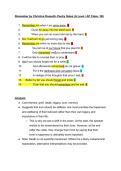
sychologist names =Red
P
Statistics =Purple
Examples =Green
Important terminology/ information =Orange
,Attachment
With reference to reciprocity and interactional synchrony, discuss infant-caregiver interactions. (16)
Discuss the stages of attachment identified by Schaffer (& Emerson - not mentioned in the specification) (16)
Outline and evaluate the role of the father in the development of attachment. (16)
Outline and evaluate animal studies of attachment. (16 marks)
Outline and evaluate the learning theory as an explanation of attachment. (16)
Outline and evaluate Bowlby’s monotropic explanation of attachment. (16)
Outline and evaluate Bowlby’s maternal explanation of attachment. (16)
Discuss the strange situation as a way of assessing types of attachment. (16)
Outline and evaluate research into cultural variations in attachment. (16)
,With reference to reciprocity and interactional synchrony, discuss infant-caregiver interactions. (16)
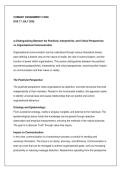
A01 Reciprocity - caregiver-infant interaction is a mutual process
A
- Each party responds to others' signals to sustain interaction (turn-taking)
- e.g. the mother smiles, and then the baby smiles back.
Belsky - elskyobserved mother-infant interactions when theinfant is1,3 and 9 months old
B
- At12 months old, infant attachment to the motherwas assessed using Strange
Situation.
- Securely attached infants had been involved in an intermediate level of reciprocal
interaction, this was seen as the optimum level of stimulation.
- Insecure-resistant attachment tended to have low levels of reciprocal interaction
- Insecure-avoidant attachments tended to have high levels of reciprocal interaction.
A01 Interactional - Interaction between a parent and child that involves mirroring communication
synchrony - Responsive to each other's social cues
- E.g. A baby moves her head in time with her mother
Interactional - eltzoff and Moorecarried out experiments using18babies aged 12 to 27 days old
M
synchrony is - Infants imitated specific facial and hand gestures, giving evidence that interactional
innate - synchrony begins at a very young age
Meltzoff and - In a later study, they researched babies at3 daysoldand concluded the same results
Moore - Based on this, the behavioural response must be innate, not learnt.
A03 Support for - I sabellastudied mother-infant interactions at3 to9 months, and then at 12 months,
interactional they were assessed using the Strange Situation.
synchrony - - Mother-infant interactions showing good interactional synchrony (well-timed and
Isabella mutually rewarding) were followed by secure attachment.
- Mother-infant interaction where the mother was minimally involved, unresponsive or
overstimulating was followed by insecure attachment.
ethodological
M - bserving and interpreting the actions of infants is notoriously difficult.
O
issues - - Because babies cannot communicate, inferences of behaviour are made, which lends
reciprocity and itself to issues with validity.
interactional - Most research is observational, so bias in observer interpretation could be a problem.
synchrony - However, this could be overcome by using more than one observer and utilising
inter-rater reliability.
- This would mean that consistency of behaviour could be checked in order to check for
any instances of researcher bias.
ethodology of
M - sing films means that observations can be recorded and analysed later.
U
caregiver-infant - Therefore it is unlikely that researchers will miss seeing key behaviours.
interactions are - Furthermore, having filmed interactions means that more than one observer can record
usually filmed - data and establish the inter-rater reliability of observations.
high reliability. - Therefore, the data collected in such research should be reliable and valid.
S ocially - esearch into caregiver interactions has influenced attachment
R
sensitive - - Bowlby proposed that there would be long term developmental effects if an attachment
Bowlby was not formed
- Therefore, women were forced to stay at home due to this research as they felt obliged
for the development of their infants
, Discuss the stages of attachment identified by Schaffer (& Emerson - not mentioned in the specification) (16)
A01 - S chaffer & Emersonsought to investigate the formationof early attachment, in particular, the age at which
they developed their emotional intensity.
- 60 babies from Glaglow, the majority were skilledworking-class families
- Babies and mothers were visited at home every month for the first year; then avisit 18 months later
- Asked the mothers about the kind of protests their babies showed in7 everyday separationse.g. adult
leaving the room.
- Attachment tended to be to the caregiver, who was most interactive and sensitive to infant signals
(reciprocity)
- The study suggests that being sensitive and responsive(including playing and communicating an infant)is
more instrumental in attachment development than physical care.
- Schaffer and Emersonalso found that39% of cases,the person who fed, bathed and changed the infant
was not his/her primary attachment object.
- Thus, some mothers/ fathers were the main attachment figures even if they didn't carry out these
activities.
- Asocial stage (Stage 1):0-6 weeks- Observable behaviouris shown towards humans and inanimate objects
Baby is forming bonds with certain people
- Indiscriminate attachment (Stage 2):6 weeks - 6 months- Babies have a clear preference for being with
humans rather than inanimate objects. Babies accept hugs from any person, hence the term
‘indiscriminate’ they do not display separation anxiety or stranger anxiety
- Specific attachment (Stage 3):7+ months- Start todisplay signs of attachment they exhibit stranger
anxiety and separation anxiety when the attachment figure is not present. This person is called the primary
attachment figure, the baby has formed a specific attachment.
- Multiple attachments (Stage 4):10-11 months- Afterbabies show attachment behaviour to one person, it
extends to multiple attachments these are called secondary attachments
- 29% of children form secondary attachments within a month of forming a primary attachment
A03 E valuation E xternal - S ince babies were observed in their own homes (a natural environment)
ofSchaffer validity/Ecolo - We can assume that the study is high in ecological validity; the findings can
and gical validity be generalised to the real world increasing external validity.
Emerson’s
study
Issue with - ll the infants came from Glasgow, and most were working class.
A
generalisabili - We cannot generalise the findings to other types of families.
ty - The findings may be era-dependent (low temporal validity), they reflect
child-rearing practices of the 1960s, which were mainly carried out by the
mother.
- Nowadays, fathers take a much more active role in their children's lives.
E valuation seful
U - T he stages can help parents to identify if they are progressing normally
of the application through the stages.
stages of - If infants are not progressing, this may encourage parents to seek further
attachment investigation to see if there could be any underlying developmental issues.
Validity - T he validity of the asocial stage can be questioned.
- This is because children at this age have very poor coordination and
mobility.
- In general babies this age provide very limited behaviour to observe.
- Therefore, there may not be enough data to draw valid conclusions from.
- This does not necessarily mean that babies don’t have the capacity to think
or feel, it is just very difficult to make assumptions about a baby's social
understanding when there is so little to go on.
sychologist names =Red
P
Statistics =Purple
Examples =Green
Important terminology/ information =Orange
,Attachment
With reference to reciprocity and interactional synchrony, discuss infant-caregiver interactions. (16)
Discuss the stages of attachment identified by Schaffer (& Emerson - not mentioned in the specification) (16)
Outline and evaluate the role of the father in the development of attachment. (16)
Outline and evaluate animal studies of attachment. (16 marks)
Outline and evaluate the learning theory as an explanation of attachment. (16)
Outline and evaluate Bowlby’s monotropic explanation of attachment. (16)
Outline and evaluate Bowlby’s maternal explanation of attachment. (16)
Discuss the strange situation as a way of assessing types of attachment. (16)
Outline and evaluate research into cultural variations in attachment. (16)
,With reference to reciprocity and interactional synchrony, discuss infant-caregiver interactions. (16)
A01 Reciprocity - caregiver-infant interaction is a mutual process
A
- Each party responds to others' signals to sustain interaction (turn-taking)
- e.g. the mother smiles, and then the baby smiles back.
Belsky - elskyobserved mother-infant interactions when theinfant is1,3 and 9 months old
B
- At12 months old, infant attachment to the motherwas assessed using Strange
Situation.
- Securely attached infants had been involved in an intermediate level of reciprocal
interaction, this was seen as the optimum level of stimulation.
- Insecure-resistant attachment tended to have low levels of reciprocal interaction
- Insecure-avoidant attachments tended to have high levels of reciprocal interaction.
A01 Interactional - Interaction between a parent and child that involves mirroring communication
synchrony - Responsive to each other's social cues
- E.g. A baby moves her head in time with her mother
Interactional - eltzoff and Moorecarried out experiments using18babies aged 12 to 27 days old
M
synchrony is - Infants imitated specific facial and hand gestures, giving evidence that interactional
innate - synchrony begins at a very young age
Meltzoff and - In a later study, they researched babies at3 daysoldand concluded the same results
Moore - Based on this, the behavioural response must be innate, not learnt.
A03 Support for - I sabellastudied mother-infant interactions at3 to9 months, and then at 12 months,
interactional they were assessed using the Strange Situation.
synchrony - - Mother-infant interactions showing good interactional synchrony (well-timed and
Isabella mutually rewarding) were followed by secure attachment.
- Mother-infant interaction where the mother was minimally involved, unresponsive or
overstimulating was followed by insecure attachment.
ethodological
M - bserving and interpreting the actions of infants is notoriously difficult.
O
issues - - Because babies cannot communicate, inferences of behaviour are made, which lends
reciprocity and itself to issues with validity.
interactional - Most research is observational, so bias in observer interpretation could be a problem.
synchrony - However, this could be overcome by using more than one observer and utilising
inter-rater reliability.
- This would mean that consistency of behaviour could be checked in order to check for
any instances of researcher bias.
ethodology of
M - sing films means that observations can be recorded and analysed later.
U
caregiver-infant - Therefore it is unlikely that researchers will miss seeing key behaviours.
interactions are - Furthermore, having filmed interactions means that more than one observer can record
usually filmed - data and establish the inter-rater reliability of observations.
high reliability. - Therefore, the data collected in such research should be reliable and valid.
S ocially - esearch into caregiver interactions has influenced attachment
R
sensitive - - Bowlby proposed that there would be long term developmental effects if an attachment
Bowlby was not formed
- Therefore, women were forced to stay at home due to this research as they felt obliged
for the development of their infants
, Discuss the stages of attachment identified by Schaffer (& Emerson - not mentioned in the specification) (16)
A01 - S chaffer & Emersonsought to investigate the formationof early attachment, in particular, the age at which
they developed their emotional intensity.
- 60 babies from Glaglow, the majority were skilledworking-class families
- Babies and mothers were visited at home every month for the first year; then avisit 18 months later
- Asked the mothers about the kind of protests their babies showed in7 everyday separationse.g. adult
leaving the room.
- Attachment tended to be to the caregiver, who was most interactive and sensitive to infant signals
(reciprocity)
- The study suggests that being sensitive and responsive(including playing and communicating an infant)is
more instrumental in attachment development than physical care.
- Schaffer and Emersonalso found that39% of cases,the person who fed, bathed and changed the infant
was not his/her primary attachment object.
- Thus, some mothers/ fathers were the main attachment figures even if they didn't carry out these
activities.
- Asocial stage (Stage 1):0-6 weeks- Observable behaviouris shown towards humans and inanimate objects
Baby is forming bonds with certain people
- Indiscriminate attachment (Stage 2):6 weeks - 6 months- Babies have a clear preference for being with
humans rather than inanimate objects. Babies accept hugs from any person, hence the term
‘indiscriminate’ they do not display separation anxiety or stranger anxiety
- Specific attachment (Stage 3):7+ months- Start todisplay signs of attachment they exhibit stranger
anxiety and separation anxiety when the attachment figure is not present. This person is called the primary
attachment figure, the baby has formed a specific attachment.
- Multiple attachments (Stage 4):10-11 months- Afterbabies show attachment behaviour to one person, it
extends to multiple attachments these are called secondary attachments
- 29% of children form secondary attachments within a month of forming a primary attachment
A03 E valuation E xternal - S ince babies were observed in their own homes (a natural environment)
ofSchaffer validity/Ecolo - We can assume that the study is high in ecological validity; the findings can
and gical validity be generalised to the real world increasing external validity.
Emerson’s
study
Issue with - ll the infants came from Glasgow, and most were working class.
A
generalisabili - We cannot generalise the findings to other types of families.
ty - The findings may be era-dependent (low temporal validity), they reflect
child-rearing practices of the 1960s, which were mainly carried out by the
mother.
- Nowadays, fathers take a much more active role in their children's lives.
E valuation seful
U - T he stages can help parents to identify if they are progressing normally
of the application through the stages.
stages of - If infants are not progressing, this may encourage parents to seek further
attachment investigation to see if there could be any underlying developmental issues.
Validity - T he validity of the asocial stage can be questioned.
- This is because children at this age have very poor coordination and
mobility.
- In general babies this age provide very limited behaviour to observe.
- Therefore, there may not be enough data to draw valid conclusions from.
- This does not necessarily mean that babies don’t have the capacity to think
or feel, it is just very difficult to make assumptions about a baby's social
understanding when there is so little to go on.