

Utah LEO Test UPDATED ACTUAL Questions and CORRECT Answers
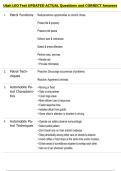
1. Patrol Functions Reduce/remove opportunities to commit crimes.
Protect life & property
Preserve the peace
Enforce laws & ordinances
Detect & arrest offenders
Perform misc. services
• Render aid
• Provide information
2. Patrol Tech- Proactive: Discourage occurrences of problems.
niques
Reactive: Apprehend criminals
3. Automobile Pa- • Moving or fixed
trol Characteris- • Solo or w/a partner
tics • Cover large areas
• More eflcient use of resources.
• Faster response time
• Isolates oflcer from public
• Some oflcer's attention is diverted to driving.
4. Automobile Pa- • Operate car safely (observe surroundings)
trol Techniques • Select patrol pattern
• Don't travel only on main arterial roadways
• Stop periodically among other cars on streets & observe.
• Avoid coffee or food stops at the same time and/or location.
• Divide areas of surveillance w/parter & overlap each other.
• Get out of car whenever possible.
, 5. Patrol Area Consider the following when becoming familiar with your assigned area:
• Population
• Geographics
• Emergency facilities
• Crime hazards
• Community habits
• Known criminals
6. Crime/Hazard Ar- ÏBurglary prone
eas Include: ÏRobbery prone
ÏAuto theft prone areas
ÏPetty theft/malicious mischief prone areas
ÏNarcotics and dangerous drug activity prone areas.
7. Community Polic- Promotes organizational strategies which support use of partnerships & problem
ing Philosophy solving techniques to be proactive.
Role of a Peace oflcer:
• Develop relationships (Youth programs, Attending community meetings, Coor-
dinating resources, etc)
Two core components of community policing:
1. Community partnerships
2. Problem solving
8. S.A.R.A. Model Scanning:
• Experience w/location
• Communication w/residents
• Problems are defined as 2 + incidents similar on nature or have the potential to
cause harm
• Similarities among incidents include:
Person, Location,
Behavior, & Time.
Analysis:
2/7
1. Patrol Functions Reduce/remove opportunities to commit crimes.
Protect life & property
Preserve the peace
Enforce laws & ordinances
Detect & arrest offenders
Perform misc. services
• Render aid
• Provide information
2. Patrol Tech- Proactive: Discourage occurrences of problems.
niques
Reactive: Apprehend criminals
3. Automobile Pa- • Moving or fixed
trol Characteris- • Solo or w/a partner
tics • Cover large areas
• More eflcient use of resources.
• Faster response time
• Isolates oflcer from public
• Some oflcer's attention is diverted to driving.
4. Automobile Pa- • Operate car safely (observe surroundings)
trol Techniques • Select patrol pattern
• Don't travel only on main arterial roadways
• Stop periodically among other cars on streets & observe.
• Avoid coffee or food stops at the same time and/or location.
• Divide areas of surveillance w/parter & overlap each other.
• Get out of car whenever possible.
, 5. Patrol Area Consider the following when becoming familiar with your assigned area:
• Population
• Geographics
• Emergency facilities
• Crime hazards
• Community habits
• Known criminals
6. Crime/Hazard Ar- ÏBurglary prone
eas Include: ÏRobbery prone
ÏAuto theft prone areas
ÏPetty theft/malicious mischief prone areas
ÏNarcotics and dangerous drug activity prone areas.
7. Community Polic- Promotes organizational strategies which support use of partnerships & problem
ing Philosophy solving techniques to be proactive.
Role of a Peace oflcer:
• Develop relationships (Youth programs, Attending community meetings, Coor-
dinating resources, etc)
Two core components of community policing:
1. Community partnerships
2. Problem solving
8. S.A.R.A. Model Scanning:
• Experience w/location
• Communication w/residents
• Problems are defined as 2 + incidents similar on nature or have the potential to
cause harm
• Similarities among incidents include:
Person, Location,
Behavior, & Time.
Analysis:
2/7

