Science Medicine
APRN- primary care of the adult: DM
Save
Students also studied
From the same upload Flashcard sets Study guides Practice tests
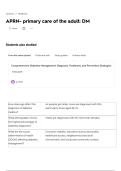
Comprehensive Diabetes Management: Diagnosis, Treatment, and Prevention Strategies
Study guide
a_rich4
How does age affect the As people get older, more are diagnosed with DM,
diagnosis of diabetes particularly those aged 65-74.
mellitus?
What demographic shows Males are diagnosed with DM more than females.
the highest percentage of
diabetes diagnoses?
What are the social Economic stability, education access and quality,
determinants of health healthcare access, neighborhood and built
(SDOH) affecting diabetes environment, and social and community context.
management?
, What barriers exist in Lack of insurance can prevent screenings and basic
healthcare access for information; distance from healthcare providers can
diabetes patients? also be a barrier.
What is therapeutic inertia It refers to the delay in diagnosis and treatment that
in diabetes management? can negatively impact patient outcomes.
What is the primary issue Pancreatic failure and insulin deficiency due to
in type 1 diabetes? autoimmune destruction of beta cells.
What happens to glucose Without insulin, glucose cannot enter the cells,
levels in type 1 diabetes? leading to hyperglycemia.
What characterizes type 2 Insulin resistance, where the pancreas produces
diabetes? insulin but the receptors are less responsive.
What is the consequence Glucose builds up in the bloodstream, leading to high
of insulin resistance in levels of both insulin and glucose, but insufficient
type 2 diabetes? glucose enters the cells.
What are the Type 1 (autoimmune destruction of beta cells) and
classifications of diabetes Type 2 (insulin resistance and progressive loss of beta
mellitus? cells).
What is the treatment Require insulin to regulate blood sugar.
requirement for type 1
diabetes?
What causes the It is usually due to hypersecretion of insulin as a
progressive loss of beta response to insulin resistance.
cells in type 2 diabetes?
What is the significance of It involves collaborating with patients to make
shared decision-making in informed choices about their care.
diabetes management?
What strategies can be Improve safety and timeliness, implement EBP models,
implemented at the and leverage patient registries and population health
system level to improve tools.
diabetes care?
APRN- primary care of the adult: DM
Save
Students also studied
From the same upload Flashcard sets Study guides Practice tests
Comprehensive Diabetes Management: Diagnosis, Treatment, and Prevention Strategies
Study guide
a_rich4
How does age affect the As people get older, more are diagnosed with DM,
diagnosis of diabetes particularly those aged 65-74.
mellitus?
What demographic shows Males are diagnosed with DM more than females.
the highest percentage of
diabetes diagnoses?
What are the social Economic stability, education access and quality,
determinants of health healthcare access, neighborhood and built
(SDOH) affecting diabetes environment, and social and community context.
management?
, What barriers exist in Lack of insurance can prevent screenings and basic
healthcare access for information; distance from healthcare providers can
diabetes patients? also be a barrier.
What is therapeutic inertia It refers to the delay in diagnosis and treatment that
in diabetes management? can negatively impact patient outcomes.
What is the primary issue Pancreatic failure and insulin deficiency due to
in type 1 diabetes? autoimmune destruction of beta cells.
What happens to glucose Without insulin, glucose cannot enter the cells,
levels in type 1 diabetes? leading to hyperglycemia.
What characterizes type 2 Insulin resistance, where the pancreas produces
diabetes? insulin but the receptors are less responsive.
What is the consequence Glucose builds up in the bloodstream, leading to high
of insulin resistance in levels of both insulin and glucose, but insufficient
type 2 diabetes? glucose enters the cells.
What are the Type 1 (autoimmune destruction of beta cells) and
classifications of diabetes Type 2 (insulin resistance and progressive loss of beta
mellitus? cells).
What is the treatment Require insulin to regulate blood sugar.
requirement for type 1
diabetes?
What causes the It is usually due to hypersecretion of insulin as a
progressive loss of beta response to insulin resistance.
cells in type 2 diabetes?
What is the significance of It involves collaborating with patients to make
shared decision-making in informed choices about their care.
diabetes management?
What strategies can be Improve safety and timeliness, implement EBP models,
implemented at the and leverage patient registries and population health
system level to improve tools.
diabetes care?