Science Medicine Psychiatry
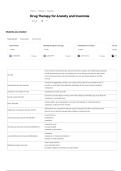
Drug Therapy for Anxiety and Insomnia
Save
Students also studied
Flashcard sets Study guides Practice tests
Psych Meds Biological impact of drugs Medications for Exam 1 4.5 sub
21 terms 11 terms 67 terms 84 terms
leah102203 Preview palfalvi907 Preview dawnravenp Preview Afr
most common mental disorder, person perceives situation as threatening to physical,
social, emotional economic well-being can occur during normal every day events
Anxiety
such as social activities can be beneficial, but can also impair ability to function
normal
excessive exaggerated, anxiety, worry about every day life circumstances for six
Generalized anxiety disorder months or more after eliminating the possibility of the anxiety being caused by
medication
Anxiety for 6 months or more Generalized anxiety disorder
Excessive concern about scrutiny from others afraid of what they say or do that will
Social anxiety disorder
embarrass or humiliate them
Acute sudden recurring attacks of anxiety with feelings of impending doom,
Panic Disorder
symptoms, peak around 10 minutes
Obsessions are compulsions that are severe enough to be time-consuming more
Obsessive-compulsive disorder (OCD)
than an hour a day that caused major distress to a persons life
muscle tension
Anxiety physical clinical manifestation restlessness
trembling
excessive worry
Anxiety psychosocial clinical manifestations racing thoughts
impaired concentration
avoidance
Anxiety Behavioral clinical manifestations obsessive or compulsive behavior
distress in social situations
exact cause unkown
Pathophysiology of anxiety environmental stress
possible imbalances among neurotransmitters
, Imbalance of NT
excess of norepinephrine (fight or flight)
Neurotransmitter involvement in anxiety lack of GABA (calming)
seratonin imbalance
depression/mania
Benzodiazepines Diazepam, Lorazepam, Midazolam, Clonazepam
Benzodiazepines (-pam, -lam) action increase the effect of GABA (calming)
short term treatment for anxiety disorders (panick attacks)
seizure
Benzodiazepines (-pam, -lam) Use
adjunctive to anesthesia
alcohol withdrawal
IV, quick onset, start slow, titrate up for effect
Benzodiazepines (-pam, -lam) Slow push
Pharmacokinetics IV PO IM
caution in elderly
Can treat alcohol withdrawal by calming pt Benzodiazepines (-pam, -lam)
down
Benzodiazepines (-pam, -lam) Adverse CNS depression
effects Black box warning other CNS depressants
Has a black box warning for other CNS Benzodiazepines (-pam, -lam)
depressants
Respiratory compromise
Benzodiazepines (-pam, -lam)
liver/kidney disease
Contraindications
history of alcohol/drug abuse
Contraindicated in liver/kidney disease Benzodiazepines (-pam, -lam)
caution with opiods and other CNS depressants
Benzodiazepines (-pam, -lam) Nursing
Patient teaching-non pharm first
Implications/Patient education
Reversal agent: Flumanezil (resp rate 5)
Reversal agent for benzodiazepines Flumazenil
(Benzodiazepine Overdose) (low resparitory rate)
Pt taking a benzodiazepine what should be Drinking alcohol
avoided
Interferes with everyday like for several weeks or longer
Depression is a mood disorder
affects people of all ages
sadness
loss
Feelings of depression
anger
frustration
immune cells produce cytokines which effect NT, inflammatory mediators that could
Immune Factors in depression
directly target the brain when they shouldn't
CRF (corticosterone releasing factor is increased in pt with depression which
increases stress response: affects endocrine, autonomic, immune, behavioral
Neuroendocrine Factors in depression
responses
-physical and psychological symptoms
Monoamine Neurotransmitter Dysfunctions
Depression Pathophysiology
Genetics, environment, abuse
Drug Therapy for Anxiety and Insomnia
Save
Students also studied
Flashcard sets Study guides Practice tests
Psych Meds Biological impact of drugs Medications for Exam 1 4.5 sub
21 terms 11 terms 67 terms 84 terms
leah102203 Preview palfalvi907 Preview dawnravenp Preview Afr
most common mental disorder, person perceives situation as threatening to physical,
social, emotional economic well-being can occur during normal every day events
Anxiety
such as social activities can be beneficial, but can also impair ability to function
normal
excessive exaggerated, anxiety, worry about every day life circumstances for six
Generalized anxiety disorder months or more after eliminating the possibility of the anxiety being caused by
medication
Anxiety for 6 months or more Generalized anxiety disorder
Excessive concern about scrutiny from others afraid of what they say or do that will
Social anxiety disorder
embarrass or humiliate them
Acute sudden recurring attacks of anxiety with feelings of impending doom,
Panic Disorder
symptoms, peak around 10 minutes
Obsessions are compulsions that are severe enough to be time-consuming more
Obsessive-compulsive disorder (OCD)
than an hour a day that caused major distress to a persons life
muscle tension
Anxiety physical clinical manifestation restlessness
trembling
excessive worry
Anxiety psychosocial clinical manifestations racing thoughts
impaired concentration
avoidance
Anxiety Behavioral clinical manifestations obsessive or compulsive behavior
distress in social situations
exact cause unkown
Pathophysiology of anxiety environmental stress
possible imbalances among neurotransmitters
, Imbalance of NT
excess of norepinephrine (fight or flight)
Neurotransmitter involvement in anxiety lack of GABA (calming)
seratonin imbalance
depression/mania
Benzodiazepines Diazepam, Lorazepam, Midazolam, Clonazepam
Benzodiazepines (-pam, -lam) action increase the effect of GABA (calming)
short term treatment for anxiety disorders (panick attacks)
seizure
Benzodiazepines (-pam, -lam) Use
adjunctive to anesthesia
alcohol withdrawal
IV, quick onset, start slow, titrate up for effect
Benzodiazepines (-pam, -lam) Slow push
Pharmacokinetics IV PO IM
caution in elderly
Can treat alcohol withdrawal by calming pt Benzodiazepines (-pam, -lam)
down
Benzodiazepines (-pam, -lam) Adverse CNS depression
effects Black box warning other CNS depressants
Has a black box warning for other CNS Benzodiazepines (-pam, -lam)
depressants
Respiratory compromise
Benzodiazepines (-pam, -lam)
liver/kidney disease
Contraindications
history of alcohol/drug abuse
Contraindicated in liver/kidney disease Benzodiazepines (-pam, -lam)
caution with opiods and other CNS depressants
Benzodiazepines (-pam, -lam) Nursing
Patient teaching-non pharm first
Implications/Patient education
Reversal agent: Flumanezil (resp rate 5)
Reversal agent for benzodiazepines Flumazenil
(Benzodiazepine Overdose) (low resparitory rate)
Pt taking a benzodiazepine what should be Drinking alcohol
avoided
Interferes with everyday like for several weeks or longer
Depression is a mood disorder
affects people of all ages
sadness
loss
Feelings of depression
anger
frustration
immune cells produce cytokines which effect NT, inflammatory mediators that could
Immune Factors in depression
directly target the brain when they shouldn't
CRF (corticosterone releasing factor is increased in pt with depression which
increases stress response: affects endocrine, autonomic, immune, behavioral
Neuroendocrine Factors in depression
responses
-physical and psychological symptoms
Monoamine Neurotransmitter Dysfunctions
Depression Pathophysiology
Genetics, environment, abuse