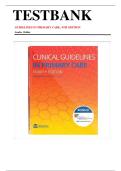
TESTBANK
GUIDELINES IN PRIMARY CARE, 4TH EDITION
w w w w w
Amelie Hollier
w
,Clinical Guidelines in Primary Care 4th Edition Hollier Test Bank
w w w w w w w w w
Table of Contents
w w
Chapter 1: Cardiovascular Disorders
w w w
Chapter 2: Dermatologic Disorders
w w w
Chapter 3: Ear Nose & Throat Disorders
w w w w w w
Chapter 4: Endocrine Disorders
w w w
Chapter 5: Gastrointestinal Disorders
w w w
Chapter 6: Genetic Disorders
w w w
Chapter 7: Health Promotion - Pediatric
w w w w w
Chapter 8: Hematologic Disorders
w w w
Chapter 9: Lactation and Breastfeeding
w w w w
Chapter 10: Men’s Health Disorders
w w w w
Chapter 11: Neurologic Disorders
w w w
Chapter 12: Ophthalmic Disorders
w w w
Chapter 13: Orthopedic Disorders
w w w
Chapter 14: Pregnancy
w w
Chapter 15: Psychiatric Disorders, Violence, Abuse, Neglect
w w w w w w
Chapter 16: Pulmonary Disorders
w w w
Chapter 17: Sexually Transmitted Diseases
w w w w
Chapter 18: Urologic Disorders
w w w
Chapter 19: Women’s Health Disorders
w w w w
,Chapter 1: Cardiovascular Disorders
w w w
Clinical Guidelines in Primary Care 4th Edition Test bank
w w w w w w w w
MULTIPLE CHOICE w
1. The nurse is aware that the muscle layer of the heart, which is responsible
w w w w w w w w w w w w w
for the heartscontraction, is the:
w w w w w
a. endocardium.
b. pericardium.
c. mediastinum.
d. myocardium.
ANS: D w
The myocardium is the specialized muscle layer that allows the heart to
w w w w w w w w w w w
w contract.2.The nurse clarifies that the master pacemaker of the heart is the:
w w w w w w w w w w w
a. left ventricle.
w
b. atrioventricular (AV) node. w w
c. sinoatrial (SA) node. w w
d. bundle of His. w w
ANS: C w
The SA node is the master pacemaker of the heart.
w w w w w w w w w
3. The nurse is aware that the symptoms of an impending myocardial infarction
w w w w w w w w w w w
w (MI) differ in women because acute chest pain is not present. Women are frequently
w w w w w w w w w w w w w
w misdiagnosed as having: w w
a. hepatitis A. w
b. indigestion.
c. urinary infection.
w
d. menopausal complications. w
, ANS: B w
Indigestion, gallbladder attack, anxiety attack, and depression are frequent misdiagnoses
w w w w w w w w w
wforwomen having an MI. w w w
4. The nurse identifies the LUBB sound of the LUBB/DUBB of the cardiac cycle as
w w w w w w w w w w w w w
w the sound ofthe:
w w
a. AV valves closing.
w w
b. closure of the semilunar valves.
w w w w
c. contraction of the papillary muscles. w w w w
d. contraction of the ventricles. w w w
ANS: A w
The LUBB is the first sound of a low pitch heard when the AV valves close.
w w w w w w w w w w w w w w w
5. A patient is admitted from the emergency department. The emergency department
w w w w w w w w w w
w physician notes the patient has a diagnosis of heart failure with a New York Heart
w w w w w w w w w w w w w w
w Association (NYHA)classification of IV. This indicates the patients condition as:
w w w w w w w w w
a. moderate heart failure. w w
b. severe heart failure.
w w
c. congestive heart failure. w w
d. negligible heart failure. w w
ANS: B w
Class IV: Severe; patient unable to perform any physical activity without discomfort.
w w w w w w w w w w w
wAngina orsymptoms of cardiac inefficiency may develop at rest.
w w w w w w w w
6. The nurse assesses that the home health patient has no signs or symptoms of
w w w w w w w w w w w w w
w heart failure, butdoes have a history of rheumatic fever and has been recently
w w w w w w w w w w w w
w diagnosed with diabetes mellitus.The nurse is aware that using the American
w w w w w w w w w w
w College of Cardiology and the American Heart Association (ACC/AHA) staging,
w w w w w w w w w
w this patient would be a:
w w w w
a. stage A. w
b. stage B. w
c. stage C. w
d. stage D. w
ANS: A w
The ACC/AHA staging describes stage A as a person without symptoms of heart failure,
w w w w w w w w w w w w w
wbutwith primary conditions associated with the development of the disease.
w w w w w w w w w
GUIDELINES IN PRIMARY CARE, 4TH EDITION
w w w w w
Amelie Hollier
w
,Clinical Guidelines in Primary Care 4th Edition Hollier Test Bank
w w w w w w w w w
Table of Contents
w w
Chapter 1: Cardiovascular Disorders
w w w
Chapter 2: Dermatologic Disorders
w w w
Chapter 3: Ear Nose & Throat Disorders
w w w w w w
Chapter 4: Endocrine Disorders
w w w
Chapter 5: Gastrointestinal Disorders
w w w
Chapter 6: Genetic Disorders
w w w
Chapter 7: Health Promotion - Pediatric
w w w w w
Chapter 8: Hematologic Disorders
w w w
Chapter 9: Lactation and Breastfeeding
w w w w
Chapter 10: Men’s Health Disorders
w w w w
Chapter 11: Neurologic Disorders
w w w
Chapter 12: Ophthalmic Disorders
w w w
Chapter 13: Orthopedic Disorders
w w w
Chapter 14: Pregnancy
w w
Chapter 15: Psychiatric Disorders, Violence, Abuse, Neglect
w w w w w w
Chapter 16: Pulmonary Disorders
w w w
Chapter 17: Sexually Transmitted Diseases
w w w w
Chapter 18: Urologic Disorders
w w w
Chapter 19: Women’s Health Disorders
w w w w
,Chapter 1: Cardiovascular Disorders
w w w
Clinical Guidelines in Primary Care 4th Edition Test bank
w w w w w w w w
MULTIPLE CHOICE w
1. The nurse is aware that the muscle layer of the heart, which is responsible
w w w w w w w w w w w w w
for the heartscontraction, is the:
w w w w w
a. endocardium.
b. pericardium.
c. mediastinum.
d. myocardium.
ANS: D w
The myocardium is the specialized muscle layer that allows the heart to
w w w w w w w w w w w
w contract.2.The nurse clarifies that the master pacemaker of the heart is the:
w w w w w w w w w w w
a. left ventricle.
w
b. atrioventricular (AV) node. w w
c. sinoatrial (SA) node. w w
d. bundle of His. w w
ANS: C w
The SA node is the master pacemaker of the heart.
w w w w w w w w w
3. The nurse is aware that the symptoms of an impending myocardial infarction
w w w w w w w w w w w
w (MI) differ in women because acute chest pain is not present. Women are frequently
w w w w w w w w w w w w w
w misdiagnosed as having: w w
a. hepatitis A. w
b. indigestion.
c. urinary infection.
w
d. menopausal complications. w
, ANS: B w
Indigestion, gallbladder attack, anxiety attack, and depression are frequent misdiagnoses
w w w w w w w w w
wforwomen having an MI. w w w
4. The nurse identifies the LUBB sound of the LUBB/DUBB of the cardiac cycle as
w w w w w w w w w w w w w
w the sound ofthe:
w w
a. AV valves closing.
w w
b. closure of the semilunar valves.
w w w w
c. contraction of the papillary muscles. w w w w
d. contraction of the ventricles. w w w
ANS: A w
The LUBB is the first sound of a low pitch heard when the AV valves close.
w w w w w w w w w w w w w w w
5. A patient is admitted from the emergency department. The emergency department
w w w w w w w w w w
w physician notes the patient has a diagnosis of heart failure with a New York Heart
w w w w w w w w w w w w w w
w Association (NYHA)classification of IV. This indicates the patients condition as:
w w w w w w w w w
a. moderate heart failure. w w
b. severe heart failure.
w w
c. congestive heart failure. w w
d. negligible heart failure. w w
ANS: B w
Class IV: Severe; patient unable to perform any physical activity without discomfort.
w w w w w w w w w w w
wAngina orsymptoms of cardiac inefficiency may develop at rest.
w w w w w w w w
6. The nurse assesses that the home health patient has no signs or symptoms of
w w w w w w w w w w w w w
w heart failure, butdoes have a history of rheumatic fever and has been recently
w w w w w w w w w w w w
w diagnosed with diabetes mellitus.The nurse is aware that using the American
w w w w w w w w w w
w College of Cardiology and the American Heart Association (ACC/AHA) staging,
w w w w w w w w w
w this patient would be a:
w w w w
a. stage A. w
b. stage B. w
c. stage C. w
d. stage D. w
ANS: A w
The ACC/AHA staging describes stage A as a person without symptoms of heart failure,
w w w w w w w w w w w w w
wbutwith primary conditions associated with the development of the disease.
w w w w w w w w w