

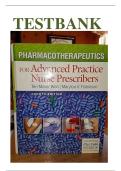
TESTBANK
b
, Pharmacotherapeutics forAdvancedPracticeNurse Prescribers, 4th b b b b b b
edition Woo Robinson Test Bank b b b b b
Chapter1. The Role of the Nurse Practitioner as PrescriberMultiple Choice
b b b b b b b b b b
Identify the choice that best completes thestatement or answers the question.
b b b b b b b b b b b
1. Nurse practitioner prescriptive authorityis regulated by:
b b b b b b b
1. The National Council of State Boards of Nursing
b b b b b b b
2. The U.S. Drug Enforcement Administration
b b b b
3. The State Board of Nursing for each state
b b b b b b b
4. The State Board of Pharmacy b b b b
2. Thebenefits to the patient of having an Advanced Practice Registered Nurse (APRN)prescriber
b b b b b b b b b b b b b b
include:
b
1. Nurses know more about Pharmacologythan other prescribers because theytakeit
b b b b b b b b b b b
both in their basic nursing program and in their APRN program.
b b b b b b b b b b b
2. Nurses care for the patient from a holistic approach and include the patient in
b b b b b b b b b b b b b
decision making regarding their care.
b b b b b
3. APRNs are less likelyto prescribe narcotics and other controlled substances.
b b b b b b b b b b
4. APRNs areable to prescribe independently in all states, whereas a physician’s
b b b b b b b b b b b
assistant needs to have a physician supervising their practice.
b b b b b b b b b
3. Clinical judgment in prescribing includes:
b b b b b
1. Factoring in the cost to the patient of the medication prescribed b b b b b b b b b b
2. Always prescribing the newest medication available for the disease process
b b b b b b b b b
3. Handing out drug samples to poor patients b b b b b b
4. Prescribingall generic medications to cut costs b b b b b b
4. Criteria for choosing an effective drug for a disorder include:
b b b b b b b b b b
1. Asking the patient what drug theythink would work best for them
b b b b b b b b b b b
2. Consultingnationallyrecognized guidelines for disease management b b b b b b
3. Prescribingmedications that are available as samples before writing a prescription b b b b b b b b b b
4. Following U.S. Drug Enforcement Administration guidelines for prescribing b b b b b b b
5. Nurse practitioner practice may thriveunder health-care reform because of:
b b b b b b b b b b
1. The demonstrated ability of nursepractitioners to control costs and improvepatient
b b b b b b b b b b b
outcomes b
2. Thefact that nurse practitioners will be able to practice independently
b b b b b b b b b b
3. The fact that nurse practitioners will have full reimbursement under health-
b b b b b b b b b b
care reform b b
4. The ability to shift accountability for Medicaid to the state level
b b b b b b b b b b
, Pharmacotherapeutics for Advanced Practice Nurse Prescribers, 4th
b b b b b b
edition Woo Robinson Test Bank b b b b b
Chapter 1. The Role of the Nurse Practitioner as Prescriber
b b b b b b b b b
Answer Section
b b
MULTIPLE CHOICE b
1. ANS: b b 3 PTS: b 1
2. ANS: b b 2 PTS: b 1
3. ANS: b b 1 PTS: b 1
4. ANS: b b 2 PTS: b 1
5. ANS: b b 1 PTS: b 1
, Pharmacotherapeutics for Advanced Practice Nurse Prescribers, 4th b b b b b b
edition Woo Robinson Test Bank b b b b b
Chapter2. Review of the Basic Principles of Pharmacology
b b b b b b b b
Multiple Choice
b b
Identify the choice that best completes the statement or answers the question.
b b b b b b b b b b b
1. A patient’s nutritional intake and laboratoryresults reflect hypoalbuminemia. This is critical to
b b b b b b b b b b b b b
prescribing because:
b b
1. Distribution of drugs to target tissue maybe affected. b b b b b b b b
2. The solubilityof the drug will not match the site of absorption.
b b b b b b b b b b b
3. There will be less free drug available to generate an effect.
b b b b b b b b b b
4. Drugs bound to albumin are readily excreted by the kidneys.
b b b b b b b b b
2. Drugs that have a significant first-pass effect:
b b b b b b b
1. Must be given by the enteral (oral) route only b b b b b b b b
2. Bypass the hepatic circulation b b b
3. Are rapidlymetabolized by the liver and may have little if any desired action
b b b b b b b b b b b b b
4. Are converted by the liver to more active and fat-soluble forms
b b b b b b b b b b
3. The route of excretion of a volatile drug will likely be the:
b b b b b b b b b b b b b
1. Kidneys
2. Lungs
3. Bileand feces b b
4. Skin
4. Medroxyprogesterone (Depo Provera) is prescribed intramuscularly(IM) to create astorage
b b b b b b b b b b b
reservoir of the drug. Storage reservoirs:
b b b b b b
1. Assurethat the drug will reach its intended target tissue b b b b b b b b b
2. Are the reason for giving loading doses
b b b b b b
3. Increase the length of time a drug is available and active b b b b b b b b b b
4. Are most common in collagen tissues
b b b b b
5. The NP chooses to give cephalexin every8 hours based on knowledge of the drug’s:
b b b b b b b b b b b b b b b
1. Propensityto go to the target receptor b b b b b b
2. Biological half-life b
3. Pharmacodynamics
4. Safety and side effects b b b
6. Azithromycin dosing requires that the first day’s dosage be twice those of the other 4 days of the
b b b b b b b b b b b b b b b b b b
prescription. This is considered a loading dose. A loading dose:
b b b b b b b b b b
1. Rapidlyachieves drug levels in the therapeutic range b b b b b b b
2. Requires four- to five-half-lives to attain b b b b b
3. Is influenced byrenal function
b b b b
4. Is directly related to the drug circulating to the target tissues
b b b b b b b b b b
7. The point in time on the drug concentration curve that indicates the first sign of a therapeutic effect is the:
b b b b b b b b b b b b b b b b b b b b
1. Minimum adverse effect level b b b
2. Peak of action b b
b
, Pharmacotherapeutics forAdvancedPracticeNurse Prescribers, 4th b b b b b b
edition Woo Robinson Test Bank b b b b b
Chapter1. The Role of the Nurse Practitioner as PrescriberMultiple Choice
b b b b b b b b b b
Identify the choice that best completes thestatement or answers the question.
b b b b b b b b b b b
1. Nurse practitioner prescriptive authorityis regulated by:
b b b b b b b
1. The National Council of State Boards of Nursing
b b b b b b b
2. The U.S. Drug Enforcement Administration
b b b b
3. The State Board of Nursing for each state
b b b b b b b
4. The State Board of Pharmacy b b b b
2. Thebenefits to the patient of having an Advanced Practice Registered Nurse (APRN)prescriber
b b b b b b b b b b b b b b
include:
b
1. Nurses know more about Pharmacologythan other prescribers because theytakeit
b b b b b b b b b b b
both in their basic nursing program and in their APRN program.
b b b b b b b b b b b
2. Nurses care for the patient from a holistic approach and include the patient in
b b b b b b b b b b b b b
decision making regarding their care.
b b b b b
3. APRNs are less likelyto prescribe narcotics and other controlled substances.
b b b b b b b b b b
4. APRNs areable to prescribe independently in all states, whereas a physician’s
b b b b b b b b b b b
assistant needs to have a physician supervising their practice.
b b b b b b b b b
3. Clinical judgment in prescribing includes:
b b b b b
1. Factoring in the cost to the patient of the medication prescribed b b b b b b b b b b
2. Always prescribing the newest medication available for the disease process
b b b b b b b b b
3. Handing out drug samples to poor patients b b b b b b
4. Prescribingall generic medications to cut costs b b b b b b
4. Criteria for choosing an effective drug for a disorder include:
b b b b b b b b b b
1. Asking the patient what drug theythink would work best for them
b b b b b b b b b b b
2. Consultingnationallyrecognized guidelines for disease management b b b b b b
3. Prescribingmedications that are available as samples before writing a prescription b b b b b b b b b b
4. Following U.S. Drug Enforcement Administration guidelines for prescribing b b b b b b b
5. Nurse practitioner practice may thriveunder health-care reform because of:
b b b b b b b b b b
1. The demonstrated ability of nursepractitioners to control costs and improvepatient
b b b b b b b b b b b
outcomes b
2. Thefact that nurse practitioners will be able to practice independently
b b b b b b b b b b
3. The fact that nurse practitioners will have full reimbursement under health-
b b b b b b b b b b
care reform b b
4. The ability to shift accountability for Medicaid to the state level
b b b b b b b b b b
, Pharmacotherapeutics for Advanced Practice Nurse Prescribers, 4th
b b b b b b
edition Woo Robinson Test Bank b b b b b
Chapter 1. The Role of the Nurse Practitioner as Prescriber
b b b b b b b b b
Answer Section
b b
MULTIPLE CHOICE b
1. ANS: b b 3 PTS: b 1
2. ANS: b b 2 PTS: b 1
3. ANS: b b 1 PTS: b 1
4. ANS: b b 2 PTS: b 1
5. ANS: b b 1 PTS: b 1
, Pharmacotherapeutics for Advanced Practice Nurse Prescribers, 4th b b b b b b
edition Woo Robinson Test Bank b b b b b
Chapter2. Review of the Basic Principles of Pharmacology
b b b b b b b b
Multiple Choice
b b
Identify the choice that best completes the statement or answers the question.
b b b b b b b b b b b
1. A patient’s nutritional intake and laboratoryresults reflect hypoalbuminemia. This is critical to
b b b b b b b b b b b b b
prescribing because:
b b
1. Distribution of drugs to target tissue maybe affected. b b b b b b b b
2. The solubilityof the drug will not match the site of absorption.
b b b b b b b b b b b
3. There will be less free drug available to generate an effect.
b b b b b b b b b b
4. Drugs bound to albumin are readily excreted by the kidneys.
b b b b b b b b b
2. Drugs that have a significant first-pass effect:
b b b b b b b
1. Must be given by the enteral (oral) route only b b b b b b b b
2. Bypass the hepatic circulation b b b
3. Are rapidlymetabolized by the liver and may have little if any desired action
b b b b b b b b b b b b b
4. Are converted by the liver to more active and fat-soluble forms
b b b b b b b b b b
3. The route of excretion of a volatile drug will likely be the:
b b b b b b b b b b b b b
1. Kidneys
2. Lungs
3. Bileand feces b b
4. Skin
4. Medroxyprogesterone (Depo Provera) is prescribed intramuscularly(IM) to create astorage
b b b b b b b b b b b
reservoir of the drug. Storage reservoirs:
b b b b b b
1. Assurethat the drug will reach its intended target tissue b b b b b b b b b
2. Are the reason for giving loading doses
b b b b b b
3. Increase the length of time a drug is available and active b b b b b b b b b b
4. Are most common in collagen tissues
b b b b b
5. The NP chooses to give cephalexin every8 hours based on knowledge of the drug’s:
b b b b b b b b b b b b b b b
1. Propensityto go to the target receptor b b b b b b
2. Biological half-life b
3. Pharmacodynamics
4. Safety and side effects b b b
6. Azithromycin dosing requires that the first day’s dosage be twice those of the other 4 days of the
b b b b b b b b b b b b b b b b b b
prescription. This is considered a loading dose. A loading dose:
b b b b b b b b b b
1. Rapidlyachieves drug levels in the therapeutic range b b b b b b b
2. Requires four- to five-half-lives to attain b b b b b
3. Is influenced byrenal function
b b b b
4. Is directly related to the drug circulating to the target tissues
b b b b b b b b b b
7. The point in time on the drug concentration curve that indicates the first sign of a therapeutic effect is the:
b b b b b b b b b b b b b b b b b b b b
1. Minimum adverse effect level b b b
2. Peak of action b b

