Katsikeas, C. S., Morgan, N. A., Leonidou, L. C., & Hult, G. T. M. (2016). Assessing Performance
Outcomes in Marketing. Journal of Marketing, 80(2), 1-20.
https://doi-org.ru.idm.oclc.org/10.1509/jm.15.0287
Topic: Framework (marketing performance)
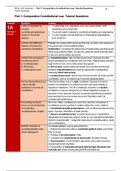
Assessing market performance in marketing, means “beoordelen” of the market performance done
by marketing. There is the operational performance and the organizational performance. In this
framework, everything starts with the firms’ marketing resources, strategies and actions, when this
reaches the customer then the firm can look at the realized marketing programs which entails the 6
parts. 4 are operational and 2 are organizational. But these show the outcome of the marketing.
- Customer mindset: satisfaction, brand equity (difficult to measure)
- Customer behavior: WOM, retention
- Customer level performance: CLV, profitability of the customer (for which customers you are
doing good)
- Product market performance: unit sales, share market. (how good you are in the market)
- Accounting performance: ROA, profitability (used the most)
- Financial market performance: shareholder returns, debt market (where the money comes
from)
Accounting performance is used the most. Customer measures are 21% used and more and more.
Product market performance is used a lot and more than product based. Financial market
performance is used more lately.
Lots of firms look at one aspect and not all, but look at correlations and connections. Also look at all 6
categories, try to cover them all when measuring market performance.
Framework can be used as reinvestment or as learning.
However, more products or services are seen as operant resources (services) instead of operand
resources (goods) and this makes it more difficult for companies to get an overview of their
marketing performance.
1
,Kirca, A. H., Jayachandran, S., & Bearden, W. O. (2005). Market Orientation: A Meta-Analytic
Review and Assessment of its Antecedents and Impact on Performance. Journal of Marketing,
69(2), 24-41. https://doi-org.ru.idm.oclc.org/10.1509/jmkg.69.2.24.60761
Topic: Market Orientation
This can be put under “Learning” or “Firms’ Marketing Resources, Strategy and Actions” in the
roadmap. Because they learned something from the market.
Market orientation is the alignment of the organizational behavior to the customers needs to create
competitive advantage.
Market orientation looks at the impact on performance. There are 2 perspectives:
- Cultural perspective – that looks at “understanding what is happening in the marketing”
o Customers
o Competitors
Both leading to interfunctional coordination
- Behavioural perspective – that looks at “what am I doing”. Organizational activities:
o generation (of knowledge)
o dissemination (of knowledge in the firm)
o responsiveness to market intelligence (how the firm responses).
Market orientation is difficult to measure.
Meta-analysis (study of studies). Effect of X on Y of 114 studies and brought that together.
Causes of market orientation:
- Top management factors – values
- Interdepartmental factors – conflict and connectiveness
- Organization systems – formalization, centralization, market based reward, market
orientation
Consequences of market orientation:
- Organizational performance – money
- Customer consequences – loyalty and satisfaction
- Innovation consequences
- Employee consequences – pride and camaraderie
Market orientation improves organization performance by enhancing customer loyalty; customer
satisfaction; quality and innovativeness. Additionally, the relationship between market orientation
and performance can vary by industry type and cultural context. Market orientation: Defined as
aligning organizational behaviors with customer needs to achieve competitive advantage, originating
from both behavioral and cultural perspectives.
2
, Hillebrand, B., Driessen, P.H. & Koll, O. Stakeholder marketing: theoretical foundations and
required capabilities. J. of the Acad. Mark. Sci. 43, 411–428 (2015).
https://doi.org/10.1007/s11747-015-0424-y
Topic: Marketing
This can be put under “Learning” or “Firms’ Marketing Resources, Strategy and Actions” in the
roadmap. Because they learned something from the market.
The stakeholders depend on each other and thus there is interrelationships. You do not only focus on
the customers but also on the stakeholders. No hub-and-spoke system (hub-firm/spoke-
stakeholders), but now stakeholders also interrelated with each other.
Stakeholder marketing refers to managing relationships with multiple stakeholders simultaneously as
opposed to focusing on customers only.
- Discrete multiplicities – stakeholders independent (traditional marketing perspective)
- Continuous multiplicities - stakeholders are interrelated and change when they are divided.
(stakeholder marketing perspective)
Stakeholder marketing perspective sees value that is co-created by the firm and its customers and
multitude of stakeholders. Thus stakeholders value is more complex than dyadic; tension between
stakeholders; control over marketing is more dispersed (democratic thinking) than centralized
(responsive thinking).
Stakeholder marketing:
- Value exchange - Systems thinking – understanding the network and how they influence each
other.
- Tension - Paradoxical thinking – accepting and learning from tension between stakeholders
instead of suppressing them
- Control - Democratic thinking – sharing control with stakeholders
Traditional marketing:
- Value exchange – relational thinking
- Tension – logical thinking
- Control – responsive thinking
Stakeholder marketing leads to companies better positioned to create long-term value and sustain
strong stakeholder relationships. More innovation and resilience in complex environments because of
stakeholders meaning. The stakeholder marketing requires companies to develop new organizational
structures and needs collaboration and coordination among the stakeholders. Strong stakeholder
relationships leads to stakeholder support. (This was no research but just a model and literature).
3
Outcomes in Marketing. Journal of Marketing, 80(2), 1-20.
https://doi-org.ru.idm.oclc.org/10.1509/jm.15.0287
Topic: Framework (marketing performance)
Assessing market performance in marketing, means “beoordelen” of the market performance done
by marketing. There is the operational performance and the organizational performance. In this
framework, everything starts with the firms’ marketing resources, strategies and actions, when this
reaches the customer then the firm can look at the realized marketing programs which entails the 6
parts. 4 are operational and 2 are organizational. But these show the outcome of the marketing.
- Customer mindset: satisfaction, brand equity (difficult to measure)
- Customer behavior: WOM, retention
- Customer level performance: CLV, profitability of the customer (for which customers you are
doing good)
- Product market performance: unit sales, share market. (how good you are in the market)
- Accounting performance: ROA, profitability (used the most)
- Financial market performance: shareholder returns, debt market (where the money comes
from)
Accounting performance is used the most. Customer measures are 21% used and more and more.
Product market performance is used a lot and more than product based. Financial market
performance is used more lately.
Lots of firms look at one aspect and not all, but look at correlations and connections. Also look at all 6
categories, try to cover them all when measuring market performance.
Framework can be used as reinvestment or as learning.
However, more products or services are seen as operant resources (services) instead of operand
resources (goods) and this makes it more difficult for companies to get an overview of their
marketing performance.
1
,Kirca, A. H., Jayachandran, S., & Bearden, W. O. (2005). Market Orientation: A Meta-Analytic
Review and Assessment of its Antecedents and Impact on Performance. Journal of Marketing,
69(2), 24-41. https://doi-org.ru.idm.oclc.org/10.1509/jmkg.69.2.24.60761
Topic: Market Orientation
This can be put under “Learning” or “Firms’ Marketing Resources, Strategy and Actions” in the
roadmap. Because they learned something from the market.
Market orientation is the alignment of the organizational behavior to the customers needs to create
competitive advantage.
Market orientation looks at the impact on performance. There are 2 perspectives:
- Cultural perspective – that looks at “understanding what is happening in the marketing”
o Customers
o Competitors
Both leading to interfunctional coordination
- Behavioural perspective – that looks at “what am I doing”. Organizational activities:
o generation (of knowledge)
o dissemination (of knowledge in the firm)
o responsiveness to market intelligence (how the firm responses).
Market orientation is difficult to measure.
Meta-analysis (study of studies). Effect of X on Y of 114 studies and brought that together.
Causes of market orientation:
- Top management factors – values
- Interdepartmental factors – conflict and connectiveness
- Organization systems – formalization, centralization, market based reward, market
orientation
Consequences of market orientation:
- Organizational performance – money
- Customer consequences – loyalty and satisfaction
- Innovation consequences
- Employee consequences – pride and camaraderie
Market orientation improves organization performance by enhancing customer loyalty; customer
satisfaction; quality and innovativeness. Additionally, the relationship between market orientation
and performance can vary by industry type and cultural context. Market orientation: Defined as
aligning organizational behaviors with customer needs to achieve competitive advantage, originating
from both behavioral and cultural perspectives.
2
, Hillebrand, B., Driessen, P.H. & Koll, O. Stakeholder marketing: theoretical foundations and
required capabilities. J. of the Acad. Mark. Sci. 43, 411–428 (2015).
https://doi.org/10.1007/s11747-015-0424-y
Topic: Marketing
This can be put under “Learning” or “Firms’ Marketing Resources, Strategy and Actions” in the
roadmap. Because they learned something from the market.
The stakeholders depend on each other and thus there is interrelationships. You do not only focus on
the customers but also on the stakeholders. No hub-and-spoke system (hub-firm/spoke-
stakeholders), but now stakeholders also interrelated with each other.
Stakeholder marketing refers to managing relationships with multiple stakeholders simultaneously as
opposed to focusing on customers only.
- Discrete multiplicities – stakeholders independent (traditional marketing perspective)
- Continuous multiplicities - stakeholders are interrelated and change when they are divided.
(stakeholder marketing perspective)
Stakeholder marketing perspective sees value that is co-created by the firm and its customers and
multitude of stakeholders. Thus stakeholders value is more complex than dyadic; tension between
stakeholders; control over marketing is more dispersed (democratic thinking) than centralized
(responsive thinking).
Stakeholder marketing:
- Value exchange - Systems thinking – understanding the network and how they influence each
other.
- Tension - Paradoxical thinking – accepting and learning from tension between stakeholders
instead of suppressing them
- Control - Democratic thinking – sharing control with stakeholders
Traditional marketing:
- Value exchange – relational thinking
- Tension – logical thinking
- Control – responsive thinking
Stakeholder marketing leads to companies better positioned to create long-term value and sustain
strong stakeholder relationships. More innovation and resilience in complex environments because of
stakeholders meaning. The stakeholder marketing requires companies to develop new organizational
structures and needs collaboration and coordination among the stakeholders. Strong stakeholder
relationships leads to stakeholder support. (This was no research but just a model and literature).
3