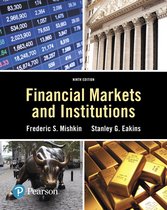
Test Bank for Financial Markets and Institutions 9th Edition by Frederic Mishkin, Stanley Eakins
Test Bank for Financial Markets and Institutions 9th Edition by Frederic Mishkin, Stanley Eakins
,Test Bank for Financial Markets and Institutions 9th Edition by Frederic Mishkin, Stanley Eakins
Financial Markets and Institutions 9th Edition by
Frederic S. Mishkin, Stanley Eakins
TEST BANK FOR
Financial Markets and Institutions 9th Edition by Frederic S. Mishkin (Author), Stanley
Eakins
Chapter 1-27
Financial Markets and Institutions, 9th Edition
Chapter 1; W h y Study Financial Markets and Institutions?
1.1 Multiple Choice
1) Financial markets and institutions
A) involve the movement of huge quantities of money.
B) affect the profits of businesses.
C) affect the types of goods and services produced in an economy.
D) do all of the above.
E) do only A and B of the above.
Answer: D
Topic: Chapter 1.1 Why Study Financial Markets
Question Status: Previous Edition
2) Financial market activities affect
A) personal wealth.
B) spending decisions by individuals and business firms.
C) the economy's location in the business cycle.
D) all of the above.
Answer: D
Topic: Chapter 1.1 Why Study Financial Markets
Question Status: Previous Edition
3) Markets in which funds are transferred from those who have excess funds available to those
who have a shortage of available funds are called
A) commodity markets.
B) funds markets.
C) derivative exchange markets.
D) financial markets.
Answer: D
Topic: Chapter 1.1 Why Study Financial Markets
Question Status: Previous Edition
4) The price paid for the rental of borrowed funds (usually expressed as a percentage of the
rental of $100 per year) is commonly referred to as the
A) inflation rate.
B) exchange rate.
C) interest rate.
D) aggregate price level.
Answer: C
1
Copyright © 2018 Pearson Education, Inc.
,Test Bank for Financial Markets and Institutions 9th Edition by Frederic Mishkin, Stanley Eakins
Topic: Chapter 1.1 Why Study Financial Markets
Question Status: Previous Edition
5) The bond markets are important because
A) they are easily the most widely followed financial markets in the United States.
B) they are the markets where interest rates are determined.
C) they are the markets where foreign exchange rates are determined.
D) all of the above.
Answer: B
Topic: Chapter 1.1 Why Study Financial Markets
Question Status: Previous Edition
6) Interest rates are important to financial institutions since an interest rate increase the
cost of acquiring funds and the income from assets.
A) decreases; decreases
B) increases; increases
C) decreases; increases
D) increases; decreases
Answer: B
Topic: Chapter 1.1 Why Study Financial Markets
Question Status: Previous Edition
7) Typically, increasing interest rates
A) discourages individuals from saving.
B) discourages corporate investments.
C) encourages corporate expansion.
D) encourages corporate borrowing.
E) none of the above.
Answer: B
Topic: Chapter 1.1 Why Study Financial Markets
Question Status: Previous Edition
8) Compared to interest rates on long-term U.S. government bonds, interest rates on
fluctuate more and are lower on average.
A) medium-quality corporate bonds
B) low-quality corporate bonds
C) high-quality corporate bonds
D) three-month Treasury bills
E) none of the above
Answer: D
Topic: Chapter 1.1 Why Study Financial Markets
Question Status: Previous Edition
2
Copyright © 2018 Pearson Education, Inc.
,Test Bank for Financial Markets and Institutions 9th Edition by Frederic Mishkin, Stanley Eakins
9) Compared to interest rates on long-term U.S. government bonds, interest rates on three-month
Treasury bills fluctuate and are on average.
A) more; lower
B) less; lower
C) more; higher
D) less; higher
Answer: A
Topic: Chapter 1.1 Why Study Financial Markets
Question Status: Previous Edition
10) The stock market is important because
A) it is where interest rates are determined.
B) it is the most widely followed financial market in the United States.
C) it is where foreign exchange rates are determined.
D) all of the above.
Answer: B
Topic: Chapter 1.1 Why Study Financial Markets
Question Status: Previous Edition
11) Stock prices since the 1980s have been
A) relatively stable, trending upward at a steady pace.
B) relatively stable, trending downward at a moderate rate.
C) extremely volatile.
D) unstable, trending downward at a moderate rate.
Answer: C
Topic: Chapter 1.1 Why Study Financial Markets
Question Status: Previous Edition
12) The largest one-day drop in the history of the American stock markets occurred in
A) 1929.
B) 1987.
C) 2000.
D) 2001.
Answer: B
Topic: Chapter 1.1 Why Study Financial Markets
Question Status: Previous Edition
13) A declining stock market index due to lower share prices
A) reduces people's wealth and as a result may reduce their willingness to spend.
B) increases people's wealth and as a result may increase their willingness to spend.
C) decreases the amount of funds that business firms can raise by selling newly issued stock.
D) both A and C of the above.
E) both B and C of the above.
Answer: D
Topic: Chapter 1.1 Why Study Financial Markets
Question Status: Previous Edition
3
Copyright © 2018 Pearson Education, Inc.
Test Bank for Financial Markets and Institutions 9th Edition by Frederic Mishkin, Stanley Eakins
,Test Bank for Financial Markets and Institutions 9th Edition by Frederic Mishkin, Stanley Eakins
Financial Markets and Institutions 9th Edition by
Frederic S. Mishkin, Stanley Eakins
TEST BANK FOR
Financial Markets and Institutions 9th Edition by Frederic S. Mishkin (Author), Stanley
Eakins
Chapter 1-27
Financial Markets and Institutions, 9th Edition
Chapter 1; W h y Study Financial Markets and Institutions?
1.1 Multiple Choice
1) Financial markets and institutions
A) involve the movement of huge quantities of money.
B) affect the profits of businesses.
C) affect the types of goods and services produced in an economy.
D) do all of the above.
E) do only A and B of the above.
Answer: D
Topic: Chapter 1.1 Why Study Financial Markets
Question Status: Previous Edition
2) Financial market activities affect
A) personal wealth.
B) spending decisions by individuals and business firms.
C) the economy's location in the business cycle.
D) all of the above.
Answer: D
Topic: Chapter 1.1 Why Study Financial Markets
Question Status: Previous Edition
3) Markets in which funds are transferred from those who have excess funds available to those
who have a shortage of available funds are called
A) commodity markets.
B) funds markets.
C) derivative exchange markets.
D) financial markets.
Answer: D
Topic: Chapter 1.1 Why Study Financial Markets
Question Status: Previous Edition
4) The price paid for the rental of borrowed funds (usually expressed as a percentage of the
rental of $100 per year) is commonly referred to as the
A) inflation rate.
B) exchange rate.
C) interest rate.
D) aggregate price level.
Answer: C
1
Copyright © 2018 Pearson Education, Inc.
,Test Bank for Financial Markets and Institutions 9th Edition by Frederic Mishkin, Stanley Eakins
Topic: Chapter 1.1 Why Study Financial Markets
Question Status: Previous Edition
5) The bond markets are important because
A) they are easily the most widely followed financial markets in the United States.
B) they are the markets where interest rates are determined.
C) they are the markets where foreign exchange rates are determined.
D) all of the above.
Answer: B
Topic: Chapter 1.1 Why Study Financial Markets
Question Status: Previous Edition
6) Interest rates are important to financial institutions since an interest rate increase the
cost of acquiring funds and the income from assets.
A) decreases; decreases
B) increases; increases
C) decreases; increases
D) increases; decreases
Answer: B
Topic: Chapter 1.1 Why Study Financial Markets
Question Status: Previous Edition
7) Typically, increasing interest rates
A) discourages individuals from saving.
B) discourages corporate investments.
C) encourages corporate expansion.
D) encourages corporate borrowing.
E) none of the above.
Answer: B
Topic: Chapter 1.1 Why Study Financial Markets
Question Status: Previous Edition
8) Compared to interest rates on long-term U.S. government bonds, interest rates on
fluctuate more and are lower on average.
A) medium-quality corporate bonds
B) low-quality corporate bonds
C) high-quality corporate bonds
D) three-month Treasury bills
E) none of the above
Answer: D
Topic: Chapter 1.1 Why Study Financial Markets
Question Status: Previous Edition
2
Copyright © 2018 Pearson Education, Inc.
,Test Bank for Financial Markets and Institutions 9th Edition by Frederic Mishkin, Stanley Eakins
9) Compared to interest rates on long-term U.S. government bonds, interest rates on three-month
Treasury bills fluctuate and are on average.
A) more; lower
B) less; lower
C) more; higher
D) less; higher
Answer: A
Topic: Chapter 1.1 Why Study Financial Markets
Question Status: Previous Edition
10) The stock market is important because
A) it is where interest rates are determined.
B) it is the most widely followed financial market in the United States.
C) it is where foreign exchange rates are determined.
D) all of the above.
Answer: B
Topic: Chapter 1.1 Why Study Financial Markets
Question Status: Previous Edition
11) Stock prices since the 1980s have been
A) relatively stable, trending upward at a steady pace.
B) relatively stable, trending downward at a moderate rate.
C) extremely volatile.
D) unstable, trending downward at a moderate rate.
Answer: C
Topic: Chapter 1.1 Why Study Financial Markets
Question Status: Previous Edition
12) The largest one-day drop in the history of the American stock markets occurred in
A) 1929.
B) 1987.
C) 2000.
D) 2001.
Answer: B
Topic: Chapter 1.1 Why Study Financial Markets
Question Status: Previous Edition
13) A declining stock market index due to lower share prices
A) reduces people's wealth and as a result may reduce their willingness to spend.
B) increases people's wealth and as a result may increase their willingness to spend.
C) decreases the amount of funds that business firms can raise by selling newly issued stock.
D) both A and C of the above.
E) both B and C of the above.
Answer: D
Topic: Chapter 1.1 Why Study Financial Markets
Question Status: Previous Edition
3
Copyright © 2018 Pearson Education, Inc.