SCHIZOPHRE
REVISION
, CLASSIFICATION OF
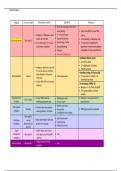
Introduction
SCHIZOPHRENIA
A severe psychiatric disorder where contact with reality and Positive
insight areSymptoms
impairedof Sz
A severe psychiatric disorder where perception of reality is Symptoms that are not usually present in a normal perso
impaired, leading to positive and negative symptoms. symptoms reflect an excess or distortion of normal functi
• A worldwide disease i.e. culturally universal • Hallucinations – Additional sensory experiences which
• Approximately 1.1% of the world’s population develop Sz disturbances in perception (rather than disturbances in
• The peak of incidence for onset is 25-30 years and cases are false perceptions that have no basis in reality. The
prior to adolescence are extremely rare. hallucinations are auditory ones (hearing voices) but c
• A classification is a cluster of symptons that often appear touch and sight. There may appear to be a single pers
together and are therefore thought to reflect the presence many, and they may be familiar or unfamiliar. Many sc
of one particular mental disorder report hearing voices that instruct them to do somethi
• The classification of Sz was first made by Bleuler in them they are wicked and evil.
1911,although the identification of its symptons actually • Delusions-false beliefs that are firmly held despite bein
dates back to later 1800s[when it was referred to by illogical, or for which there is no evidence.
Kraepelin as “dementia praecox”-dementia of youth” • Delusions of persecution: The belief that others want t
• Bleuler coined term Sz as it translates to “split mind” or manipulate you. May feel they’re being spied on or
reflecting that the nature of the disorder means that mind about them.
is cut off from reality • Delusions of grandeur: This is the idea that you are an
*In the Diagnostic and Statistical Manual (DSM) it is classified individual, even god-like and have extraordinary powe
as a psychosis, as the sufferer has no concept of reality. • Delusions of control: Individuals may believe that they
Essentially the illness is due to a breakdown of the patient’s control of something that has invaded their mind and/
personality. be interpreted, for example, as the presence of spirits
transmitters.
Negative Symptoms of Sz
.Schizophrenia can cause ‘negative symptoms’ which c
functioning. Negative symptoms appear to reflect a loss
For example, sufferers may not be able to work at a job
same level of skill or concentration as the job they held
became ill, or they may lose all ability to withstand the
• Avolition: Reduction, difficulty, or inability to start an
goal-directed behaviour. It is often mistaken for appa
Examples of avolition include: no longer being intere
and meeting with friends, no longer being interested
the person used to show enthusiasm for, no longer b
anything, sitting in the house for many hours a day d
• Speech poverty - Inability to speak properly, characte
ability to produce fluent words; this is thought to refl
Current DSM criteria for Sz
• DSM-5 blocked thoughts. It can manifest itself as short and
• Symptoms must be present for 1 month, continuous questions
disturbance to individuals functioning for 6 months prior to
symptom appearing
REVISION
, CLASSIFICATION OF
Introduction
SCHIZOPHRENIA
A severe psychiatric disorder where contact with reality and Positive
insight areSymptoms
impairedof Sz
A severe psychiatric disorder where perception of reality is Symptoms that are not usually present in a normal perso
impaired, leading to positive and negative symptoms. symptoms reflect an excess or distortion of normal functi
• A worldwide disease i.e. culturally universal • Hallucinations – Additional sensory experiences which
• Approximately 1.1% of the world’s population develop Sz disturbances in perception (rather than disturbances in
• The peak of incidence for onset is 25-30 years and cases are false perceptions that have no basis in reality. The
prior to adolescence are extremely rare. hallucinations are auditory ones (hearing voices) but c
• A classification is a cluster of symptons that often appear touch and sight. There may appear to be a single pers
together and are therefore thought to reflect the presence many, and they may be familiar or unfamiliar. Many sc
of one particular mental disorder report hearing voices that instruct them to do somethi
• The classification of Sz was first made by Bleuler in them they are wicked and evil.
1911,although the identification of its symptons actually • Delusions-false beliefs that are firmly held despite bein
dates back to later 1800s[when it was referred to by illogical, or for which there is no evidence.
Kraepelin as “dementia praecox”-dementia of youth” • Delusions of persecution: The belief that others want t
• Bleuler coined term Sz as it translates to “split mind” or manipulate you. May feel they’re being spied on or
reflecting that the nature of the disorder means that mind about them.
is cut off from reality • Delusions of grandeur: This is the idea that you are an
*In the Diagnostic and Statistical Manual (DSM) it is classified individual, even god-like and have extraordinary powe
as a psychosis, as the sufferer has no concept of reality. • Delusions of control: Individuals may believe that they
Essentially the illness is due to a breakdown of the patient’s control of something that has invaded their mind and/
personality. be interpreted, for example, as the presence of spirits
transmitters.
Negative Symptoms of Sz
.Schizophrenia can cause ‘negative symptoms’ which c
functioning. Negative symptoms appear to reflect a loss
For example, sufferers may not be able to work at a job
same level of skill or concentration as the job they held
became ill, or they may lose all ability to withstand the
• Avolition: Reduction, difficulty, or inability to start an
goal-directed behaviour. It is often mistaken for appa
Examples of avolition include: no longer being intere
and meeting with friends, no longer being interested
the person used to show enthusiasm for, no longer b
anything, sitting in the house for many hours a day d
• Speech poverty - Inability to speak properly, characte
ability to produce fluent words; this is thought to refl
Current DSM criteria for Sz
• DSM-5 blocked thoughts. It can manifest itself as short and
• Symptoms must be present for 1 month, continuous questions
disturbance to individuals functioning for 6 months prior to
symptom appearing