

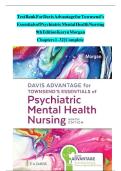
Test Bank For Davis Advantage for Townsend’s
n n n n n n
Essentials of Psychiatric Mental Health Nursing
n n n n n n
9th Edition Karyn Morgan
n n n
Chapters 1 - 32 | Complete
n n n n n n
,TABLE OF CONTENTS n n
INTRODUCTION TO PSYCHIATRIC MENTAL HEALTH CONCEPTS n n n n n
1. Mental Health and Mental Illness
n n n n n
2. Biological Implications
n n
3. Ethical and Legal Issues
n n n n
4. Psychopharmacology
n
II. PSYCHIATRIC MENTAL HEALTH NURSING INTERVENTIONS
n n n n n
5. Relationship Development and Therapeutic Communication
n n n n n
6. The Nursing Process in Psychiatric/Mental Health Nursing
n n n n n n n
7. Psychosocial Interventions and Spiritual Care
n n n n n
8. Intervention in Groups
n n n
9. Crisis Intervention
n n
10. The Recovery Model
n n n
11. Suicide Prevention
n n
III. CARE OF PATIENTS WITH PSYCHIATRIC DISORDERS
n n n n n n
12. Caring for Patients with Mental Illness and Substance Use Disorders in General Practice Settings
n n n n n n n n n n n n n n
13. Neurocognitive Disorders
n n
14. Substance Use and Addiction Disorders
n n n n n
15. Schizophrenia Spectrum and Other Psychotic Disorders
n n n n n n
16. Depressive Disorders
n n
17. Bipolar and Related Disorders
n n n n
18. Anxiety, Obsessive-Compulsive, and Related Disorders
n n n n n
19. Trauma- and Stressor-Related Disorders
n n n n
20. Somatic Symptom and Dissociative Disorders
n n n n n
21. Eating Disorders
n n
22. Personality Disorders
n n
IV. PSYCHIATRIC MENTAL HEALTH NURSING OF SPECIAL POPULATIONS
n n n n n n n
23. Children and Adolescents
n n n
24. The Aging Individual
n n n
25. Survivors of Abuse or Neglect
n n n n n
26. Community Mental Health Nursing
n n n n
27. The Bereaved Individual
n n n
28. Military Families
n n
V. ONLINE CHAPTERS
n n
29. Concepts of Personality Development
n n n n
,30. Complementary and Integrative Therapies
n n n n
31. Cultural Concepts Relevant to Psychiatric Mental Health Nursing
n n n n n n n n
32. Issues Related to Human Sexuality and Gender Dysphoria
n n n n n n n n n
, Chapter 1. Mental Health and Mental Illness
n n n n n n
Multiple Choice
n n
1. A nurse is assessing a client who is experiencing occasional feelings of sadness because of therecent
n n n n n n n n n n n n n n n n n
death of a beloved pet. The clients appetite, sleep patterns, and daily routine have not changed. How
n n n n n n n n n n n n n n n n n
should the nurse interpret the clients behaviors?
n n n n n n n
1. The clients behaviors demonstrate mental illness in the form ofdepression.
n n n n n n n n n n
2. The clients behaviors are extensive, which indicates the presence of mental illness.
n n n n n n n n n n n
3. The clients behaviors are not congruent with cultural norms.
n n n n n n n n
4. The clients behaviors demonstrate no functional impairment, indicating no mental illness.
n n n n n n n n n n
ANSWER: 4 n
Rationale: The nurse should assess that the clients daily functioning is not impaired. The clientwho
n n n n n n n n n n n n n n n
experiences feelings of sadness after the loss of a pet is responding within normal expectations.
n n n n n n n n n n n n n n n
Without significant impairment, the clients distress does not indicate a mental illness.
n n n n n n n n n n n n
Cognitive Level: Analysis n n
IntegratedProcess: Assessment
n n n
2. At what point should the nurse determine that a client is at risk for developing a mental
n n n n n n n n n n n n n n n n n
illness?
n
1. When thoughts, feelings, and behaviors are not reflective of the DSM-5 criteria.
n n n n n n n n n n n
2. When maladaptive responses to stress are coupled with interference in daily functioning.
n n n n n n n n n n n
3. When a client communicates significant distress.
n n n n n
4. When a client uses defense mechanisms as ego protection.
n n n n n n n n
ANSWER: 2 n
Rationale: The nurse should determine that the client is at risk for mental illness when responsesto
n n n n n n n n n n n n n n n n
stress are maladaptive and interfere with daily functioning. The DSM-5 indicates that in orderto be
n n n n n n n n n n n n n n n n
diagnosed with a mental illness, daily functioning must be significantly impaired. The clients ability
n n n n n n n n n n n n n n
to communicate distress would be considered a positive attribute.
n n n n n n n n n
Cognitive Level: Application n n
IntegratedProcess: Assessment
n n n
3. A nurse is assessing a set of 15-year-old identical twins who respond very differently to stress.One
n n n n n n n n n n n n n n n n n
twin becomes anxious and irritable, and the other withdraws and cries. How should the nurse explain
n n n n n n n n n n n n n n n n
these different stress responses to the parents?
n n n n n n n
1. Reactions to stress are relative rather than absolute; individual responses to stress vary.
n n n n n n n n n n n n
2. It isabnormal for identical twins to react differently to similar stressors.
n n n n n n n n n n n
3. Identical twins should share the same temperament and respond similarly to stress.
n n n n n n n n n n n
4. Environmental influences to stress weigh more heavily than genetic influences. n n n n n n n n n
n n n n n n
Essentials of Psychiatric Mental Health Nursing
n n n n n n
9th Edition Karyn Morgan
n n n
Chapters 1 - 32 | Complete
n n n n n n
,TABLE OF CONTENTS n n
INTRODUCTION TO PSYCHIATRIC MENTAL HEALTH CONCEPTS n n n n n
1. Mental Health and Mental Illness
n n n n n
2. Biological Implications
n n
3. Ethical and Legal Issues
n n n n
4. Psychopharmacology
n
II. PSYCHIATRIC MENTAL HEALTH NURSING INTERVENTIONS
n n n n n
5. Relationship Development and Therapeutic Communication
n n n n n
6. The Nursing Process in Psychiatric/Mental Health Nursing
n n n n n n n
7. Psychosocial Interventions and Spiritual Care
n n n n n
8. Intervention in Groups
n n n
9. Crisis Intervention
n n
10. The Recovery Model
n n n
11. Suicide Prevention
n n
III. CARE OF PATIENTS WITH PSYCHIATRIC DISORDERS
n n n n n n
12. Caring for Patients with Mental Illness and Substance Use Disorders in General Practice Settings
n n n n n n n n n n n n n n
13. Neurocognitive Disorders
n n
14. Substance Use and Addiction Disorders
n n n n n
15. Schizophrenia Spectrum and Other Psychotic Disorders
n n n n n n
16. Depressive Disorders
n n
17. Bipolar and Related Disorders
n n n n
18. Anxiety, Obsessive-Compulsive, and Related Disorders
n n n n n
19. Trauma- and Stressor-Related Disorders
n n n n
20. Somatic Symptom and Dissociative Disorders
n n n n n
21. Eating Disorders
n n
22. Personality Disorders
n n
IV. PSYCHIATRIC MENTAL HEALTH NURSING OF SPECIAL POPULATIONS
n n n n n n n
23. Children and Adolescents
n n n
24. The Aging Individual
n n n
25. Survivors of Abuse or Neglect
n n n n n
26. Community Mental Health Nursing
n n n n
27. The Bereaved Individual
n n n
28. Military Families
n n
V. ONLINE CHAPTERS
n n
29. Concepts of Personality Development
n n n n
,30. Complementary and Integrative Therapies
n n n n
31. Cultural Concepts Relevant to Psychiatric Mental Health Nursing
n n n n n n n n
32. Issues Related to Human Sexuality and Gender Dysphoria
n n n n n n n n n
, Chapter 1. Mental Health and Mental Illness
n n n n n n
Multiple Choice
n n
1. A nurse is assessing a client who is experiencing occasional feelings of sadness because of therecent
n n n n n n n n n n n n n n n n n
death of a beloved pet. The clients appetite, sleep patterns, and daily routine have not changed. How
n n n n n n n n n n n n n n n n n
should the nurse interpret the clients behaviors?
n n n n n n n
1. The clients behaviors demonstrate mental illness in the form ofdepression.
n n n n n n n n n n
2. The clients behaviors are extensive, which indicates the presence of mental illness.
n n n n n n n n n n n
3. The clients behaviors are not congruent with cultural norms.
n n n n n n n n
4. The clients behaviors demonstrate no functional impairment, indicating no mental illness.
n n n n n n n n n n
ANSWER: 4 n
Rationale: The nurse should assess that the clients daily functioning is not impaired. The clientwho
n n n n n n n n n n n n n n n
experiences feelings of sadness after the loss of a pet is responding within normal expectations.
n n n n n n n n n n n n n n n
Without significant impairment, the clients distress does not indicate a mental illness.
n n n n n n n n n n n n
Cognitive Level: Analysis n n
IntegratedProcess: Assessment
n n n
2. At what point should the nurse determine that a client is at risk for developing a mental
n n n n n n n n n n n n n n n n n
illness?
n
1. When thoughts, feelings, and behaviors are not reflective of the DSM-5 criteria.
n n n n n n n n n n n
2. When maladaptive responses to stress are coupled with interference in daily functioning.
n n n n n n n n n n n
3. When a client communicates significant distress.
n n n n n
4. When a client uses defense mechanisms as ego protection.
n n n n n n n n
ANSWER: 2 n
Rationale: The nurse should determine that the client is at risk for mental illness when responsesto
n n n n n n n n n n n n n n n n
stress are maladaptive and interfere with daily functioning. The DSM-5 indicates that in orderto be
n n n n n n n n n n n n n n n n
diagnosed with a mental illness, daily functioning must be significantly impaired. The clients ability
n n n n n n n n n n n n n n
to communicate distress would be considered a positive attribute.
n n n n n n n n n
Cognitive Level: Application n n
IntegratedProcess: Assessment
n n n
3. A nurse is assessing a set of 15-year-old identical twins who respond very differently to stress.One
n n n n n n n n n n n n n n n n n
twin becomes anxious and irritable, and the other withdraws and cries. How should the nurse explain
n n n n n n n n n n n n n n n n
these different stress responses to the parents?
n n n n n n n
1. Reactions to stress are relative rather than absolute; individual responses to stress vary.
n n n n n n n n n n n n
2. It isabnormal for identical twins to react differently to similar stressors.
n n n n n n n n n n n
3. Identical twins should share the same temperament and respond similarly to stress.
n n n n n n n n n n n
4. Environmental influences to stress weigh more heavily than genetic influences. n n n n n n n n n

