

IBOLC Comprehensive Exam
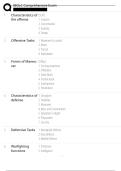
1. Characteristics of (SCAT)
the offense 1. Surprise
2. Concentration
3. Audacity
4. Tempo
2. Offensive Tasks 1. Movement to contact
2. Attack
3. Pursuit
4. Exploitation
3. Forms of Maneu- (Tiffep)
ver 1. Turning movement
2. Infiltration
3. Flank Attack
4. Frontal attack
5. Envelopment
6. Penetration
4. Characteristics of 1. Disruption
defense 2. Flexibility
3. Maneuver
4. Mass and Concentration
5. Operation in depth
6. Preparation
7. Security
5. Defensive Tasks 1. Retrograde Defense
2. Area Defense
3. Mobile Defense
6. Warfighting 1. Protection
functions 2. Intelligence
, IBOLC Comprehensive Exam
3. Mission command
4. Sustainment
5. Fires
6. Movement and Maneuver
7. Task Org for 1. Assault
breaching 2. Support
3. Breach
8. Forms of De- 1. Defense of Linear Obstacle
fense 2. Perimeter Defense
3. Reverse Slope
9. Breaching funda- (SOSRA)
mentals 1. Suppress
2. Obscure
3. Secure
4. Reduce
5. Assault
10. Operational con- 1. High intensity
ditions of urban 2. Precision
operations 3. Surgical
11. Sequence of Of- Gain and maintain enemy contact
fense Disrupt the enemy
Fix the enemy
Maneuver
Follow through
12. Sequence of De- Gain and maintain enemy contact
fense Disrupt the enemy
Fix the enemy
, IBOLC Comprehensive Exam
Maneuver
Follow through/counterattack
13. Forms of Contact Direct
Indirect
Non-hostile civilian contact
Obstacle
CBRN
Aerial
Visual
Electronic
14. Battle Positions Primary
Alternate
Supplementary
Subsequent
Strongpoint
15. Methods of Re- Service Station Method-platoon goes to supply
supply Tailgate- Supply truck stops and moves opening tailgate for platoon resupply
In-position resupply-PSG resupplies entire platoon while they are on line.
16. 8 step training 1. Plan event
model 2. Train and certify leaders
3. reconnoiter training sites
4. Issue the event operation order
5. rehearse
6. execute the training
7. conduct an after-action review
8. conduct retaining
17. Supply Class I Subsistence; Food and water
1. Characteristics of (SCAT)
the offense 1. Surprise
2. Concentration
3. Audacity
4. Tempo
2. Offensive Tasks 1. Movement to contact
2. Attack
3. Pursuit
4. Exploitation
3. Forms of Maneu- (Tiffep)
ver 1. Turning movement
2. Infiltration
3. Flank Attack
4. Frontal attack
5. Envelopment
6. Penetration
4. Characteristics of 1. Disruption
defense 2. Flexibility
3. Maneuver
4. Mass and Concentration
5. Operation in depth
6. Preparation
7. Security
5. Defensive Tasks 1. Retrograde Defense
2. Area Defense
3. Mobile Defense
6. Warfighting 1. Protection
functions 2. Intelligence
, IBOLC Comprehensive Exam
3. Mission command
4. Sustainment
5. Fires
6. Movement and Maneuver
7. Task Org for 1. Assault
breaching 2. Support
3. Breach
8. Forms of De- 1. Defense of Linear Obstacle
fense 2. Perimeter Defense
3. Reverse Slope
9. Breaching funda- (SOSRA)
mentals 1. Suppress
2. Obscure
3. Secure
4. Reduce
5. Assault
10. Operational con- 1. High intensity
ditions of urban 2. Precision
operations 3. Surgical
11. Sequence of Of- Gain and maintain enemy contact
fense Disrupt the enemy
Fix the enemy
Maneuver
Follow through
12. Sequence of De- Gain and maintain enemy contact
fense Disrupt the enemy
Fix the enemy
, IBOLC Comprehensive Exam
Maneuver
Follow through/counterattack
13. Forms of Contact Direct
Indirect
Non-hostile civilian contact
Obstacle
CBRN
Aerial
Visual
Electronic
14. Battle Positions Primary
Alternate
Supplementary
Subsequent
Strongpoint
15. Methods of Re- Service Station Method-platoon goes to supply
supply Tailgate- Supply truck stops and moves opening tailgate for platoon resupply
In-position resupply-PSG resupplies entire platoon while they are on line.
16. 8 step training 1. Plan event
model 2. Train and certify leaders
3. reconnoiter training sites
4. Issue the event operation order
5. rehearse
6. execute the training
7. conduct an after-action review
8. conduct retaining
17. Supply Class I Subsistence; Food and water

