‘Draw, if you be men’: Duelling in Renaissance Drama
2018/2019
Z0971022
12,025 words
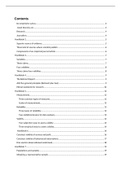
, Contents
Illustrations 2
Introduction 3
Chapter 1: ‘Your reputation lies at his mercy’: The Judicial Duel 9
Chapter 2: ‘Let us take the law of our sides’: The Extra-legal Duel 16
Chapter 3: ‘I’ll be your foil, Laertes’: Duelling for Sport 25
Chapter 4: ‘Draw upon a woman? Why, what dost mean’: Women and Duelling 31
Conclusion 37
Bibliography 41
1
, Illustrations
Figure 1- Victoria and Albert Museum, V & A Search the Collections (2017)
www.collections.vam.ac.uk [accessed 4 March 2019].
Figure 2- Victoria and Albert Museum, V & A Search the Collections (2017)
www.collections.vam.ac.uk [accessed 4 March 2019].
Figure 3- Thomas Middleton and William Rowley, A Fair Quarrel (London: n.p., 1627).
Figure 4- Vincentio Saviolo, His Practise: In Two Bookes (London: John Wolfe, 1595).
Figure 5- Victoria and Albert Museum, V & A Search the Collections (2017)
www.wallacecollection.org.uk [accessed 4 March 2019].
Figure 6- The Wallace Collection, The Collection (2019) www.wallacecollection.org.uk
[accessed 4 March 2019].
Figure 7- The Wallace Collection, The Collection (2019) www.wallacecollection.org.uk
[accessed 4 March 2019].
Figure 8- The Wallace Collection, The Collection (2019) www.wallacecollection.org.uk
[accessed 4 March 2019].
Figure 9- Vincentio Saviolo, His Practise: In Two Bookes (London: John Wolfe, 1595).
Figure 10- Victoria and Albert Museum, V & A Search the Collections (2017)
www.collections.vam.ac.uk [accessed 4 March 2019].
Figure 11- Victoria and Albert Museum, V & A Search the Collections (2017)
www.collections.vam.ac.uk [accessed 4 March 2019].
Figure 12- Thomas Dekker, The Roaring Girl (London: Nicholas Okes, 1611).
2
, Introduction
What was Duelling in Renaissance Drama?
Duel, from the Italian duello and Latin duellum (duo meaning two and bellum meaning war)1
is a form of sword fighting originating in Europe during the late medieval period. Young
aristocratic men travelled abroad to receive an education, which often included sword
fighting. Upon their return they brought these skills back to England. Continental sword
fighting gained prominence in England as foreign fencing masters such as Rocco Bonetti and
Vincentio Saviolo established schools in London in the latter part of the 16th century.
However, it was not just continental masters that established schools in London, as the
Fencing Teachers’ Guild and Corporation of Masters of the Noble Science of Defence taught
an anglicized version of continental technique. Alongside these schools, fencing manuals
entered circulation as fencing masters of different nationalities outlined their guidelines for
the correct practice for duelling. These opinions often differed, illustrating an interplay
between different nationalities, for example apparent in Vincent Saviolo’s His Practise, 1595,
George Silver’s Paradoxes of Defence, 1599, and Girard Thibault’s De L’Espée 1628.
Prior to the arrival of these continental masters in England, a variety of weaponry had
been used when duelling, these included the small sword, sword and buckler, broadsword,
rapier, longsword, and dagger. However, as continental styles influenced English sword
fighting the traditional sword and buckler and broadsword were abandoned in favour of the
lighter and more agile rapier. This led to an upsurge in street violence as an increasing
number of people were carrying weapons. However, the rapier was primarily only used by
noblemen or members of the gentry as it was expensive to purchase and difficult to procure
as rapiers were often produced abroad. Therefore, rapiers became a symbol of wealth,
1
Oxford English Dictionary, duel (2016) http://www.oed.com [accessed 12 February 2019].
3
2018/2019
Z0971022
12,025 words
, Contents
Illustrations 2
Introduction 3
Chapter 1: ‘Your reputation lies at his mercy’: The Judicial Duel 9
Chapter 2: ‘Let us take the law of our sides’: The Extra-legal Duel 16
Chapter 3: ‘I’ll be your foil, Laertes’: Duelling for Sport 25
Chapter 4: ‘Draw upon a woman? Why, what dost mean’: Women and Duelling 31
Conclusion 37
Bibliography 41
1
, Illustrations
Figure 1- Victoria and Albert Museum, V & A Search the Collections (2017)
www.collections.vam.ac.uk [accessed 4 March 2019].
Figure 2- Victoria and Albert Museum, V & A Search the Collections (2017)
www.collections.vam.ac.uk [accessed 4 March 2019].
Figure 3- Thomas Middleton and William Rowley, A Fair Quarrel (London: n.p., 1627).
Figure 4- Vincentio Saviolo, His Practise: In Two Bookes (London: John Wolfe, 1595).
Figure 5- Victoria and Albert Museum, V & A Search the Collections (2017)
www.wallacecollection.org.uk [accessed 4 March 2019].
Figure 6- The Wallace Collection, The Collection (2019) www.wallacecollection.org.uk
[accessed 4 March 2019].
Figure 7- The Wallace Collection, The Collection (2019) www.wallacecollection.org.uk
[accessed 4 March 2019].
Figure 8- The Wallace Collection, The Collection (2019) www.wallacecollection.org.uk
[accessed 4 March 2019].
Figure 9- Vincentio Saviolo, His Practise: In Two Bookes (London: John Wolfe, 1595).
Figure 10- Victoria and Albert Museum, V & A Search the Collections (2017)
www.collections.vam.ac.uk [accessed 4 March 2019].
Figure 11- Victoria and Albert Museum, V & A Search the Collections (2017)
www.collections.vam.ac.uk [accessed 4 March 2019].
Figure 12- Thomas Dekker, The Roaring Girl (London: Nicholas Okes, 1611).
2
, Introduction
What was Duelling in Renaissance Drama?
Duel, from the Italian duello and Latin duellum (duo meaning two and bellum meaning war)1
is a form of sword fighting originating in Europe during the late medieval period. Young
aristocratic men travelled abroad to receive an education, which often included sword
fighting. Upon their return they brought these skills back to England. Continental sword
fighting gained prominence in England as foreign fencing masters such as Rocco Bonetti and
Vincentio Saviolo established schools in London in the latter part of the 16th century.
However, it was not just continental masters that established schools in London, as the
Fencing Teachers’ Guild and Corporation of Masters of the Noble Science of Defence taught
an anglicized version of continental technique. Alongside these schools, fencing manuals
entered circulation as fencing masters of different nationalities outlined their guidelines for
the correct practice for duelling. These opinions often differed, illustrating an interplay
between different nationalities, for example apparent in Vincent Saviolo’s His Practise, 1595,
George Silver’s Paradoxes of Defence, 1599, and Girard Thibault’s De L’Espée 1628.
Prior to the arrival of these continental masters in England, a variety of weaponry had
been used when duelling, these included the small sword, sword and buckler, broadsword,
rapier, longsword, and dagger. However, as continental styles influenced English sword
fighting the traditional sword and buckler and broadsword were abandoned in favour of the
lighter and more agile rapier. This led to an upsurge in street violence as an increasing
number of people were carrying weapons. However, the rapier was primarily only used by
noblemen or members of the gentry as it was expensive to purchase and difficult to procure
as rapiers were often produced abroad. Therefore, rapiers became a symbol of wealth,
1
Oxford English Dictionary, duel (2016) http://www.oed.com [accessed 12 February 2019].
3