

PlusBay.Plus
,PlusBay.Plus
,TEST BANK FOR
5% 5%
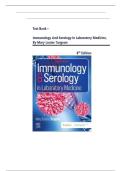
Immunology and Serology in Laboratory Medicine, 8th Edition by Mary Louise Turgeon
5% 5% 5% 5% 5% 5% 5% 5% 5% 5% 5%
Chapter 1-27
5%
Chapter 01: Highlights of the Innate and Adaptive Immune Systems
5% 5% 5% 5% 5% 5% 5% 5% 5%
MULTIPLE CHOICE 5%
1. The ―father‖ of immunology is generally considered to be
5% 5% 5% 5% 5% 5% 5% 5%
a. Koch.
b. Pasteur.
c. Gram.
d. Salk.
ANS: 5 % B
Louis Pasteur is generally considered to be the ―father of immunology.‖
5% 5% 5% 5% 5% 5% 5% 5% 5% 5%
DIF: Cognitive Level: I 5% 5%
2. An early form of immunization was practiced by the
5% 5% 5% 5% 5% 5% 5% 5%
a. Romans.
b. Greeks.
c. Chinese.
d. Native Americans. 5%
ANS: 5 % C
Beginning about 1000 AD, the Chinese practiced a form of immunization by inhaling dried
5% 5% 5% 5% 5% 5% 5% 5% 5% 5% 5% 5% 5% 5
powders derived from the crusts of smallpox lesions.
% 5% 5% 5% 5% 5% 5% 5%
DIF: Cognitive Level: I 5% 5%
3. A 5% specific function of the immune system is to
5% 5% 5% 5% 5% 5% 5%
a. recognize self from nonself. 5% 5% 5%
b. defend the body against nonself.
5% 5% 5% 5%
c. amplify specific functions. 5% 5%
d. Both A and B. 5% 5% 5%
ANS: 5 % D
The function of the immune system is to recognize self from nonself and defend the bo
5% 5% 5% 5% 5% 5% 5% 5% 5% 5% 5% 5% 5% 5% 5%
dy against nonself. Such a system is necessary for survival. The immune system also h
5% 5% 5% 5% 5% 5% 5% 5% 5% 5% 5% 5% 5% 5%
as nonspecific effector mechanisms that usually amplify the specific functions. Nonspeci
5% 5% 5% 5% 5% 5% 5% 5% 5% 5%
fic components of the immune system include mononuclear phagocytes, polymorphonucl
5% 5% 5% 5% 5% 5% 5% 5% 5%
ear leukocytes, and soluble factors (e.g., complement).
5% 5% 5% 5% 5% 5%
DIF: Cognitive Level: I 5% 5%
4. An undesirable consequence of immunity is
5% 5% 5% 5% 5%
a. natural resistance. 5%
b. acquired resistance to infectious diseases.
5% 5% 5% 5%
PlusBay.Plus
, c. an autoimmune disorder.
5% 5%
d. recovery from infectious disease.
5% 5% 5%
ANS: 5 % C
The desirable consequences of immunity include natural resistance, recovery, and acquired
5% 5% 5% 5% 5% 5% 5% 5% 5% 5% 5
%resistance to infectious diseases. A deficiency or dysfunction of the immune system can ca
5% 5% 5% 5% 5% 5% 5% 5% 5% 5% 5% 5% 5%
use many disorders. Undesirable consequences of immunity include allergy, rejection of a
5% 5% 5% 5% 5% 5% 5% 5% 5% 5% 5% 5%
transplanted organ, or an autoimmune disorder.
5% 5% 5% 5% 5%
DIF: Cognitive Level: I 5% 5%
5. The immune system has various distinctive characteristics except;
5% 5% 5% 5% 5% 5% 5%
a. specificity.
b. memory.
c. mobility.
d. noncooperation among different cells. 5% 5% 5%
ANS: 5 % D
The immune system is composed of a large, complex set of widely distributed elements
5% 5% 5% 5% 5% 5% 5% 5% 5% 5% 5% 5% 5%
, with the distinctive characteristics of specificity, memory, mobility, replicability, and c
5% 5% 5% 5% 5% 5% 5% 5% 5% 5% 5%
ooperation among different cells or cellular products. Specificity and memory are chara
5% 5% 5% 5% 5% 5% 5% 5% 5% 5% 5%
cteristics of lymphocytes in the immune system. Nonspecific elements of the immune sys
5% 5% 5% 5% 5% 5% 5% 5% 5% 5% 5% 5%
tem demonstrate mobility. In addition, specific and nonspecific cellular components of th
5% 5% 5% 5% 5% 5% 5% 5% 5% 5% 5%
e immune system can replicate. Cooperation is required for optimal functioning, and int
5% 5% 5% 5% 5% 5% 5% 5% 5% 5% 5% 5%
eraction involves specific cellular elements, cell products, and nonlymphoid elements.
5% 5% 5% 5% 5% 5% 5% 5% 5%
DIF: Cognitive Level: I 5% 5%
6. Hematopoiesis occurs in the yolk sac during the
5% 5% 5% 5% 5% 5% 5%
a. immediate hours after conception 5% 5% 5%
b. second month of gestation. 5% 5% 5%
c. second trimester of gestation.
5% 5% 5%
d. periods of severe anemia in children.
5% 5% 5% 5% 5%
ANS: 5 % A
The sites of blood cell development, or hematopoiesis, follow a definite sequence in th
5% 5% 5% 5% 5% 5% 5% 5% 5% 5% 5% 5% 5%
e embryo and fetus. Hematopoiesis occurs in the yolk sac during the second month of g
5% 5% 5% 5% 5% 5% 5% 5% 5% 5% 5% 5% 5% 5% 5%
estation.
DIF: Cognitive Level: II 5% 5%
7. The sequence of blood cell development in the embryo and fetus is
5% 5% 5% 5% 5% 5% 5% 5% 5% 5% 5%
a. yolk sac, liver-spleen, bone marrow.
5% 5% 5% 5%
b. yolk sac, bone marrow, liver/spleen.
5% 5% 5% 5%
c. liver-spleen, yolk sac, bone marrow. 5% 5% 5% 5%
d. bone marrow, liver-spleen, yolk sac.
5% 5% 5% 5%
ANS: 5 % A
PlusBay.Plus
,PlusBay.Plus
,TEST BANK FOR
5% 5%
Immunology and Serology in Laboratory Medicine, 8th Edition by Mary Louise Turgeon
5% 5% 5% 5% 5% 5% 5% 5% 5% 5% 5%
Chapter 1-27
5%
Chapter 01: Highlights of the Innate and Adaptive Immune Systems
5% 5% 5% 5% 5% 5% 5% 5% 5%
MULTIPLE CHOICE 5%
1. The ―father‖ of immunology is generally considered to be
5% 5% 5% 5% 5% 5% 5% 5%
a. Koch.
b. Pasteur.
c. Gram.
d. Salk.
ANS: 5 % B
Louis Pasteur is generally considered to be the ―father of immunology.‖
5% 5% 5% 5% 5% 5% 5% 5% 5% 5%
DIF: Cognitive Level: I 5% 5%
2. An early form of immunization was practiced by the
5% 5% 5% 5% 5% 5% 5% 5%
a. Romans.
b. Greeks.
c. Chinese.
d. Native Americans. 5%
ANS: 5 % C
Beginning about 1000 AD, the Chinese practiced a form of immunization by inhaling dried
5% 5% 5% 5% 5% 5% 5% 5% 5% 5% 5% 5% 5% 5
powders derived from the crusts of smallpox lesions.
% 5% 5% 5% 5% 5% 5% 5%
DIF: Cognitive Level: I 5% 5%
3. A 5% specific function of the immune system is to
5% 5% 5% 5% 5% 5% 5%
a. recognize self from nonself. 5% 5% 5%
b. defend the body against nonself.
5% 5% 5% 5%
c. amplify specific functions. 5% 5%
d. Both A and B. 5% 5% 5%
ANS: 5 % D
The function of the immune system is to recognize self from nonself and defend the bo
5% 5% 5% 5% 5% 5% 5% 5% 5% 5% 5% 5% 5% 5% 5%
dy against nonself. Such a system is necessary for survival. The immune system also h
5% 5% 5% 5% 5% 5% 5% 5% 5% 5% 5% 5% 5% 5%
as nonspecific effector mechanisms that usually amplify the specific functions. Nonspeci
5% 5% 5% 5% 5% 5% 5% 5% 5% 5%
fic components of the immune system include mononuclear phagocytes, polymorphonucl
5% 5% 5% 5% 5% 5% 5% 5% 5%
ear leukocytes, and soluble factors (e.g., complement).
5% 5% 5% 5% 5% 5%
DIF: Cognitive Level: I 5% 5%
4. An undesirable consequence of immunity is
5% 5% 5% 5% 5%
a. natural resistance. 5%
b. acquired resistance to infectious diseases.
5% 5% 5% 5%
PlusBay.Plus
, c. an autoimmune disorder.
5% 5%
d. recovery from infectious disease.
5% 5% 5%
ANS: 5 % C
The desirable consequences of immunity include natural resistance, recovery, and acquired
5% 5% 5% 5% 5% 5% 5% 5% 5% 5% 5
%resistance to infectious diseases. A deficiency or dysfunction of the immune system can ca
5% 5% 5% 5% 5% 5% 5% 5% 5% 5% 5% 5% 5%
use many disorders. Undesirable consequences of immunity include allergy, rejection of a
5% 5% 5% 5% 5% 5% 5% 5% 5% 5% 5% 5%
transplanted organ, or an autoimmune disorder.
5% 5% 5% 5% 5%
DIF: Cognitive Level: I 5% 5%
5. The immune system has various distinctive characteristics except;
5% 5% 5% 5% 5% 5% 5%
a. specificity.
b. memory.
c. mobility.
d. noncooperation among different cells. 5% 5% 5%
ANS: 5 % D
The immune system is composed of a large, complex set of widely distributed elements
5% 5% 5% 5% 5% 5% 5% 5% 5% 5% 5% 5% 5%
, with the distinctive characteristics of specificity, memory, mobility, replicability, and c
5% 5% 5% 5% 5% 5% 5% 5% 5% 5% 5%
ooperation among different cells or cellular products. Specificity and memory are chara
5% 5% 5% 5% 5% 5% 5% 5% 5% 5% 5%
cteristics of lymphocytes in the immune system. Nonspecific elements of the immune sys
5% 5% 5% 5% 5% 5% 5% 5% 5% 5% 5% 5%
tem demonstrate mobility. In addition, specific and nonspecific cellular components of th
5% 5% 5% 5% 5% 5% 5% 5% 5% 5% 5%
e immune system can replicate. Cooperation is required for optimal functioning, and int
5% 5% 5% 5% 5% 5% 5% 5% 5% 5% 5% 5%
eraction involves specific cellular elements, cell products, and nonlymphoid elements.
5% 5% 5% 5% 5% 5% 5% 5% 5%
DIF: Cognitive Level: I 5% 5%
6. Hematopoiesis occurs in the yolk sac during the
5% 5% 5% 5% 5% 5% 5%
a. immediate hours after conception 5% 5% 5%
b. second month of gestation. 5% 5% 5%
c. second trimester of gestation.
5% 5% 5%
d. periods of severe anemia in children.
5% 5% 5% 5% 5%
ANS: 5 % A
The sites of blood cell development, or hematopoiesis, follow a definite sequence in th
5% 5% 5% 5% 5% 5% 5% 5% 5% 5% 5% 5% 5%
e embryo and fetus. Hematopoiesis occurs in the yolk sac during the second month of g
5% 5% 5% 5% 5% 5% 5% 5% 5% 5% 5% 5% 5% 5% 5%
estation.
DIF: Cognitive Level: II 5% 5%
7. The sequence of blood cell development in the embryo and fetus is
5% 5% 5% 5% 5% 5% 5% 5% 5% 5% 5%
a. yolk sac, liver-spleen, bone marrow.
5% 5% 5% 5%
b. yolk sac, bone marrow, liver/spleen.
5% 5% 5% 5%
c. liver-spleen, yolk sac, bone marrow. 5% 5% 5% 5%
d. bone marrow, liver-spleen, yolk sac.
5% 5% 5% 5%
ANS: 5 % A
PlusBay.Plus


